

Applications of Microbe-Based Nanoparticles …
345
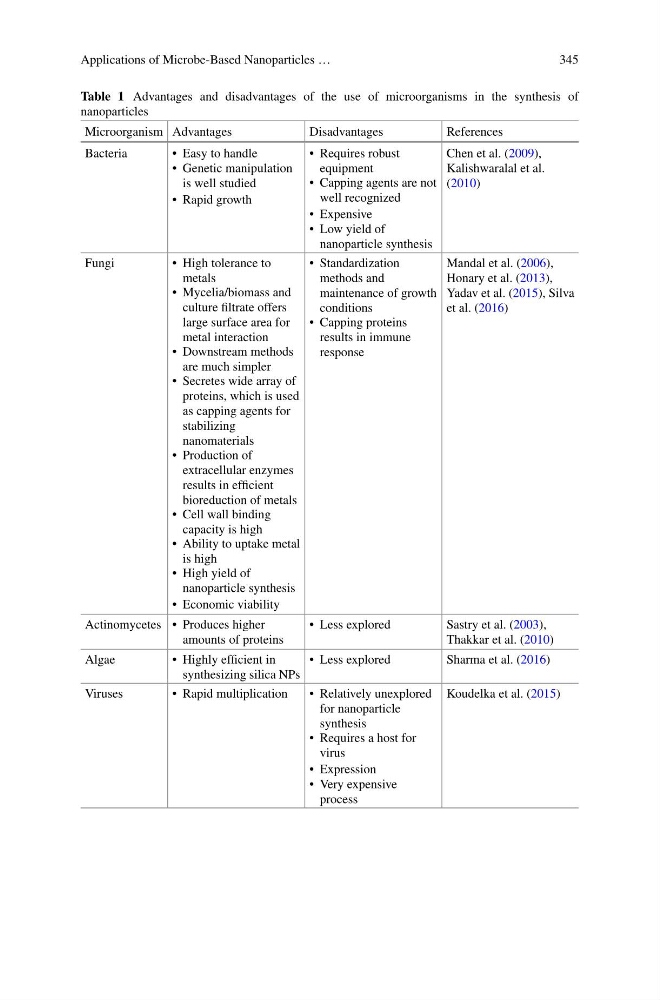
Table 1 Advantages and disadvantages of the use of microorganisms in the synthesis of
nanoparticles
Microorganism Advantages
Disadvantages
References
Bacteria
• Easy to handle
• Genetic manipulation
is well studied
• Rapid growth
• Requires robust
equipment
• Capping agents are not
well recognized
• Expensive
• Low yield of
nanoparticle synthesis
Chen et al. (2009),
Kalishwaralal et al.
(2010)
Fungi
• High tolerance to
metals
• Mycelia/biomass and
culture filtrate offers
large surface area for
metal interaction
• Downstream methods
are much simpler
• Secretes wide array of
proteins, which is used
as capping agents for
stabilizing
nanomaterials
• Production of
extracellular enzymes
results in efficient
bioreduction of metals
• Cell wall binding
capacity is high
• Ability to uptake metal
is high
• High yield of
nanoparticle synthesis
• Economic viability
• Standardization
methods and
maintenance of growth
conditions
• Capping proteins
results in immune
response
Mandal et al. (2006),
Honary et al. (2013),
Yadav et al. (2015), Silva
et al. (2016)
Actinomycetes • Produces higher
amounts of proteins
• Less explored
Sastry et al. (2003),
Thakkar et al. (2010)
Algae
• Highly efficient in
synthesizing silica NPs
• Less explored
Sharma et al. (2016)
Viruses
• Rapid multiplication
• Relatively unexplored
for nanoparticle
synthesis
• Requires a host for
virus
• Expression
• Very expensive
process
Koudelka et al. (2015)
345
Table 1 Advantages and disadvantages of the use of microorganisms in the synthesis of
nanoparticles
Microorganism Advantages
Disadvantages
References
Bacteria
• Easy to handle
• Genetic manipulation
is well studied
• Rapid growth
• Requires robust
equipment
• Capping agents are not
well recognized
• Expensive
• Low yield of
nanoparticle synthesis
Chen et al. (2009),
Kalishwaralal et al.
(2010)
Fungi
• High tolerance to
metals
• Mycelia/biomass and
culture filtrate offers
large surface area for
metal interaction
• Downstream methods
are much simpler
• Secretes wide array of
proteins, which is used
as capping agents for
stabilizing
nanomaterials
• Production of
extracellular enzymes
results in efficient
bioreduction of metals
• Cell wall binding
capacity is high
• Ability to uptake metal
is high
• High yield of
nanoparticle synthesis
• Economic viability
• Standardization
methods and
maintenance of growth
conditions
• Capping proteins
results in immune
response
Mandal et al. (2006),
Honary et al. (2013),
Yadav et al. (2015), Silva
et al. (2016)
Actinomycetes • Produces higher
amounts of proteins
• Less explored
Sastry et al. (2003),
Thakkar et al. (2010)
Algae
• Highly efficient in
synthesizing silica NPs
• Less explored
Sharma et al. (2016)
Viruses
• Rapid multiplication
• Relatively unexplored
for nanoparticle
synthesis
• Requires a host for
virus
• Expression
• Very expensive
process
Koudelka et al. (2015)