

194
J. A. Elegbede and A. Lateef
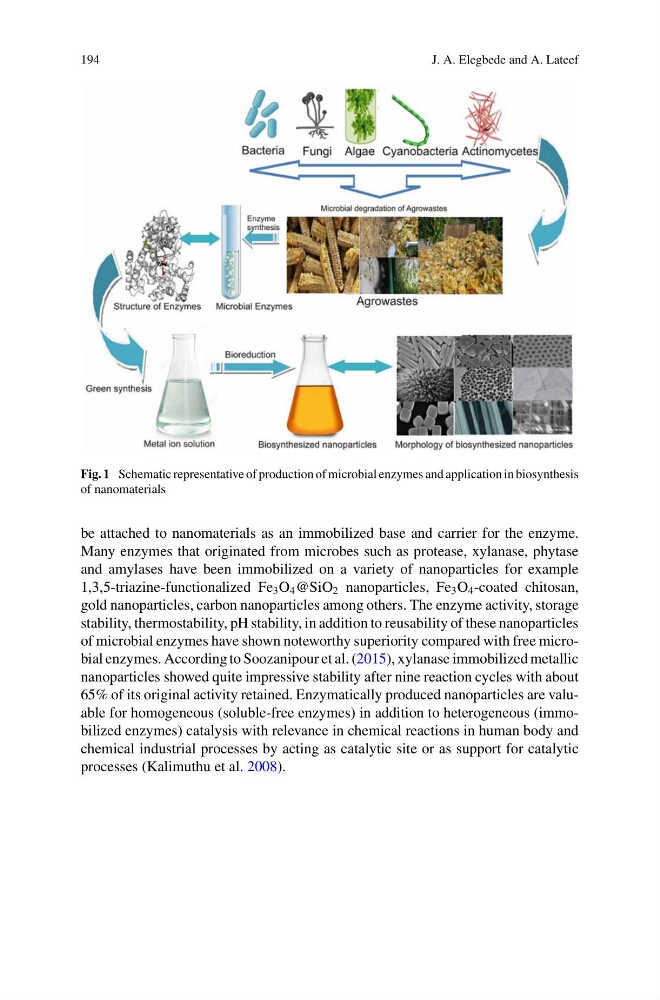
Fig. 1 Schematic representative of production of microbial enzymes and application in biosynthesis
of nanomaterials
be attached to nanomaterials as an immobilized base and carrier for the enzyme.
Many enzymes that originated from microbes such as protease, xylanase, phytase
and amylases have been immobilized on a variety of nanoparticles for example
1,3,5-triazine-functionalized Fe 3 O 4 @SiO 2 nanoparticles, Fe 3 O 4 -coated chitosan,
gold nanoparticles, carbon nanoparticles among others. The enzyme activity, storage
stability, thermostability, pH stability, in addition to reusability of these nanoparticles
of microbial enzymes have shown noteworthy superiority compared with free microbial enzymes. According to Soozanipour et al. (2015), xylanase immobilized metallic
nanoparticles showed quite impressive stability after nine reaction cycles with about
65% of its original activity retained. Enzymatically produced nanoparticles are valuable for homogeneous (soluble-free enzymes) in addition to heterogeneous (immobilized enzymes) catalysis with relevance in chemical reactions in human body and
chemical industrial processes by acting as catalytic site or as support for catalytic
processes (Kalimuthu et al. 2008).
J. A. Elegbede and A. Lateef
Fig. 1 Schematic representative of production of microbial enzymes and application in biosynthesis
of nanomaterials
be attached to nanomaterials as an immobilized base and carrier for the enzyme.
Many enzymes that originated from microbes such as protease, xylanase, phytase
and amylases have been immobilized on a variety of nanoparticles for example
1,3,5-triazine-functionalized Fe 3 O 4 @SiO 2 nanoparticles, Fe 3 O 4 -coated chitosan,
gold nanoparticles, carbon nanoparticles among others. The enzyme activity, storage
stability, thermostability, pH stability, in addition to reusability of these nanoparticles
of microbial enzymes have shown noteworthy superiority compared with free microbial enzymes. According to Soozanipour et al. (2015), xylanase immobilized metallic
nanoparticles showed quite impressive stability after nine reaction cycles with about
65% of its original activity retained. Enzymatically produced nanoparticles are valuable for homogeneous (soluble-free enzymes) in addition to heterogeneous (immobilized enzymes) catalysis with relevance in chemical reactions in human body and
chemical industrial processes by acting as catalytic site or as support for catalytic
processes (Kalimuthu et al. 2008).