

Nanotechnology in Bioprocess Development …
177
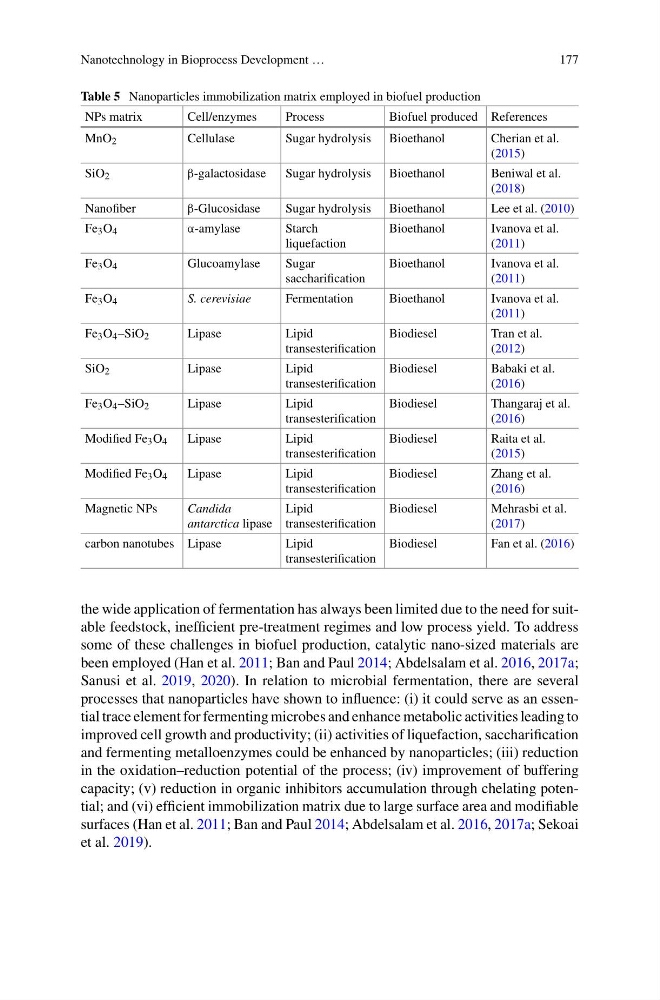
Table 5 Nanoparticles immobilization matrix employed in biofuel production
NPs matrix
Cell/enzymes
Process
Biofuel produced References
MnO 2
Cellulase
Sugar hydrolysis Bioethanol
Cherian et al.
(2015)
SiO 2
β-galactosidase
Sugar hydrolysis Bioethanol
Beniwal et al.
(2018)
Nanofiber
β-Glucosidase
Sugar hydrolysis Bioethanol
Lee et al. (2010)
Fe 3 O 4
α-amylase
Starch
liquefaction
Bioethanol
Ivanova et al.
(2011)
Fe 3 O 4
Glucoamylase
Sugar
saccharification
Bioethanol
Ivanova et al.
(2011)
Fe 3 O 4
S. cerevisiae
Fermentation
Bioethanol
Ivanova et al.
(2011)
Fe 3 O 4 –SiO 2
Lipase
Lipid
transesterification
Biodiesel
Tran et al.
(2012)
SiO 2
Lipase
Lipid
transesterification
Biodiesel
Babaki et al.
(2016)
Fe 3 O 4 –SiO 2
Lipase
Lipid
transesterification
Biodiesel
Thangaraj et al.
(2016)
Modified Fe 3 O 4
Lipase
Lipid
transesterification
Biodiesel
Raita et al.
(2015)
Modified Fe 3 O 4
Lipase
Lipid
transesterification
Biodiesel
Zhang et al.
(2016)
Magnetic NPs
Candida
antarctica lipase
Lipid
transesterification
Biodiesel
Mehrasbi et al.
(2017)
carbon nanotubes Lipase
Lipid
transesterification
Biodiesel
Fan et al. (2016)
the wide application of fermentation has always been limited due to the need for suitable feedstock, inefficient pre-treatment regimes and low process yield. To address
some of these challenges in biofuel production, catalytic nano-sized materials are
been employed (Han et al. 2011; Ban and Paul 2014; Abdelsalam et al. 2016, 2017a;
Sanusi et al. 2019, 2020). In relation to microbial fermentation, there are several
processes that nanoparticles have shown to influence: (i) it could serve as an essential trace element for fermenting microbes and enhance metabolic activities leading to
improved cell growth and productivity; (ii) activities of liquefaction, saccharification
and fermenting metalloenzymes could be enhanced by nanoparticles; (iii) reduction
in the oxidation–reduction potential of the process; (iv) improvement of buffering
capacity; (v) reduction in organic inhibitors accumulation through chelating potential; and (vi) efficient immobilization matrix due to large surface area and modifiable
surfaces (Han et al. 2011; Ban and Paul 2014; Abdelsalam et al. 2016, 2017a; Sekoai
et al. 2019).
177
Table 5 Nanoparticles immobilization matrix employed in biofuel production
NPs matrix
Cell/enzymes
Process
Biofuel produced References
MnO 2
Cellulase
Sugar hydrolysis Bioethanol
Cherian et al.
(2015)
SiO 2
β-galactosidase
Sugar hydrolysis Bioethanol
Beniwal et al.
(2018)
Nanofiber
β-Glucosidase
Sugar hydrolysis Bioethanol
Lee et al. (2010)
Fe 3 O 4
α-amylase
Starch
liquefaction
Bioethanol
Ivanova et al.
(2011)
Fe 3 O 4
Glucoamylase
Sugar
saccharification
Bioethanol
Ivanova et al.
(2011)
Fe 3 O 4
S. cerevisiae
Fermentation
Bioethanol
Ivanova et al.
(2011)
Fe 3 O 4 –SiO 2
Lipase
Lipid
transesterification
Biodiesel
Tran et al.
(2012)
SiO 2
Lipase
Lipid
transesterification
Biodiesel
Babaki et al.
(2016)
Fe 3 O 4 –SiO 2
Lipase
Lipid
transesterification
Biodiesel
Thangaraj et al.
(2016)
Modified Fe 3 O 4
Lipase
Lipid
transesterification
Biodiesel
Raita et al.
(2015)
Modified Fe 3 O 4
Lipase
Lipid
transesterification
Biodiesel
Zhang et al.
(2016)
Magnetic NPs
Candida
antarctica lipase
Lipid
transesterification
Biodiesel
Mehrasbi et al.
(2017)
carbon nanotubes Lipase
Lipid
transesterification
Biodiesel
Fan et al. (2016)
the wide application of fermentation has always been limited due to the need for suitable feedstock, inefficient pre-treatment regimes and low process yield. To address
some of these challenges in biofuel production, catalytic nano-sized materials are
been employed (Han et al. 2011; Ban and Paul 2014; Abdelsalam et al. 2016, 2017a;
Sanusi et al. 2019, 2020). In relation to microbial fermentation, there are several
processes that nanoparticles have shown to influence: (i) it could serve as an essential trace element for fermenting microbes and enhance metabolic activities leading to
improved cell growth and productivity; (ii) activities of liquefaction, saccharification
and fermenting metalloenzymes could be enhanced by nanoparticles; (iii) reduction
in the oxidation–reduction potential of the process; (iv) improvement of buffering
capacity; (v) reduction in organic inhibitors accumulation through chelating potential; and (vi) efficient immobilization matrix due to large surface area and modifiable
surfaces (Han et al. 2011; Ban and Paul 2014; Abdelsalam et al. 2016, 2017a; Sekoai
et al. 2019).