

Nanotechnology in Bioprocess Development …
175
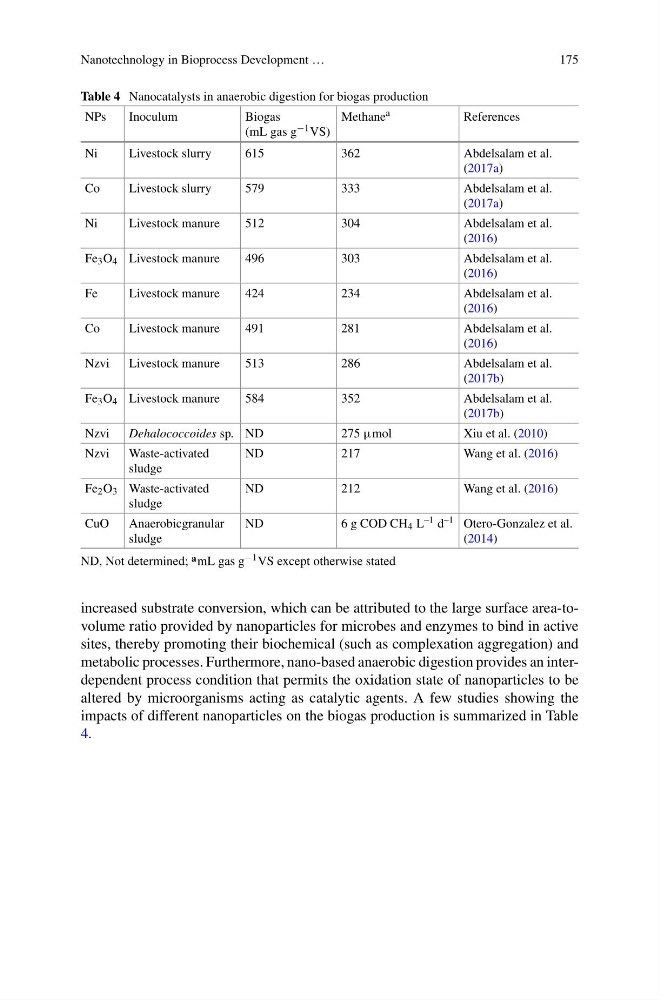
Table 4 Nanocatalysts in anaerobic digestion for biogas production
NPs
Inoculum
Biogas
(mL gas g −1 VS)
Methane a
References
Ni
Livestock slurry
615
362
Abdelsalam et al.
(2017a)
Co
Livestock slurry
579
333
Abdelsalam et al.
(2017a)
Ni
Livestock manure
512
304
Abdelsalam et al.
(2016)
Fe 3 O 4 Livestock manure
496
303
Abdelsalam et al.
(2016)
Fe
Livestock manure
424
234
Abdelsalam et al.
(2016)
Co
Livestock manure
491
281
Abdelsalam et al.
(2016)
Nzvi
Livestock manure
513
286
Abdelsalam et al.
(2017b)
Fe 3 O 4 Livestock manure
584
352
Abdelsalam et al.
(2017b)
Nzvi
Dehalococcoides sp. ND
275 μmol
Xiu et al. (2010)
Nzvi
Waste-activated
sludge
ND
217
Wang et al. (2016)
Fe 2 O 3 Waste-activated
sludge
ND
212
Wang et al. (2016)
CuO
Anaerobicgranular
sludge
ND
6 g COD CH 4 L –1 d –1 Otero-Gonzalez et al.
(2014)
ND, Not determined; a mL gas g −1 VS except otherwise stated
increased substrate conversion, which can be attributed to the large surface area-tovolume ratio provided by nanoparticles for microbes and enzymes to bind in active
sites, thereby promoting their biochemical (such as complexation aggregation) and
metabolic processes. Furthermore, nano-based anaerobic digestion provides an interdependent process condition that permits the oxidation state of nanoparticles to be
altered by microorganisms acting as catalytic agents. A few studies showing the
impacts of different nanoparticles on the biogas production is summarized in Table
4.
175
Table 4 Nanocatalysts in anaerobic digestion for biogas production
NPs
Inoculum
Biogas
(mL gas g −1 VS)
Methane a
References
Ni
Livestock slurry
615
362
Abdelsalam et al.
(2017a)
Co
Livestock slurry
579
333
Abdelsalam et al.
(2017a)
Ni
Livestock manure
512
304
Abdelsalam et al.
(2016)
Fe 3 O 4 Livestock manure
496
303
Abdelsalam et al.
(2016)
Fe
Livestock manure
424
234
Abdelsalam et al.
(2016)
Co
Livestock manure
491
281
Abdelsalam et al.
(2016)
Nzvi
Livestock manure
513
286
Abdelsalam et al.
(2017b)
Fe 3 O 4 Livestock manure
584
352
Abdelsalam et al.
(2017b)
Nzvi
Dehalococcoides sp. ND
275 μmol
Xiu et al. (2010)
Nzvi
Waste-activated
sludge
ND
217
Wang et al. (2016)
Fe 2 O 3 Waste-activated
sludge
ND
212
Wang et al. (2016)
CuO
Anaerobicgranular
sludge
ND
6 g COD CH 4 L –1 d –1 Otero-Gonzalez et al.
(2014)
ND, Not determined; a mL gas g −1 VS except otherwise stated
increased substrate conversion, which can be attributed to the large surface area-tovolume ratio provided by nanoparticles for microbes and enzymes to bind in active
sites, thereby promoting their biochemical (such as complexation aggregation) and
metabolic processes. Furthermore, nano-based anaerobic digestion provides an interdependent process condition that permits the oxidation state of nanoparticles to be
altered by microorganisms acting as catalytic agents. A few studies showing the
impacts of different nanoparticles on the biogas production is summarized in Table
4.