

salts, ambient temperature molten salts, ionic melts, ionic fluids, fused salts, liquid
salts, ionic glasses, or neoteric solvents (Wilkes 2002). Room temperature ionic
liquids are salts which are in liquid state at or below room temperature. The
structures of common cations and anions of ionic liquids are presented in
Fig. 12.2. Ionic liquids are gaining worldwide acknowledgement from researchers
as well as people in the industries for a large number of applications (Heintz and
Wertz 2006).
Depending on the cation and anion, the characteristics of ionic liquids, e.g.,
viscosity, solubility, and cloud point, may differ. The main benefit of ionic liquids
is the provision of the replacement of anion that enables developing compounds with
characteristics necessary for specific application. These tuned salts are referred to as
task-specific ionic liquids/functionalized ionic liquids. Moreover, non-volatility,
non-flammability, and better thermal stability make ionic liquids very attractive for
industrial applications. Ionic liquids also have excellent features for removal of
organic pollutants and metal ions because of its low volatility, chemical stability,
and chelating abilities (Domanska and Rekawek 2009; Egorov et al. 2010; RegelRosocka and Wisniewski 2011). Ionic liquids consist of loosely coordinating bulky
ions with the polarities comparable to alcohols. In addition to negligible vapor
pressure, ionic liquids are nonexplosive and nonflammable. Ionic liquids have
application in fields such as electrochemical, photo-degradation of organic compounds, catalysis and/or reaction media, drug delivery, biotransformation, solar
cells, and various areas of separations (Patel and Lee 2012). The tailored ionic
liquids used in reaction media and separation processes are reported to show better
activity, selectivity, yields, stability, and environmental safety than conventional
solvents (Dietz 2006; Han and Row 2010; Bollin and Viamajala 2012). An overview
of physical properties such as density and viscosity of selected ionic liquids used
in separations are presented in Table 12.1 (Han and Row 2010). The design ability
of the functionalized ionic liquids/task-specific ionic liquids provides better
Waste water
Waste water + IL
Application of IL in waste water
Treatment
Recovery of IL
Recovery of IL
Removal of IL
from treated
water
Effluent
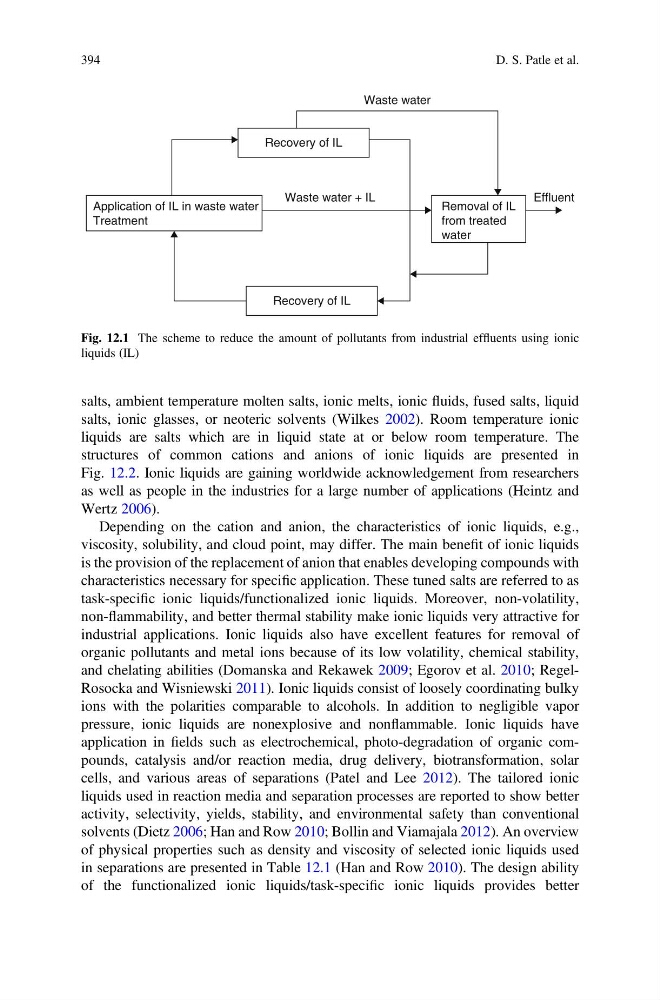
Fig. 12.1 The scheme to reduce the amount of pollutants from industrial effluents using ionic
liquids (IL)
394
D. S. Patle et al.
salts, ionic glasses, or neoteric solvents (Wilkes 2002). Room temperature ionic
liquids are salts which are in liquid state at or below room temperature. The
structures of common cations and anions of ionic liquids are presented in
Fig. 12.2. Ionic liquids are gaining worldwide acknowledgement from researchers
as well as people in the industries for a large number of applications (Heintz and
Wertz 2006).
Depending on the cation and anion, the characteristics of ionic liquids, e.g.,
viscosity, solubility, and cloud point, may differ. The main benefit of ionic liquids
is the provision of the replacement of anion that enables developing compounds with
characteristics necessary for specific application. These tuned salts are referred to as
task-specific ionic liquids/functionalized ionic liquids. Moreover, non-volatility,
non-flammability, and better thermal stability make ionic liquids very attractive for
industrial applications. Ionic liquids also have excellent features for removal of
organic pollutants and metal ions because of its low volatility, chemical stability,
and chelating abilities (Domanska and Rekawek 2009; Egorov et al. 2010; RegelRosocka and Wisniewski 2011). Ionic liquids consist of loosely coordinating bulky
ions with the polarities comparable to alcohols. In addition to negligible vapor
pressure, ionic liquids are nonexplosive and nonflammable. Ionic liquids have
application in fields such as electrochemical, photo-degradation of organic compounds, catalysis and/or reaction media, drug delivery, biotransformation, solar
cells, and various areas of separations (Patel and Lee 2012). The tailored ionic
liquids used in reaction media and separation processes are reported to show better
activity, selectivity, yields, stability, and environmental safety than conventional
solvents (Dietz 2006; Han and Row 2010; Bollin and Viamajala 2012). An overview
of physical properties such as density and viscosity of selected ionic liquids used
in separations are presented in Table 12.1 (Han and Row 2010). The design ability
of the functionalized ionic liquids/task-specific ionic liquids provides better
Waste water
Waste water + IL
Application of IL in waste water
Treatment
Recovery of IL
Recovery of IL
Removal of IL
from treated
water
Effluent
Fig. 12.1 The scheme to reduce the amount of pollutants from industrial effluents using ionic
liquids (IL)
394
D. S. Patle et al.