

absorption of UV range, the band energy gap of photocatalyst should be lower than
the UV energy light. The metal oxide having lesser energy of band gap must be
reconstructed using cocrystal additives for proper water molecules splitting. TiO 2
with particles loading of Pt, RuO 2 , NaOH, and Na 2 CO 3 into photo-cocrystal TiO 2 /Pt
raises the water splitting activity (Duonghong et al. 1981; Akihiko et al. 1987).
Moreover, coupling of TiO 2 with some second semiconductors of metal oxides such
as SnO 2 , Ag x O, and ZrO 2 improves the photocatalytic efficiency. Therefore, the
useful formed of heterostructures have higher photocatalytic ability of hydrogen
production from an aqueous media including electron donors (Park and Kang 2007;
Yuan et al. 2009). Metal oxides based on Nb like Nb 2 O 5 with band gap ¼ 3.4 eV can
improved photocatalytic hydrogen evolution through coupling of Pt (Chen et al.
2007). The photoactivated splitting efficiency of water by the metal oxides of Ga 2 O 3
with band gap ¼ 4.6 eV and CeO 2 with d
10 electronic configuration of metal ions is
highly enhanced when coupled with Zn, Sr, Cr, Ta, Ba, Ca, and RuO 2 (Yanagida
et al. 2004; Kadowaki et al. 2007).
Ternary Metal Oxides
Ternary metal oxide based on Ti with interlayered additives of TiO 2 shows efficient
splitting reaction of water under UV light. The titanates with layered structures such
as K 2 Ti 4 O 9 , Na 2 Ti 3 O 7 , and K 2 Ti 2 O 5 have enough photoactivity to hydrogen production via splitting reaction of water (Shibata et al. 1987). LaTiO 3 incorporated
with NO- and Ba-doped in the presence of additive of alkaline hydroxide show
permanent increasing of photocatalytic water splitting (Kim et al. 2005a). SrTiO 3
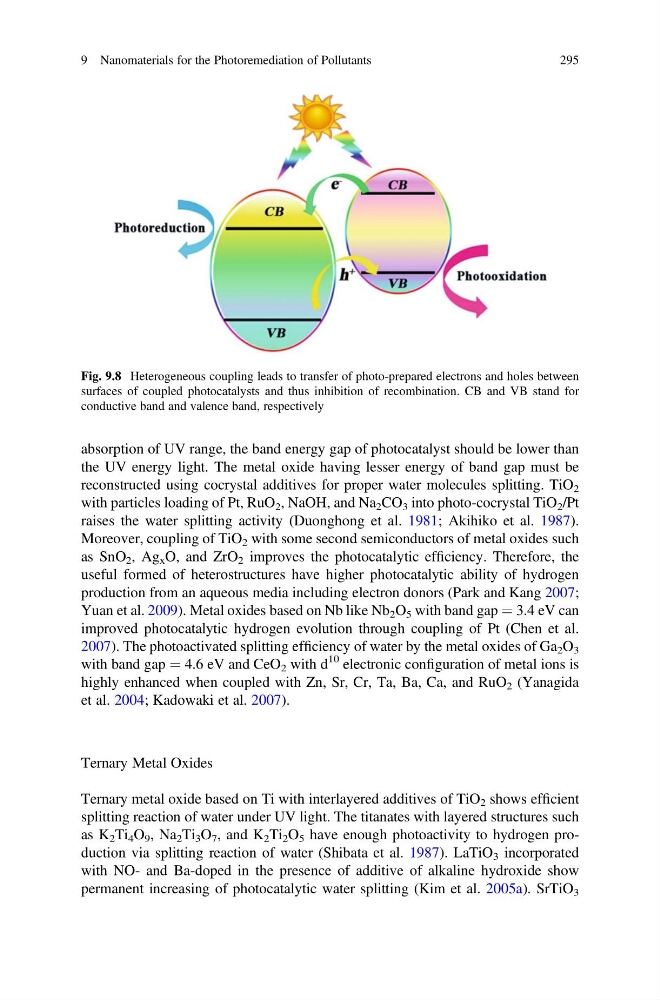
Fig. 9.8 Heterogeneous coupling leads to transfer of photo-prepared electrons and holes between
surfaces of coupled photocatalysts and thus inhibition of recombination. CB and VB stand for
conductive band and valence band, respectively
9 Nanomaterials for the Photoremediation of Pollutants
295
the UV energy light. The metal oxide having lesser energy of band gap must be
reconstructed using cocrystal additives for proper water molecules splitting. TiO 2
with particles loading of Pt, RuO 2 , NaOH, and Na 2 CO 3 into photo-cocrystal TiO 2 /Pt
raises the water splitting activity (Duonghong et al. 1981; Akihiko et al. 1987).
Moreover, coupling of TiO 2 with some second semiconductors of metal oxides such
as SnO 2 , Ag x O, and ZrO 2 improves the photocatalytic efficiency. Therefore, the
useful formed of heterostructures have higher photocatalytic ability of hydrogen
production from an aqueous media including electron donors (Park and Kang 2007;
Yuan et al. 2009). Metal oxides based on Nb like Nb 2 O 5 with band gap ¼ 3.4 eV can
improved photocatalytic hydrogen evolution through coupling of Pt (Chen et al.
2007). The photoactivated splitting efficiency of water by the metal oxides of Ga 2 O 3
with band gap ¼ 4.6 eV and CeO 2 with d
10 electronic configuration of metal ions is
highly enhanced when coupled with Zn, Sr, Cr, Ta, Ba, Ca, and RuO 2 (Yanagida
et al. 2004; Kadowaki et al. 2007).
Ternary Metal Oxides
Ternary metal oxide based on Ti with interlayered additives of TiO 2 shows efficient
splitting reaction of water under UV light. The titanates with layered structures such
as K 2 Ti 4 O 9 , Na 2 Ti 3 O 7 , and K 2 Ti 2 O 5 have enough photoactivity to hydrogen production via splitting reaction of water (Shibata et al. 1987). LaTiO 3 incorporated
with NO- and Ba-doped in the presence of additive of alkaline hydroxide show
permanent increasing of photocatalytic water splitting (Kim et al. 2005a). SrTiO 3
Fig. 9.8 Heterogeneous coupling leads to transfer of photo-prepared electrons and holes between
surfaces of coupled photocatalysts and thus inhibition of recombination. CB and VB stand for
conductive band and valence band, respectively
9 Nanomaterials for the Photoremediation of Pollutants
295