

effective in the disinfection process than hydroxyl radical and superoxide anion
radicals due to the high span time to damage the outer membrane and cell wall of the
pathogenic microbes because the existence of the pathogenic microbes depends on
these organelles. Furthermore, the relationship between the gap energy with the configuration (i.e., heterojunction and intra-gap states) as well as the microstructure is a
crucial factor in increasing the performance of the photocatalytic materials. However, nanostructured photocatalytic materials such as zero-dimensional,
one-dimensional, and two-dimensional coupled with ultrafine particle materials
have been reported to show high efficiency to select the preferred reactive species
than the bulk materials. This is depending upon the design and the morphology of
the nanostructured materials (Gao et al. 2007; Kong et al. 2010; Lu et al. 2008;
Naveenraj et al. 2015; Zhang et al. 2006, 2018). Consequently, understanding the
application of nanostructured photocatalytic materials in water disinfection and
water purification gets increasing attention in the scientific community, even if
there is a lack of published results dealing with the use of nanostructured as
photocatalytic material.
The objective of this book chapter is to review the progress of photocatalytic
nanomaterials for water disinfection under both ultraviolet and visible light irradiations. The assessment of the current status of the preparation, characterization,
design, and application of highly efficient photocatalytic nanomaterials such as
zero-dimensional, one-dimensional, and two-dimensional as well as supported catalysts for water disinfection and the challenges and perspectives for further
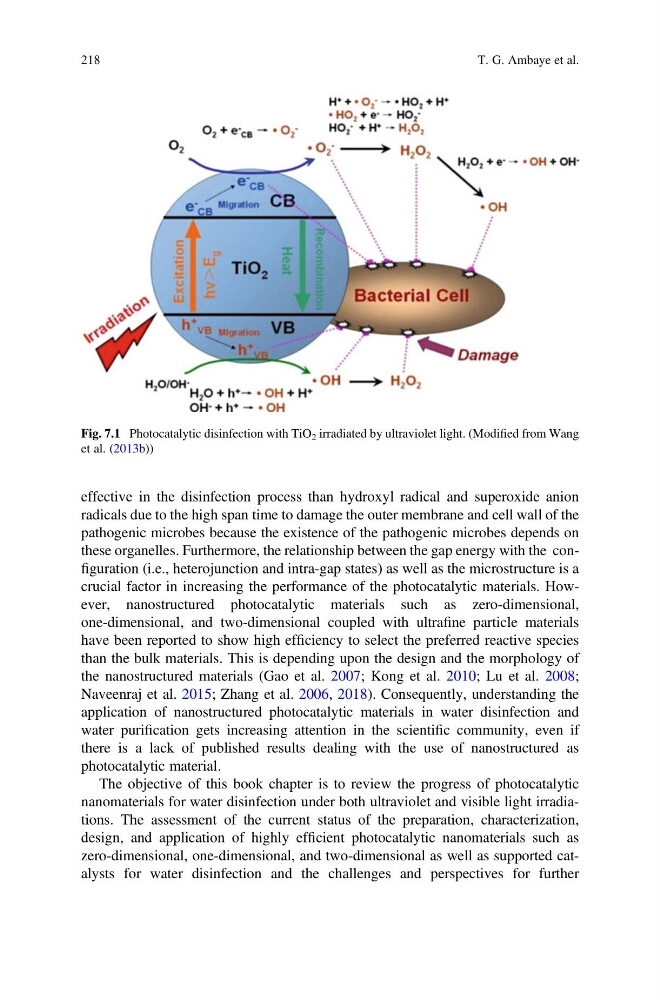
Fig. 7.1 Photocatalytic disinfection with TiO 2 irradiated by ultraviolet light. (Modified from Wang
et al. (2013b))
218
T. G. Ambaye et al.
radicals due to the high span time to damage the outer membrane and cell wall of the
pathogenic microbes because the existence of the pathogenic microbes depends on
these organelles. Furthermore, the relationship between the gap energy with the configuration (i.e., heterojunction and intra-gap states) as well as the microstructure is a
crucial factor in increasing the performance of the photocatalytic materials. However, nanostructured photocatalytic materials such as zero-dimensional,
one-dimensional, and two-dimensional coupled with ultrafine particle materials
have been reported to show high efficiency to select the preferred reactive species
than the bulk materials. This is depending upon the design and the morphology of
the nanostructured materials (Gao et al. 2007; Kong et al. 2010; Lu et al. 2008;
Naveenraj et al. 2015; Zhang et al. 2006, 2018). Consequently, understanding the
application of nanostructured photocatalytic materials in water disinfection and
water purification gets increasing attention in the scientific community, even if
there is a lack of published results dealing with the use of nanostructured as
photocatalytic material.
The objective of this book chapter is to review the progress of photocatalytic
nanomaterials for water disinfection under both ultraviolet and visible light irradiations. The assessment of the current status of the preparation, characterization,
design, and application of highly efficient photocatalytic nanomaterials such as
zero-dimensional, one-dimensional, and two-dimensional as well as supported catalysts for water disinfection and the challenges and perspectives for further
Fig. 7.1 Photocatalytic disinfection with TiO 2 irradiated by ultraviolet light. (Modified from Wang
et al. (2013b))
218
T. G. Ambaye et al.