

heterogeneous Fenton reaction – where semiconductors are used as catalysts in the
reaction such as ZnO and TiO 2 . To utilize the visible light, sometimes these oxides
are doped with transition metals such as Fe, Au, Ag, Ni, and Mg. Recently, numerous literatures have reported the use of combined advanced oxidation processes or
hybrid advanced oxidation processes for treatment of wastewater, and it has been
found to be more effective for complete mineralization of organic pollutants. In these
processes, two or more conventional advanced oxidation processes are applied
simultaneously. The most widely used hybrid advanced oxidation techniques are
photo-Fenton, photocatalysis–Fenton, photo-Fenton–ferrioxalate, ozone photolysis,
and ozone microbubble system (Monteagudo et al. 2008, 2013, 2015; Katsumata
et al. 2010; Kusic et al. 2011; Pang and Abdullah 2013; Nie et al. 2014; Khuntia et al.
2014; Wang et al. 2015).
Another most effective and efficient advanced oxidation process is sonolysis
process – where the wastewater is exposed to ultrasound wave irradiation. This
technique is relatively new and advanced for complete mineralization of emerging
pollutants’ molecules from wastewater through generation of extremely energetic
species during transient collapse of cavitation bubbles. Sonolysis process has been
successfully implemented for degradation of a large number of toxic and recalcitrant
organic pollutants (Adewuyi, 2001, 2005a, b). During the transient cavitation and at
the extreme condition, several radicals are formed such as
• O,
•
OH, HO
•
2 , and H
•
.
Cavitation is the phenomenon of nucleation, growth, and implosive collapse of tiny
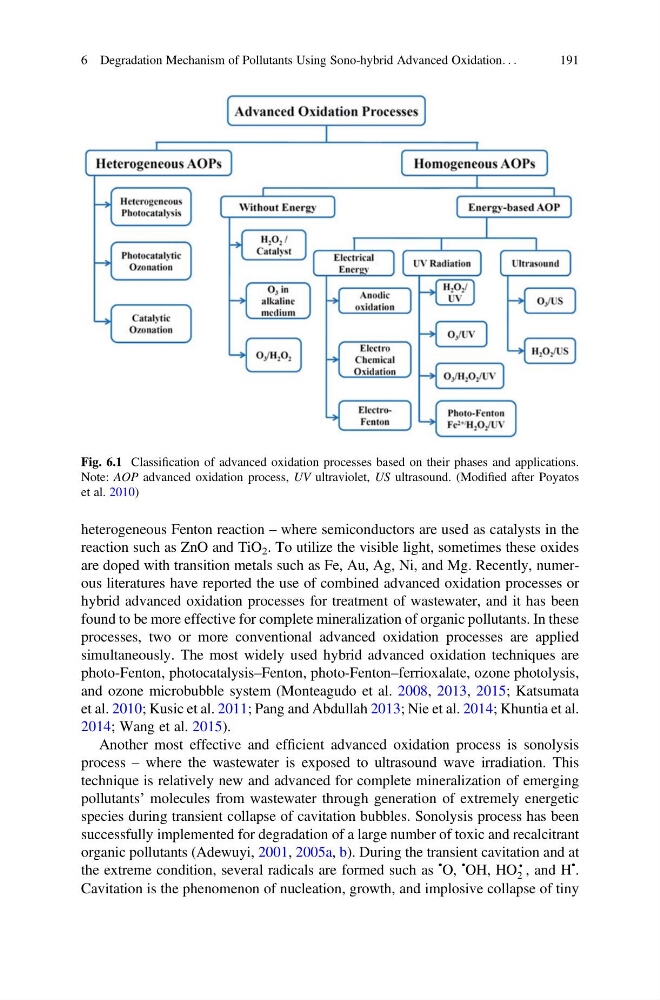
Fig. 6.1 Classification of advanced oxidation processes based on their phases and applications.
Note: AOP advanced oxidation process, UV ultraviolet, US ultrasound. (Modified after Poyatos
et al. 2010)
6 Degradation Mechanism of Pollutants Using Sono-hybrid Advanced Oxidation. . .
191
reaction such as ZnO and TiO 2 . To utilize the visible light, sometimes these oxides
are doped with transition metals such as Fe, Au, Ag, Ni, and Mg. Recently, numerous literatures have reported the use of combined advanced oxidation processes or
hybrid advanced oxidation processes for treatment of wastewater, and it has been
found to be more effective for complete mineralization of organic pollutants. In these
processes, two or more conventional advanced oxidation processes are applied
simultaneously. The most widely used hybrid advanced oxidation techniques are
photo-Fenton, photocatalysis–Fenton, photo-Fenton–ferrioxalate, ozone photolysis,
and ozone microbubble system (Monteagudo et al. 2008, 2013, 2015; Katsumata
et al. 2010; Kusic et al. 2011; Pang and Abdullah 2013; Nie et al. 2014; Khuntia et al.
2014; Wang et al. 2015).
Another most effective and efficient advanced oxidation process is sonolysis
process – where the wastewater is exposed to ultrasound wave irradiation. This
technique is relatively new and advanced for complete mineralization of emerging
pollutants’ molecules from wastewater through generation of extremely energetic
species during transient collapse of cavitation bubbles. Sonolysis process has been
successfully implemented for degradation of a large number of toxic and recalcitrant
organic pollutants (Adewuyi, 2001, 2005a, b). During the transient cavitation and at
the extreme condition, several radicals are formed such as
• O,
•
OH, HO
•
2 , and H
•
.
Cavitation is the phenomenon of nucleation, growth, and implosive collapse of tiny
Fig. 6.1 Classification of advanced oxidation processes based on their phases and applications.
Note: AOP advanced oxidation process, UV ultraviolet, US ultrasound. (Modified after Poyatos
et al. 2010)
6 Degradation Mechanism of Pollutants Using Sono-hybrid Advanced Oxidation. . .
191