

components of heterojunction were also compared with nanocomposites. The
photocatalytic abilities of TiO 2 , ZnO and graphene oxide were examined at lower
initial concentration of methyl orange by varying the size of nanoparticles. The
nanoparticles of pristine metal oxides and graphene oxide with size less than 25 nm
displayed effectual photocatalytic efficiency, while the ternary nanocomposites
GO-TiO 2 -ZnO showed best methyl orange degradation efficiency.
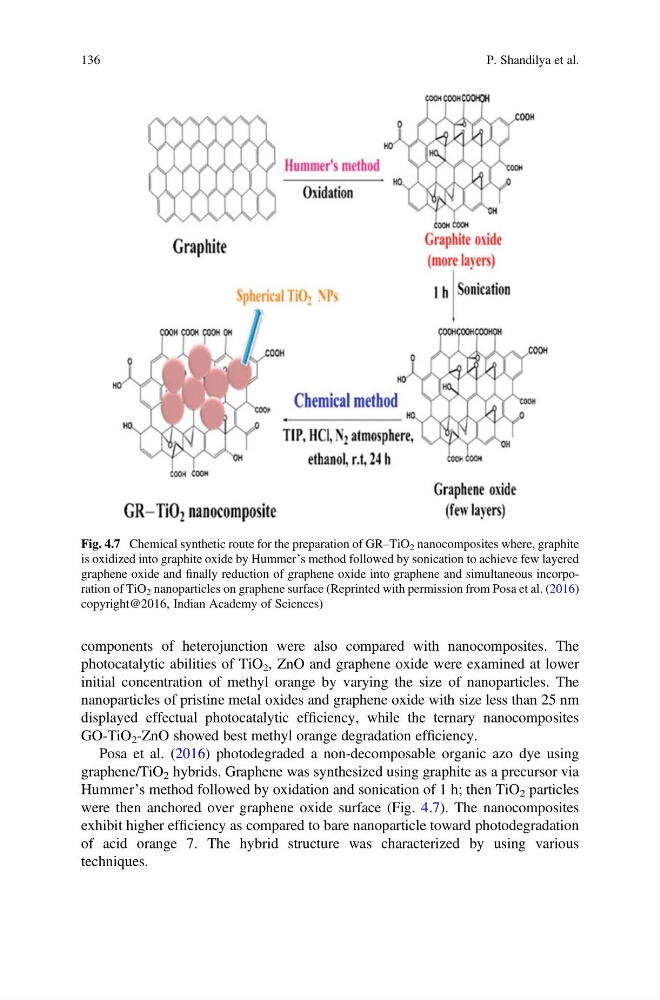
Posa et al. (2016) photodegraded a non-decomposable organic azo dye using
graphene/TiO 2 hybrids. Graphene was synthesized using graphite as a precursor via
Hummer’s method followed by oxidation and sonication of 1 h; then TiO 2 particles
were then anchored over graphene oxide surface (Fig. 4.7). The nanocomposites
exhibit higher efficiency as compared to bare nanoparticle toward photodegradation
of acid orange 7. The hybrid structure was characterized by using various
techniques.
Fig. 4.7 Chemical synthetic route for the preparation of GR–TiO 2 nanocomposites where, graphite
is oxidized into graphite oxide by Hummer’s method followed by sonication to achieve few layered
graphene oxide and finally reduction of graphene oxide into graphene and simultaneous incorporation of TiO 2 nanoparticles on graphene surface (Reprinted with permission from Posa et al. (2016)
copyright@2016, Indian Academy of Sciences)
136
P. Shandilya et al.
photocatalytic abilities of TiO 2 , ZnO and graphene oxide were examined at lower
initial concentration of methyl orange by varying the size of nanoparticles. The
nanoparticles of pristine metal oxides and graphene oxide with size less than 25 nm
displayed effectual photocatalytic efficiency, while the ternary nanocomposites
GO-TiO 2 -ZnO showed best methyl orange degradation efficiency.
Posa et al. (2016) photodegraded a non-decomposable organic azo dye using
graphene/TiO 2 hybrids. Graphene was synthesized using graphite as a precursor via
Hummer’s method followed by oxidation and sonication of 1 h; then TiO 2 particles
were then anchored over graphene oxide surface (Fig. 4.7). The nanocomposites
exhibit higher efficiency as compared to bare nanoparticle toward photodegradation
of acid orange 7. The hybrid structure was characterized by using various
techniques.
Fig. 4.7 Chemical synthetic route for the preparation of GR–TiO 2 nanocomposites where, graphite
is oxidized into graphite oxide by Hummer’s method followed by sonication to achieve few layered
graphene oxide and finally reduction of graphene oxide into graphene and simultaneous incorporation of TiO 2 nanoparticles on graphene surface (Reprinted with permission from Posa et al. (2016)
copyright@2016, Indian Academy of Sciences)
136
P. Shandilya et al.