

20 Does the Use of Local Knowledge in Complex Systems …
469
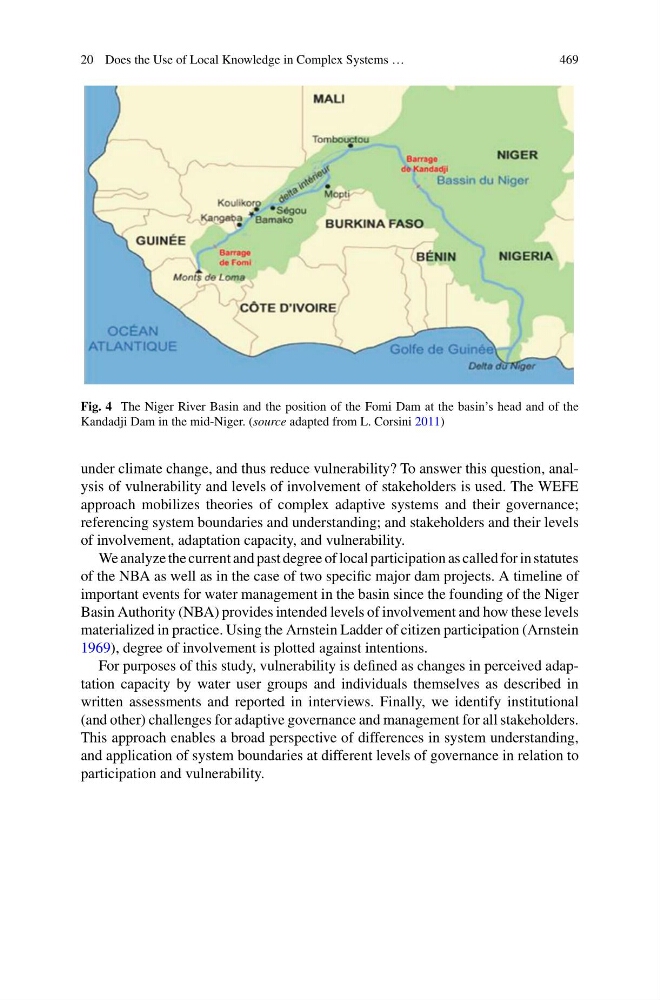
Fig. 4 The Niger River Basin and the position of the Fomi Dam at the basin’s head and of the
Kandadji Dam in the mid-Niger. (source adapted from L. Corsini 2011)
under climate change, and thus reduce vulnerability? To answer this question, analysis of vulnerability and levels of involvement of stakeholders is used. The WEFE
approach mobilizes theories of complex adaptive systems and their governance;
referencing system boundaries and understanding; and stakeholders and their levels
of involvement, adaptation capacity, and vulnerability.
We analyze the current and past degree of local participation as called for in statutes
of the NBA as well as in the case of two specific major dam projects. A timeline of
important events for water management in the basin since the founding of the Niger
Basin Authority (NBA) provides intended levels of involvement and how these levels
materialized in practice. Using the Arnstein Ladder of citizen participation (Arnstein
1969), degree of involvement is plotted against intentions.
For purposes of this study, vulnerability is defined as changes in perceived adaptation capacity by water user groups and individuals themselves as described in
written assessments and reported in interviews. Finally, we identify institutional
(and other) challenges for adaptive governance and management for all stakeholders.
This approach enables a broad perspective of differences in system understanding,
and application of system boundaries at different levels of governance in relation to
participation and vulnerability.
469
Fig. 4 The Niger River Basin and the position of the Fomi Dam at the basin’s head and of the
Kandadji Dam in the mid-Niger. (source adapted from L. Corsini 2011)
under climate change, and thus reduce vulnerability? To answer this question, analysis of vulnerability and levels of involvement of stakeholders is used. The WEFE
approach mobilizes theories of complex adaptive systems and their governance;
referencing system boundaries and understanding; and stakeholders and their levels
of involvement, adaptation capacity, and vulnerability.
We analyze the current and past degree of local participation as called for in statutes
of the NBA as well as in the case of two specific major dam projects. A timeline of
important events for water management in the basin since the founding of the Niger
Basin Authority (NBA) provides intended levels of involvement and how these levels
materialized in practice. Using the Arnstein Ladder of citizen participation (Arnstein
1969), degree of involvement is plotted against intentions.
For purposes of this study, vulnerability is defined as changes in perceived adaptation capacity by water user groups and individuals themselves as described in
written assessments and reported in interviews. Finally, we identify institutional
(and other) challenges for adaptive governance and management for all stakeholders.
This approach enables a broad perspective of differences in system understanding,
and application of system boundaries at different levels of governance in relation to
participation and vulnerability.