

15 Impacts of Climate Change on Water Resources …
349
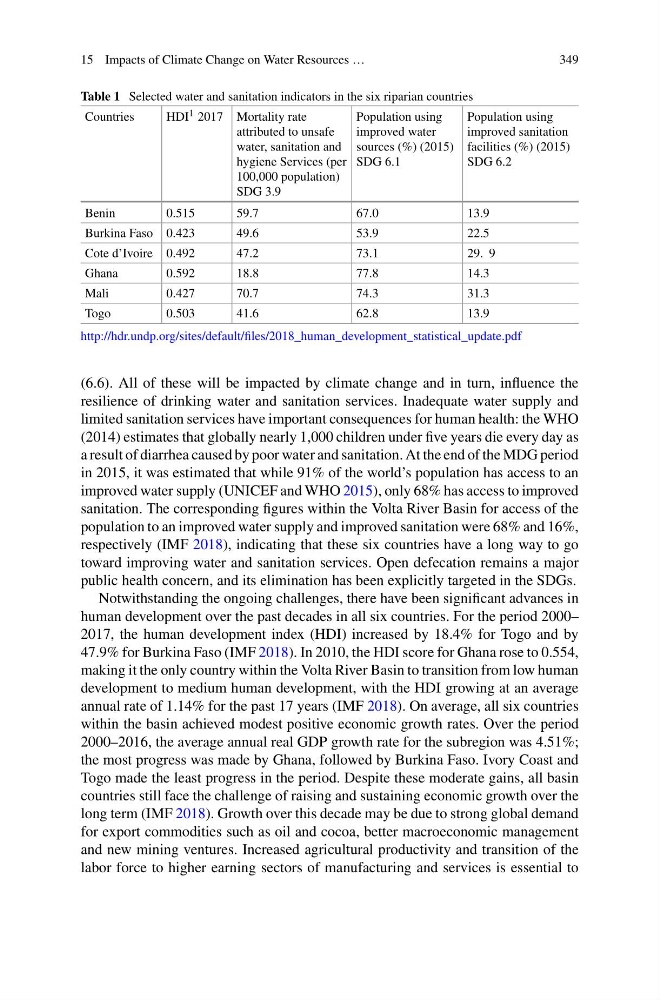
Table 1 Selected water and sanitation indicators in the six riparian countries
Countries
HDI 1 2017 Mortality rate
attributed to unsafe
water, sanitation and
hygiene Services (per
100,000 population)
SDG 3.9
Population using
improved water
sources (%) (2015)
SDG 6.1
Population using
improved sanitation
facilities (%) (2015)
SDG 6.2
Benin
0.515
59.7
67.0
13.9
Burkina Faso 0.423
49.6
53.9
22.5
Cote d’Ivoire 0.492
47.2
73.1
29. 9
Ghana
0.592
18.8
77.8
14.3
Mali
0.427
70.7
74.3
31.3
Togo
0.503
41.6
62.8
13.9
http://hdr.undp.org/sites/default/files/2018_human_development_statistical_update.pdf
(6.6). All of these will be impacted by climate change and in turn, influence the
resilience of drinking water and sanitation services. Inadequate water supply and
limited sanitation services have important consequences for human health: the WHO
(2014) estimates that globally nearly 1,000 children under five years die every day as
a result of diarrhea caused by poor water and sanitation. At the end of the MDG period
in 2015, it was estimated that while 91% of the world’s population has access to an
improved water supply (UNICEF and WHO 2015), only 68% has access to improved
sanitation. The corresponding figures within the Volta River Basin for access of the
population to an improved water supply and improved sanitation were 68% and 16%,
respectively (IMF 2018), indicating that these six countries have a long way to go
toward improving water and sanitation services. Open defecation remains a major
public health concern, and its elimination has been explicitly targeted in the SDGs.
Notwithstanding the ongoing challenges, there have been significant advances in
human development over the past decades in all six countries. For the period 2000–
2017, the human development index (HDI) increased by 18.4% for Togo and by
47.9% for Burkina Faso (IMF 2018). In 2010, the HDI score for Ghana rose to 0.554,
making it the only country within the Volta River Basin to transition from low human
development to medium human development, with the HDI growing at an average
annual rate of 1.14% for the past 17 years (IMF 2018). On average, all six countries
within the basin achieved modest positive economic growth rates. Over the period
2000–2016, the average annual real GDP growth rate for the subregion was 4.51%;
the most progress was made by Ghana, followed by Burkina Faso. Ivory Coast and
Togo made the least progress in the period. Despite these moderate gains, all basin
countries still face the challenge of raising and sustaining economic growth over the
long term (IMF 2018). Growth over this decade may be due to strong global demand
for export commodities such as oil and cocoa, better macroeconomic management
and new mining ventures. Increased agricultural productivity and transition of the
labor force to higher earning sectors of manufacturing and services is essential to
349
Table 1 Selected water and sanitation indicators in the six riparian countries
Countries
HDI 1 2017 Mortality rate
attributed to unsafe
water, sanitation and
hygiene Services (per
100,000 population)
SDG 3.9
Population using
improved water
sources (%) (2015)
SDG 6.1
Population using
improved sanitation
facilities (%) (2015)
SDG 6.2
Benin
0.515
59.7
67.0
13.9
Burkina Faso 0.423
49.6
53.9
22.5
Cote d’Ivoire 0.492
47.2
73.1
29. 9
Ghana
0.592
18.8
77.8
14.3
Mali
0.427
70.7
74.3
31.3
Togo
0.503
41.6
62.8
13.9
http://hdr.undp.org/sites/default/files/2018_human_development_statistical_update.pdf
(6.6). All of these will be impacted by climate change and in turn, influence the
resilience of drinking water and sanitation services. Inadequate water supply and
limited sanitation services have important consequences for human health: the WHO
(2014) estimates that globally nearly 1,000 children under five years die every day as
a result of diarrhea caused by poor water and sanitation. At the end of the MDG period
in 2015, it was estimated that while 91% of the world’s population has access to an
improved water supply (UNICEF and WHO 2015), only 68% has access to improved
sanitation. The corresponding figures within the Volta River Basin for access of the
population to an improved water supply and improved sanitation were 68% and 16%,
respectively (IMF 2018), indicating that these six countries have a long way to go
toward improving water and sanitation services. Open defecation remains a major
public health concern, and its elimination has been explicitly targeted in the SDGs.
Notwithstanding the ongoing challenges, there have been significant advances in
human development over the past decades in all six countries. For the period 2000–
2017, the human development index (HDI) increased by 18.4% for Togo and by
47.9% for Burkina Faso (IMF 2018). In 2010, the HDI score for Ghana rose to 0.554,
making it the only country within the Volta River Basin to transition from low human
development to medium human development, with the HDI growing at an average
annual rate of 1.14% for the past 17 years (IMF 2018). On average, all six countries
within the basin achieved modest positive economic growth rates. Over the period
2000–2016, the average annual real GDP growth rate for the subregion was 4.51%;
the most progress was made by Ghana, followed by Burkina Faso. Ivory Coast and
Togo made the least progress in the period. Despite these moderate gains, all basin
countries still face the challenge of raising and sustaining economic growth over the
long term (IMF 2018). Growth over this decade may be due to strong global demand
for export commodities such as oil and cocoa, better macroeconomic management
and new mining ventures. Increased agricultural productivity and transition of the
labor force to higher earning sectors of manufacturing and services is essential to