

318
B. Lèye et al.
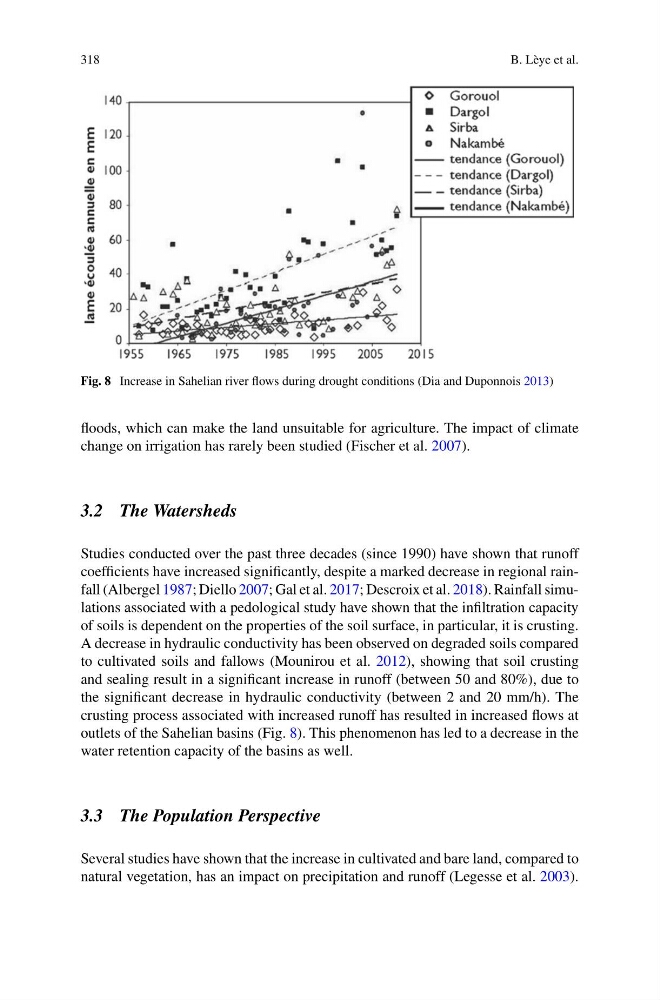
Fig. 8 Increase in Sahelian river flows during drought conditions (Dia and Duponnois 2013)
floods, which can make the land unsuitable for agriculture. The impact of climate
change on irrigation has rarely been studied (Fischer et al. 2007).
3.2 The Watersheds
Studies conducted over the past three decades (since 1990) have shown that runoff
coefficients have increased significantly, despite a marked decrease in regional rainfall (Albergel 1987; Diello 2007; Gal et al. 2017; Descroix et al. 2018). Rainfall simulations associated with a pedological study have shown that the infiltration capacity
of soils is dependent on the properties of the soil surface, in particular, it is crusting.
A decrease in hydraulic conductivity has been observed on degraded soils compared
to cultivated soils and fallows (Mounirou et al. 2012), showing that soil crusting
and sealing result in a significant increase in runoff (between 50 and 80%), due to
the significant decrease in hydraulic conductivity (between 2 and 20 mm/h). The
crusting process associated with increased runoff has resulted in increased flows at
outlets of the Sahelian basins (Fig. 8). This phenomenon has led to a decrease in the
water retention capacity of the basins as well.
3.3 The Population Perspective
Several studies have shown that the increase in cultivated and bare land, compared to
natural vegetation, has an impact on precipitation and runoff (Legesse et al. 2003).
B. Lèye et al.
Fig. 8 Increase in Sahelian river flows during drought conditions (Dia and Duponnois 2013)
floods, which can make the land unsuitable for agriculture. The impact of climate
change on irrigation has rarely been studied (Fischer et al. 2007).
3.2 The Watersheds
Studies conducted over the past three decades (since 1990) have shown that runoff
coefficients have increased significantly, despite a marked decrease in regional rainfall (Albergel 1987; Diello 2007; Gal et al. 2017; Descroix et al. 2018). Rainfall simulations associated with a pedological study have shown that the infiltration capacity
of soils is dependent on the properties of the soil surface, in particular, it is crusting.
A decrease in hydraulic conductivity has been observed on degraded soils compared
to cultivated soils and fallows (Mounirou et al. 2012), showing that soil crusting
and sealing result in a significant increase in runoff (between 50 and 80%), due to
the significant decrease in hydraulic conductivity (between 2 and 20 mm/h). The
crusting process associated with increased runoff has resulted in increased flows at
outlets of the Sahelian basins (Fig. 8). This phenomenon has led to a decrease in the
water retention capacity of the basins as well.
3.3 The Population Perspective
Several studies have shown that the increase in cultivated and bare land, compared to
natural vegetation, has an impact on precipitation and runoff (Legesse et al. 2003).