

7 A Framework for IWRM in the Water-Energy-Food …
159
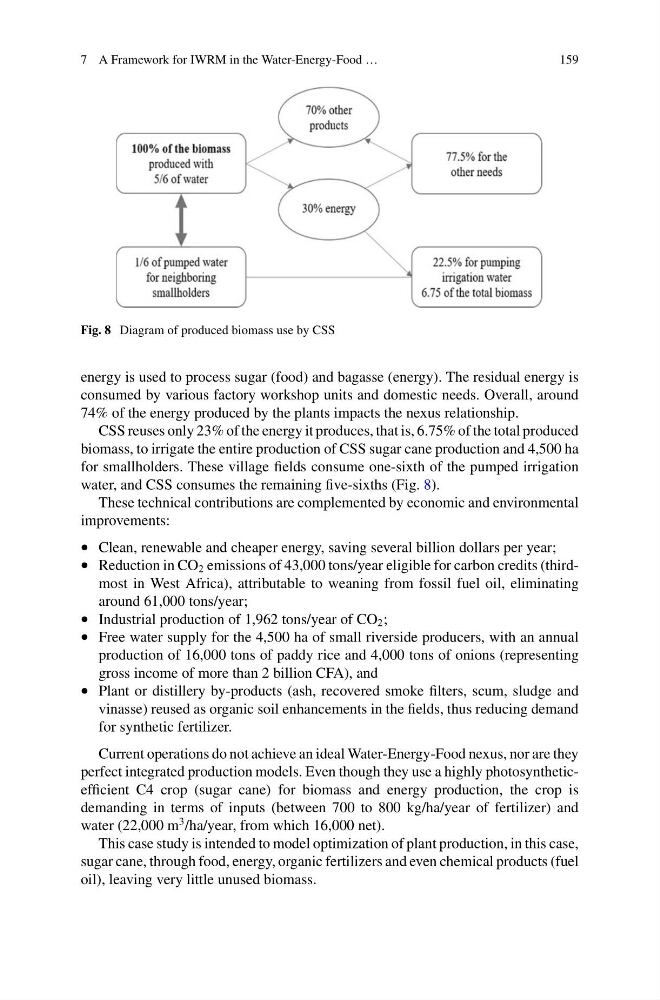
Fig. 8 Diagram of produced biomass use by CSS
energy is used to process sugar (food) and bagasse (energy). The residual energy is
consumed by various factory workshop units and domestic needs. Overall, around
74% of the energy produced by the plants impacts the nexus relationship.
CSS reuses only 23% of the energy it produces, that is, 6.75% of the total produced
biomass, to irrigate the entire production of CSS sugar cane production and 4,500 ha
for smallholders. These village fields consume one-sixth of the pumped irrigation
water, and CSS consumes the remaining five-sixths (Fig. 8).
These technical contributions are complemented by economic and environmental
improvements:
• Clean, renewable and cheaper energy, saving several billion dollars per year;
• Reduction in CO 2 emissions of 43,000 tons/year eligible for carbon credits (thirdmost in West Africa), attributable to weaning from fossil fuel oil, eliminating
around 61,000 tons/year;
• Industrial production of 1,962 tons/year of CO 2 ;
• Free water supply for the 4,500 ha of small riverside producers, with an annual
production of 16,000 tons of paddy rice and 4,000 tons of onions (representing
gross income of more than 2 billion CFA), and
• Plant or distillery by-products (ash, recovered smoke filters, scum, sludge and
vinasse) reused as organic soil enhancements in the fields, thus reducing demand
for synthetic fertilizer.
Current operations do not achieve an ideal Water-Energy-Food nexus, nor are they
perfect integrated production models. Even though they use a highly photosyntheticefficient C4 crop (sugar cane) for biomass and energy production, the crop is
demanding in terms of inputs (between 700 to 800 kg/ha/year of fertilizer) and
water (22,000 m
3 /ha/year, from which 16,000 net).
This case study is intended to model optimization of plant production, in this case,
sugar cane, through food, energy, organic fertilizers and even chemical products (fuel
oil), leaving very little unused biomass.
159
Fig. 8 Diagram of produced biomass use by CSS
energy is used to process sugar (food) and bagasse (energy). The residual energy is
consumed by various factory workshop units and domestic needs. Overall, around
74% of the energy produced by the plants impacts the nexus relationship.
CSS reuses only 23% of the energy it produces, that is, 6.75% of the total produced
biomass, to irrigate the entire production of CSS sugar cane production and 4,500 ha
for smallholders. These village fields consume one-sixth of the pumped irrigation
water, and CSS consumes the remaining five-sixths (Fig. 8).
These technical contributions are complemented by economic and environmental
improvements:
• Clean, renewable and cheaper energy, saving several billion dollars per year;
• Reduction in CO 2 emissions of 43,000 tons/year eligible for carbon credits (thirdmost in West Africa), attributable to weaning from fossil fuel oil, eliminating
around 61,000 tons/year;
• Industrial production of 1,962 tons/year of CO 2 ;
• Free water supply for the 4,500 ha of small riverside producers, with an annual
production of 16,000 tons of paddy rice and 4,000 tons of onions (representing
gross income of more than 2 billion CFA), and
• Plant or distillery by-products (ash, recovered smoke filters, scum, sludge and
vinasse) reused as organic soil enhancements in the fields, thus reducing demand
for synthetic fertilizer.
Current operations do not achieve an ideal Water-Energy-Food nexus, nor are they
perfect integrated production models. Even though they use a highly photosyntheticefficient C4 crop (sugar cane) for biomass and energy production, the crop is
demanding in terms of inputs (between 700 to 800 kg/ha/year of fertilizer) and
water (22,000 m
3 /ha/year, from which 16,000 net).
This case study is intended to model optimization of plant production, in this case,
sugar cane, through food, energy, organic fertilizers and even chemical products (fuel
oil), leaving very little unused biomass.