

6 Historic Climatic Variability and Change: The Importance …
133
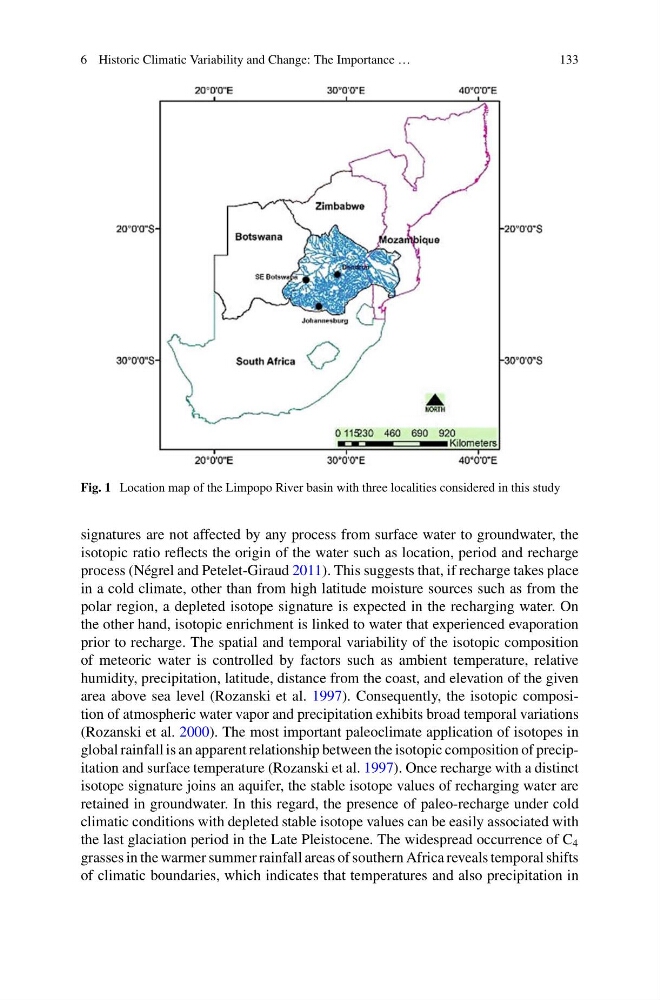
Fig. 1 Location map of the Limpopo River basin with three localities considered in this study
signatures are not affected by any process from surface water to groundwater, the
isotopic ratio reflects the origin of the water such as location, period and recharge
process (Négrel and Petelet-Giraud 2011). This suggests that, if recharge takes place
in a cold climate, other than from high latitude moisture sources such as from the
polar region, a depleted isotope signature is expected in the recharging water. On
the other hand, isotopic enrichment is linked to water that experienced evaporation
prior to recharge. The spatial and temporal variability of the isotopic composition
of meteoric water is controlled by factors such as ambient temperature, relative
humidity, precipitation, latitude, distance from the coast, and elevation of the given
area above sea level (Rozanski et al. 1997). Consequently, the isotopic composition of atmospheric water vapor and precipitation exhibits broad temporal variations
(Rozanski et al. 2000). The most important paleoclimate application of isotopes in
global rainfall is an apparent relationship between the isotopic composition of precipitation and surface temperature (Rozanski et al. 1997). Once recharge with a distinct
isotope signature joins an aquifer, the stable isotope values of recharging water are
retained in groundwater. In this regard, the presence of paleo-recharge under cold
climatic conditions with depleted stable isotope values can be easily associated with
the last glaciation period in the Late Pleistocene. The widespread occurrence of C 4
grasses in the warmer summer rainfall areas of southern Africa reveals temporal shifts
of climatic boundaries, which indicates that temperatures and also precipitation in
133
Fig. 1 Location map of the Limpopo River basin with three localities considered in this study
signatures are not affected by any process from surface water to groundwater, the
isotopic ratio reflects the origin of the water such as location, period and recharge
process (Négrel and Petelet-Giraud 2011). This suggests that, if recharge takes place
in a cold climate, other than from high latitude moisture sources such as from the
polar region, a depleted isotope signature is expected in the recharging water. On
the other hand, isotopic enrichment is linked to water that experienced evaporation
prior to recharge. The spatial and temporal variability of the isotopic composition
of meteoric water is controlled by factors such as ambient temperature, relative
humidity, precipitation, latitude, distance from the coast, and elevation of the given
area above sea level (Rozanski et al. 1997). Consequently, the isotopic composition of atmospheric water vapor and precipitation exhibits broad temporal variations
(Rozanski et al. 2000). The most important paleoclimate application of isotopes in
global rainfall is an apparent relationship between the isotopic composition of precipitation and surface temperature (Rozanski et al. 1997). Once recharge with a distinct
isotope signature joins an aquifer, the stable isotope values of recharging water are
retained in groundwater. In this regard, the presence of paleo-recharge under cold
climatic conditions with depleted stable isotope values can be easily associated with
the last glaciation period in the Late Pleistocene. The widespread occurrence of C 4
grasses in the warmer summer rainfall areas of southern Africa reveals temporal shifts
of climatic boundaries, which indicates that temperatures and also precipitation in