

112
S. Kusangaya et al.
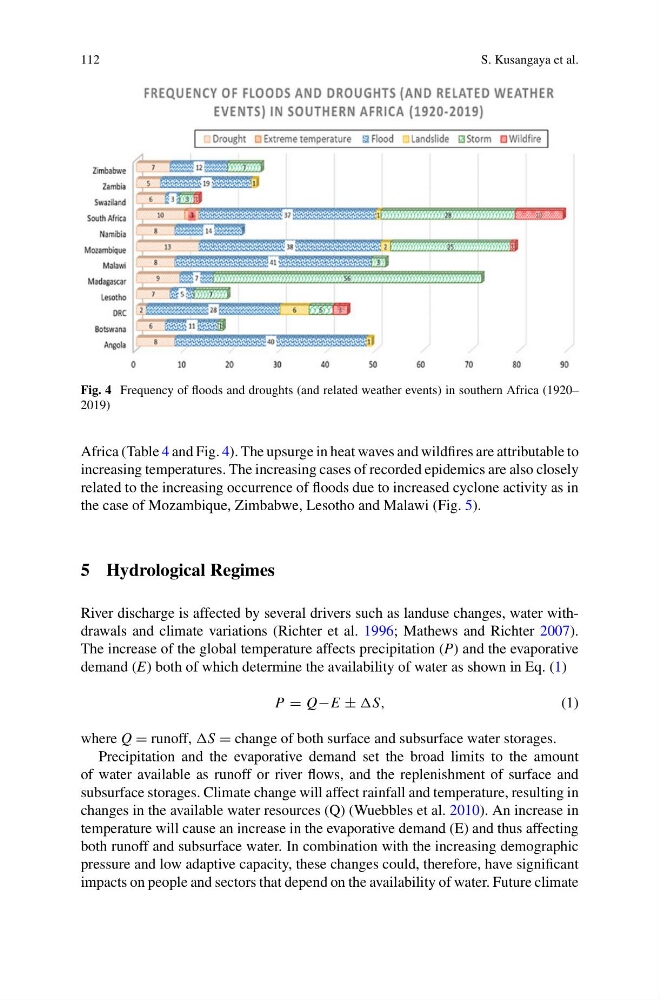
Fig. 4 Frequency of floods and droughts (and related weather events) in southern Africa (1920–
2019)
Africa (Table 4 and Fig. 4). The upsurge in heat waves and wildfires are attributable to
increasing temperatures. The increasing cases of recorded epidemics are also closely
related to the increasing occurrence of floods due to increased cyclone activity as in
the case of Mozambique, Zimbabwe, Lesotho and Malawi (Fig. 5).
5 Hydrological Regimes
River discharge is affected by several drivers such as landuse changes, water withdrawals and climate variations (Richter et al. 1996; Mathews and Richter 2007).
The increase of the global temperature affects precipitation (P) and the evaporative
demand (E) both of which determine the availability of water as shown in Eq. (1)
P = Q−E ± S,
(1)
where Q = runoff, S = change of both surface and subsurface water storages.
Precipitation and the evaporative demand set the broad limits to the amount
of water available as runoff or river flows, and the replenishment of surface and
subsurface storages. Climate change will affect rainfall and temperature, resulting in
changes in the available water resources (Q) (Wuebbles et al. 2010). An increase in
temperature will cause an increase in the evaporative demand (E) and thus affecting
both runoff and subsurface water. In combination with the increasing demographic
pressure and low adaptive capacity, these changes could, therefore, have significant
impacts on people and sectors that depend on the availability of water. Future climate
S. Kusangaya et al.
Fig. 4 Frequency of floods and droughts (and related weather events) in southern Africa (1920–
2019)
Africa (Table 4 and Fig. 4). The upsurge in heat waves and wildfires are attributable to
increasing temperatures. The increasing cases of recorded epidemics are also closely
related to the increasing occurrence of floods due to increased cyclone activity as in
the case of Mozambique, Zimbabwe, Lesotho and Malawi (Fig. 5).
5 Hydrological Regimes
River discharge is affected by several drivers such as landuse changes, water withdrawals and climate variations (Richter et al. 1996; Mathews and Richter 2007).
The increase of the global temperature affects precipitation (P) and the evaporative
demand (E) both of which determine the availability of water as shown in Eq. (1)
P = Q−E ± S,
(1)
where Q = runoff, S = change of both surface and subsurface water storages.
Precipitation and the evaporative demand set the broad limits to the amount
of water available as runoff or river flows, and the replenishment of surface and
subsurface storages. Climate change will affect rainfall and temperature, resulting in
changes in the available water resources (Q) (Wuebbles et al. 2010). An increase in
temperature will cause an increase in the evaporative demand (E) and thus affecting
both runoff and subsurface water. In combination with the increasing demographic
pressure and low adaptive capacity, these changes could, therefore, have significant
impacts on people and sectors that depend on the availability of water. Future climate