

414
hematophagous and do not transmit disease (Krenn and Aspöck 2012). Nagatomi
and Soroida (1985) list only the distantly related Spaniopsis and Symphoromyia as
blood feeders, indicating the hematophagy originated multiple times within the
family. Although Rhagionidae enter the fossil record during the Early Jurassic
(Lukashevich and Mostovski 2003), the earliest hematophagous forms are of Late
Jurassic age, from the Glushkovo Formation of Transbaikalia, Russia (Kovalev and
Mostovski 1997). One species with particularly evident hematophagous structures
is the female of Palaeoarthroteles mesozoicus that houses a robust, hypognathous
proboscis, downturned palps and an apparently rigid labium enveloping the stylets
(Kovalev and Mostovski 1997; Labandeira 2019). An alternative explanation is that
Palaeoarthroteles was an insect predator (Lukashevich and Mostovski 2003); however, the absence of spinose legs, stiff bristles surrounding the mouthparts and other
features of predatory insects strongly suggests the blood-feeding nature of this insect.
Mormotomyiidae (frightful hairy fly) consists of the monotypic, spiderlike and
hirsute Mormotomyia hirsuta that occurs on a bat guano substrate below a local cliff
face in Kenya (Copeland et al. 2011). Once thought to be a bat parasite because of
its habitus and association with guano, recent evidence indicates that it is not a bat
parasite (Copeland et al. 2011). Mormotomyiidae evidently are a member of the
Ephydroidea, an acalyptrate group basal to the Calyptratae Clade (Kirk-Spriggs
et al. 2011).
Within Calyptratae (calyptrate flies), the three superfamilies Muscoidea (often
treated as a grade), Hippoboscoidea and Oestroidea (Kutty et al. 2001) collectively
bear nine families that contain parasitic taxa. Calyptrate flies are monophyletic and
the most derived major clade of flies (Grimaldi and Engel 2005a, b; Kutty et al.
2001), responsible for a considerable amount of pestilence on vertebrates, including
humans, particularly as feeders on blood and other fluids in their role as parasites
and parasitoids (Oldroyd 1964; Marshall 2012). Many of the blood-feeding forms
are found in the ubiquitous family Muscidae (house flies, stable flies), which consist
of about 110 genera, including the familiar, synanthropic fly Musca domestica.
Typically, muscids are predatory or feed on fluid exudates from plants and animals,
such as sugar, honeydew, sweat, tears and blood. Blood-feeding muscids principally
include Stomoxys, Hydrotaea and Haematobia of the tribe Stomoxyini (Krenn and
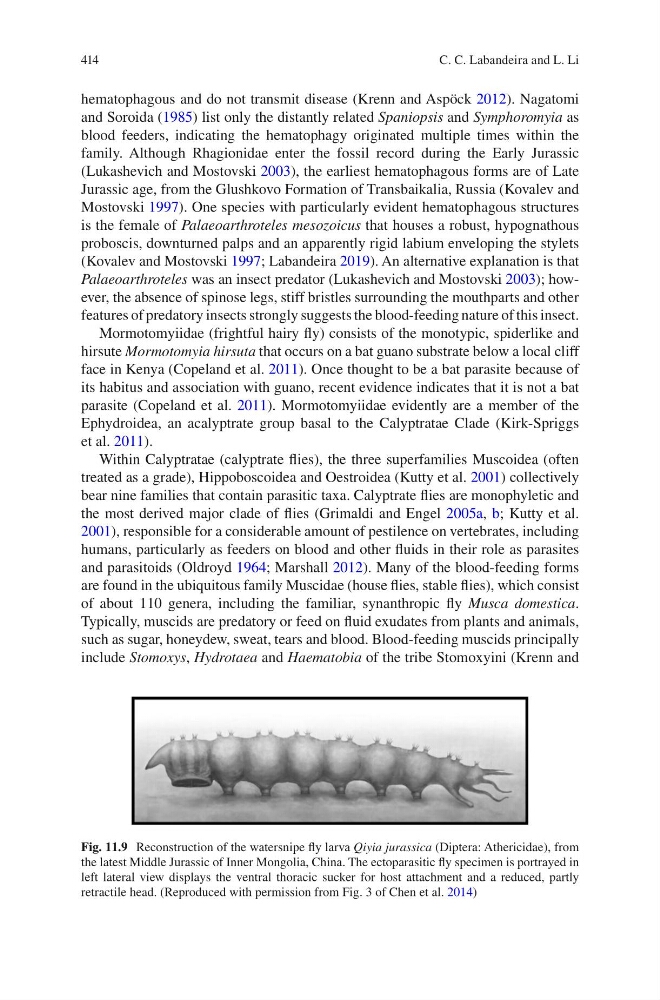
Fig. 11.9 Reconstruction of the watersnipe fly larva Qiyia jurassica (Diptera: Athericidae), from
the latest Middle Jurassic of Inner Mongolia, China. The ectoparasitic fly specimen is portrayed in
left lateral view displays the ventral thoracic sucker for host attachment and a reduced, partly
retractile head. (Reproduced with permission from Fig. 3 of Chen et al. 2014)
C. C. Labandeira and L. Li
hematophagous and do not transmit disease (Krenn and Aspöck 2012). Nagatomi
and Soroida (1985) list only the distantly related Spaniopsis and Symphoromyia as
blood feeders, indicating the hematophagy originated multiple times within the
family. Although Rhagionidae enter the fossil record during the Early Jurassic
(Lukashevich and Mostovski 2003), the earliest hematophagous forms are of Late
Jurassic age, from the Glushkovo Formation of Transbaikalia, Russia (Kovalev and
Mostovski 1997). One species with particularly evident hematophagous structures
is the female of Palaeoarthroteles mesozoicus that houses a robust, hypognathous
proboscis, downturned palps and an apparently rigid labium enveloping the stylets
(Kovalev and Mostovski 1997; Labandeira 2019). An alternative explanation is that
Palaeoarthroteles was an insect predator (Lukashevich and Mostovski 2003); however, the absence of spinose legs, stiff bristles surrounding the mouthparts and other
features of predatory insects strongly suggests the blood-feeding nature of this insect.
Mormotomyiidae (frightful hairy fly) consists of the monotypic, spiderlike and
hirsute Mormotomyia hirsuta that occurs on a bat guano substrate below a local cliff
face in Kenya (Copeland et al. 2011). Once thought to be a bat parasite because of
its habitus and association with guano, recent evidence indicates that it is not a bat
parasite (Copeland et al. 2011). Mormotomyiidae evidently are a member of the
Ephydroidea, an acalyptrate group basal to the Calyptratae Clade (Kirk-Spriggs
et al. 2011).
Within Calyptratae (calyptrate flies), the three superfamilies Muscoidea (often
treated as a grade), Hippoboscoidea and Oestroidea (Kutty et al. 2001) collectively
bear nine families that contain parasitic taxa. Calyptrate flies are monophyletic and
the most derived major clade of flies (Grimaldi and Engel 2005a, b; Kutty et al.
2001), responsible for a considerable amount of pestilence on vertebrates, including
humans, particularly as feeders on blood and other fluids in their role as parasites
and parasitoids (Oldroyd 1964; Marshall 2012). Many of the blood-feeding forms
are found in the ubiquitous family Muscidae (house flies, stable flies), which consist
of about 110 genera, including the familiar, synanthropic fly Musca domestica.
Typically, muscids are predatory or feed on fluid exudates from plants and animals,
such as sugar, honeydew, sweat, tears and blood. Blood-feeding muscids principally
include Stomoxys, Hydrotaea and Haematobia of the tribe Stomoxyini (Krenn and
Fig. 11.9 Reconstruction of the watersnipe fly larva Qiyia jurassica (Diptera: Athericidae), from
the latest Middle Jurassic of Inner Mongolia, China. The ectoparasitic fly specimen is portrayed in
left lateral view displays the ventral thoracic sucker for host attachment and a reduced, partly
retractile head. (Reproduced with permission from Fig. 3 of Chen et al. 2014)
C. C. Labandeira and L. Li