

155
directly on the selected surface of exoskeleton or soft body of their hosts (sometimes being then covered by host tissues, e.g. on echiurids, or inside sponges); the
other attach within the branchial cavity of host crabs or inside the esophagus of
holothurians (Morton 1972; Lafferty 1993; Kato 1998; Boyko and Mikkelsen 2002;
Bristow et al. 2010a; Tsubaki and Kato 2014; Bhaduri et al. 2017; Goto and Ishikawa
2019). Yet, it is described at least for two marine species, that a commensal bivalve
becomes possibly endoparasitic, by being enclosed in the host’s body and presumably feeding on the host’s tissues (Bristow et al. 2010a; Bhaduri et al. 2017).
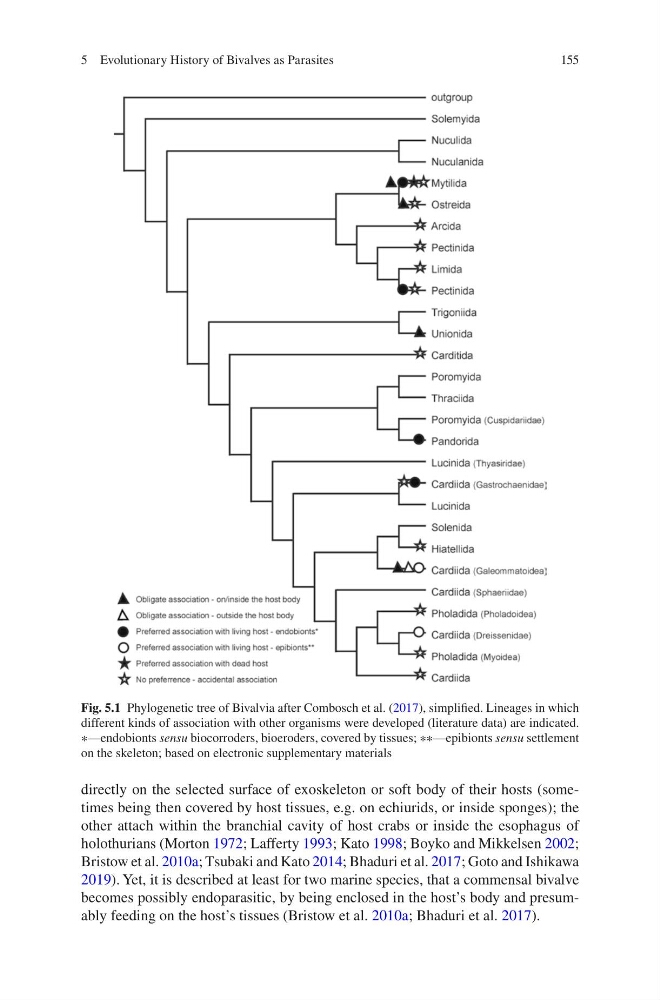
Fig. 5.1 Phylogenetic tree of Bivalvia after Combosch et al. (2017), simplified. Lineages in which
different kinds of association with other organisms were developed (literature data) are indicated.
∗—endobionts sensu biocorroders, bioeroders, covered by tissues; ∗∗—epibionts sensu settlement
on the skeleton; based on electronic supplementary materials
5 Evolutionary History of Bivalves as Parasites
directly on the selected surface of exoskeleton or soft body of their hosts (sometimes being then covered by host tissues, e.g. on echiurids, or inside sponges); the
other attach within the branchial cavity of host crabs or inside the esophagus of
holothurians (Morton 1972; Lafferty 1993; Kato 1998; Boyko and Mikkelsen 2002;
Bristow et al. 2010a; Tsubaki and Kato 2014; Bhaduri et al. 2017; Goto and Ishikawa
2019). Yet, it is described at least for two marine species, that a commensal bivalve
becomes possibly endoparasitic, by being enclosed in the host’s body and presumably feeding on the host’s tissues (Bristow et al. 2010a; Bhaduri et al. 2017).
Fig. 5.1 Phylogenetic tree of Bivalvia after Combosch et al. (2017), simplified. Lineages in which
different kinds of association with other organisms were developed (literature data) are indicated.
∗—endobionts sensu biocorroders, bioeroders, covered by tissues; ∗∗—epibionts sensu settlement
on the skeleton; based on electronic supplementary materials
5 Evolutionary History of Bivalves as Parasites