

13 Review on PCM Application for Cooling Load Reduction …
249
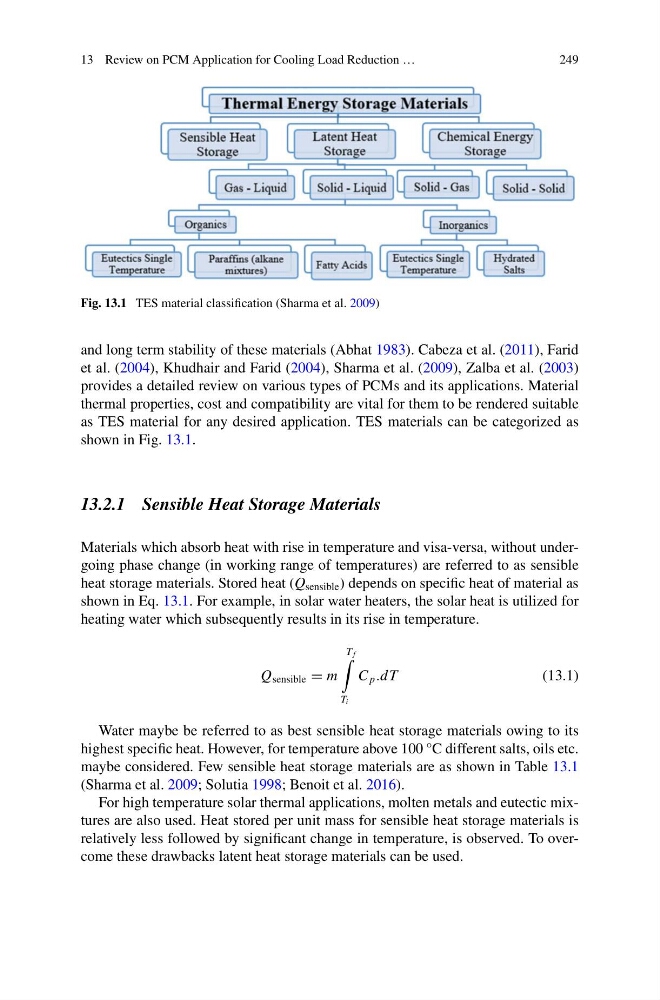
Fig. 13.1 TES material classification (Sharma et al. 2009)
and long term stability of these materials (Abhat 1983). Cabeza et al. (2011), Farid
et al. (2004), Khudhair and Farid (2004), Sharma et al. (2009), Zalba et al. (2003)
provides a detailed review on various types of PCMs and its applications. Material
thermal properties, cost and compatibility are vital for them to be rendered suitable
as TES material for any desired application. TES materials can be categorized as
shown in Fig. 13.1.
13.2.1 Sensible Heat Storage Materials
Materials which absorb heat with rise in temperature and visa-versa, without undergoing phase change (in working range of temperatures) are referred to as sensible
heat storage materials. Stored heat (Q sensible ) depends on specific heat of material as
shown in Eq. 13.1. For example, in solar water heaters, the solar heat is utilized for
heating water which subsequently results in its rise in temperature.
Q sensible = m
T f
T i
C p .dT
(13.1)
Water maybe be referred to as best sensible heat storage materials owing to its
highest specific heat. However, for temperature above 100 °C different salts, oils etc.
maybe considered. Few sensible heat storage materials are as shown in Table 13.1
(Sharma et al. 2009; Solutia 1998; Benoit et al. 2016).
For high temperature solar thermal applications, molten metals and eutectic mixtures are also used. Heat stored per unit mass for sensible heat storage materials is
relatively less followed by significant change in temperature, is observed. To overcome these drawbacks latent heat storage materials can be used.
249
Fig. 13.1 TES material classification (Sharma et al. 2009)
and long term stability of these materials (Abhat 1983). Cabeza et al. (2011), Farid
et al. (2004), Khudhair and Farid (2004), Sharma et al. (2009), Zalba et al. (2003)
provides a detailed review on various types of PCMs and its applications. Material
thermal properties, cost and compatibility are vital for them to be rendered suitable
as TES material for any desired application. TES materials can be categorized as
shown in Fig. 13.1.
13.2.1 Sensible Heat Storage Materials
Materials which absorb heat with rise in temperature and visa-versa, without undergoing phase change (in working range of temperatures) are referred to as sensible
heat storage materials. Stored heat (Q sensible ) depends on specific heat of material as
shown in Eq. 13.1. For example, in solar water heaters, the solar heat is utilized for
heating water which subsequently results in its rise in temperature.
Q sensible = m
T f
T i
C p .dT
(13.1)
Water maybe be referred to as best sensible heat storage materials owing to its
highest specific heat. However, for temperature above 100 °C different salts, oils etc.
maybe considered. Few sensible heat storage materials are as shown in Table 13.1
(Sharma et al. 2009; Solutia 1998; Benoit et al. 2016).
For high temperature solar thermal applications, molten metals and eutectic mixtures are also used. Heat stored per unit mass for sensible heat storage materials is
relatively less followed by significant change in temperature, is observed. To overcome these drawbacks latent heat storage materials can be used.