

6 Some Integration Bottlenecks and Challenges
Integration of wetlands in water management plans cannot be treated as an additive
process, wherein the policies and programmes of wetlands and water sector are
simply joined together, but require a more sophisticated and nuanced, collaborative
and beyond sectoral disciplinary approaches (Bracken and Oughton 2006). The
issue at hand is not just about connecting two different policy areas at a single
hydrological (catchment) or administrative (district) scale. Given the pervasive
uncertainty (such as the manifestation of climate change on wetlands functioning as
well as on extreme hydrological events, such as floods and droughts) and contested
knowledge claims (such as increased need for hydrological regulation is required to
address variability), the difficulty of joined-up management of wetlands and water
cannot be overcome by policy and programme actors acting in isolation. The role of
collaborative governance solutions is crucial for addressing challenges associated
with building coherent conceptual and methodological narratives (such as wetlands
degradation not just seen as tantamount to loss of critical ecosystem services, but
reduced landscape resiliency to increasing water risks), and developing approaches
for joint working that have potential to transform, rather than simply reaffirming
segmented ways of research on natural systems and landscapes. We discuss in this
section the science, policy and practice bottlenecks that hinder adoption of integration of wetlands in water management.
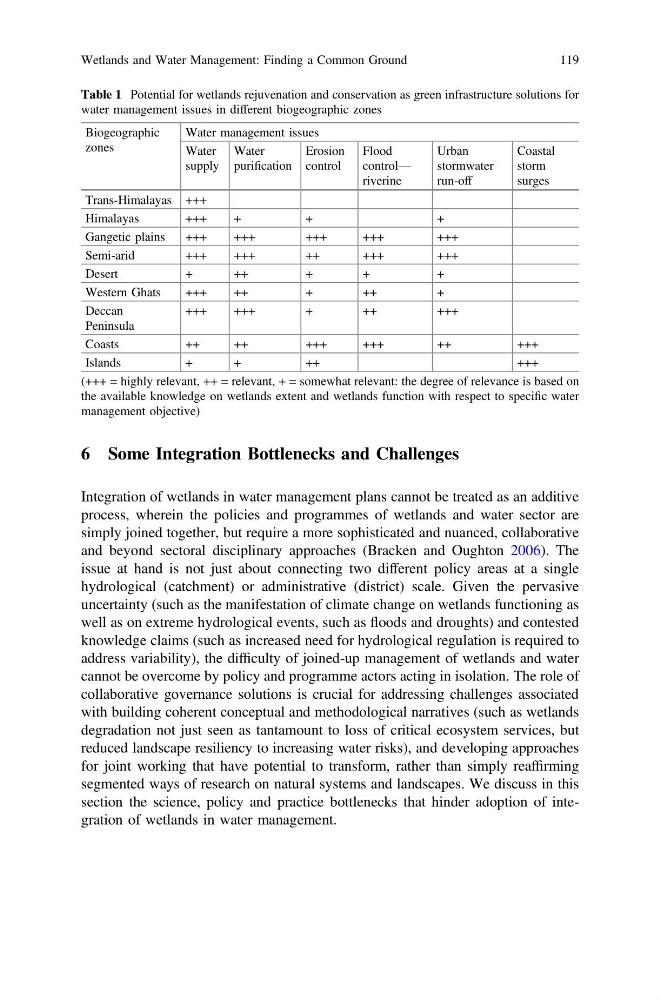
Table 1 Potential for wetlands rejuvenation and conservation as green infrastructure solutions for
water management issues in different biogeographic zones
Biogeographic
zones
Water management issues
Water
supply
Water
purification
Erosion
control
Flood
control—
riverine
Urban
stormwater
run-off
Coastal
storm
surges
Trans-Himalayas +++
Himalayas
+++
+
+
+
Gangetic plains
+++
+++
+++
+++
+++
Semi-arid
+++
+++
++
+++
+++
Desert
+
++
+
+
+
Western Ghats
+++
++
+
++
+
Deccan
Peninsula
+++
+++
+
++
+++
Coasts
++
++
+++
+++
++
+++
Islands
+
+
++
+++
(+++ = highly relevant, ++ = relevant, + = somewhat relevant: the degree of relevance is based on
the available knowledge on wetlands extent and wetlands function with respect to specific water
management objective)
Wetlands and Water Management: Finding a Common Ground
119
Integration of wetlands in water management plans cannot be treated as an additive
process, wherein the policies and programmes of wetlands and water sector are
simply joined together, but require a more sophisticated and nuanced, collaborative
and beyond sectoral disciplinary approaches (Bracken and Oughton 2006). The
issue at hand is not just about connecting two different policy areas at a single
hydrological (catchment) or administrative (district) scale. Given the pervasive
uncertainty (such as the manifestation of climate change on wetlands functioning as
well as on extreme hydrological events, such as floods and droughts) and contested
knowledge claims (such as increased need for hydrological regulation is required to
address variability), the difficulty of joined-up management of wetlands and water
cannot be overcome by policy and programme actors acting in isolation. The role of
collaborative governance solutions is crucial for addressing challenges associated
with building coherent conceptual and methodological narratives (such as wetlands
degradation not just seen as tantamount to loss of critical ecosystem services, but
reduced landscape resiliency to increasing water risks), and developing approaches
for joint working that have potential to transform, rather than simply reaffirming
segmented ways of research on natural systems and landscapes. We discuss in this
section the science, policy and practice bottlenecks that hinder adoption of integration of wetlands in water management.
Table 1 Potential for wetlands rejuvenation and conservation as green infrastructure solutions for
water management issues in different biogeographic zones
Biogeographic
zones
Water management issues
Water
supply
Water
purification
Erosion
control
Flood
control—
riverine
Urban
stormwater
run-off
Coastal
storm
surges
Trans-Himalayas +++
Himalayas
+++
+
+
+
Gangetic plains
+++
+++
+++
+++
+++
Semi-arid
+++
+++
++
+++
+++
Desert
+
++
+
+
+
Western Ghats
+++
++
+
++
+
Deccan
Peninsula
+++
+++
+
++
+++
Coasts
++
++
+++
+++
++
+++
Islands
+
+
++
+++
(+++ = highly relevant, ++ = relevant, + = somewhat relevant: the degree of relevance is based on
the available knowledge on wetlands extent and wetlands function with respect to specific water
management objective)
Wetlands and Water Management: Finding a Common Ground
119