

public investment, ranging from 3% to 6% of GDP (Kessides 1993). Haldea (2011)
comments that India is spending only 4–5%, compared to China and other East
Asian countries where over 10% of GDP is devoted to infrastructure investment. (see
also Moyo (2012) and Sharma (2013), as also given at the beginning of this chapter).
In fact the debate about infrastructure performance with respect to economic growth
started in the mid 1980s.
Research that has tried to find a link between infrastructure and economic growth
has taken a macroeconomic approach, as it is difficult to carry out otherwise. In
developed countries, studies show that infrastructure capital impacts positively on
growth and economic output. However, as all possible spillover effects or externalities arising from infrastructure investment have been considered, the analysis cannot
explicitly point out how infrastructure affects growth, nor can provide any policy
guidance about the strategies to adopt.
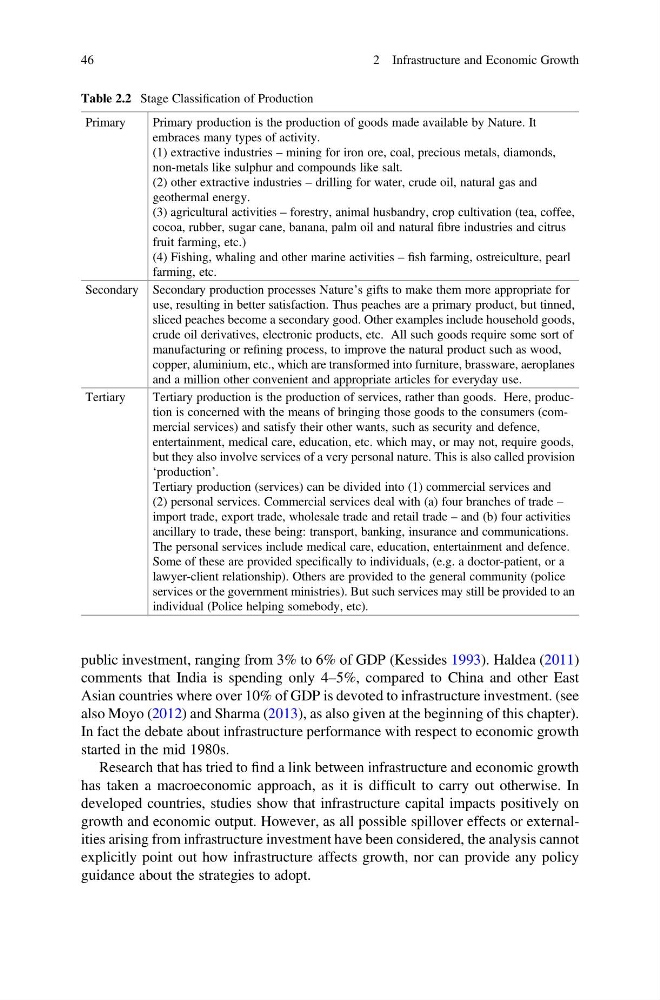
Table 2.2 Stage Classification of Production
Primary
Primary production is the production of goods made available by Nature. It
embraces many types of activity.
(1) extractive industries – mining for iron ore, coal, precious metals, diamonds,
non-metals like sulphur and compounds like salt.
(2) other extractive industries – drilling for water, crude oil, natural gas and
geothermal energy.
(3) agricultural activities – forestry, animal husbandry, crop cultivation (tea, coffee,
cocoa, rubber, sugar cane, banana, palm oil and natural fibre industries and citrus
fruit farming, etc.)
(4) Fishing, whaling and other marine activities – fish farming, ostreiculture, pearl
farming, etc.
Secondary Secondary production processes Nature’s gifts to make them more appropriate for
use, resulting in better satisfaction. Thus peaches are a primary product, but tinned,
sliced peaches become a secondary good. Other examples include household goods,
crude oil derivatives, electronic products, etc. All such goods require some sort of
manufacturing or refining process, to improve the natural product such as wood,
copper, aluminium, etc., which are transformed into furniture, brassware, aeroplanes
and a million other convenient and appropriate articles for everyday use.
Tertiary
Tertiary production is the production of services, rather than goods. Here, production is concerned with the means of bringing those goods to the consumers (commercial services) and satisfy their other wants, such as security and defence,
entertainment, medical care, education, etc. which may, or may not, require goods,
but they also involve services of a very personal nature. This is also called provision
‘production’.
Tertiary production (services) can be divided into (1) commercial services and
(2) personal services. Commercial services deal with (a) four branches of trade –
import trade, export trade, wholesale trade and retail trade – and (b) four activities
ancillary to trade, these being: transport, banking, insurance and communications.
The personal services include medical care, education, entertainment and defence.
Some of these are provided specifically to individuals, (e.g. a doctor-patient, or a
lawyer-client relationship). Others are provided to the general community (police
services or the government ministries). But such services may still be provided to an
individual (Police helping somebody, etc).
46
2 Infrastructure and Economic Growth
comments that India is spending only 4–5%, compared to China and other East
Asian countries where over 10% of GDP is devoted to infrastructure investment. (see
also Moyo (2012) and Sharma (2013), as also given at the beginning of this chapter).
In fact the debate about infrastructure performance with respect to economic growth
started in the mid 1980s.
Research that has tried to find a link between infrastructure and economic growth
has taken a macroeconomic approach, as it is difficult to carry out otherwise. In
developed countries, studies show that infrastructure capital impacts positively on
growth and economic output. However, as all possible spillover effects or externalities arising from infrastructure investment have been considered, the analysis cannot
explicitly point out how infrastructure affects growth, nor can provide any policy
guidance about the strategies to adopt.
Table 2.2 Stage Classification of Production
Primary
Primary production is the production of goods made available by Nature. It
embraces many types of activity.
(1) extractive industries – mining for iron ore, coal, precious metals, diamonds,
non-metals like sulphur and compounds like salt.
(2) other extractive industries – drilling for water, crude oil, natural gas and
geothermal energy.
(3) agricultural activities – forestry, animal husbandry, crop cultivation (tea, coffee,
cocoa, rubber, sugar cane, banana, palm oil and natural fibre industries and citrus
fruit farming, etc.)
(4) Fishing, whaling and other marine activities – fish farming, ostreiculture, pearl
farming, etc.
Secondary Secondary production processes Nature’s gifts to make them more appropriate for
use, resulting in better satisfaction. Thus peaches are a primary product, but tinned,
sliced peaches become a secondary good. Other examples include household goods,
crude oil derivatives, electronic products, etc. All such goods require some sort of
manufacturing or refining process, to improve the natural product such as wood,
copper, aluminium, etc., which are transformed into furniture, brassware, aeroplanes
and a million other convenient and appropriate articles for everyday use.
Tertiary
Tertiary production is the production of services, rather than goods. Here, production is concerned with the means of bringing those goods to the consumers (commercial services) and satisfy their other wants, such as security and defence,
entertainment, medical care, education, etc. which may, or may not, require goods,
but they also involve services of a very personal nature. This is also called provision
‘production’.
Tertiary production (services) can be divided into (1) commercial services and
(2) personal services. Commercial services deal with (a) four branches of trade –
import trade, export trade, wholesale trade and retail trade – and (b) four activities
ancillary to trade, these being: transport, banking, insurance and communications.
The personal services include medical care, education, entertainment and defence.
Some of these are provided specifically to individuals, (e.g. a doctor-patient, or a
lawyer-client relationship). Others are provided to the general community (police
services or the government ministries). But such services may still be provided to an
individual (Police helping somebody, etc).
46
2 Infrastructure and Economic Growth