

There are essentially two explanations for the shift toward cost recovery:
(1) People have become accustomed to not paying for their services and have come
to believe that it is their right to continue to receive free services. Service
payment shortfalls will ultimately make the country’s institutions financially
unsustainable. Financially unsustainable institutions would not only be a problem for citizens but would also undermine the country’s economic strategy.
(2) The alternative explanation holds that non-payment is actually related to issues of
affordability and quality of service. Given the extensive financial burdens carried
by most income earners, rates and service payments are at times simply not
affordable. Cyclical bills such as school fees, as well as unpredictable expenditure like healthcare or funerals, kept most poor households perennially in debt.
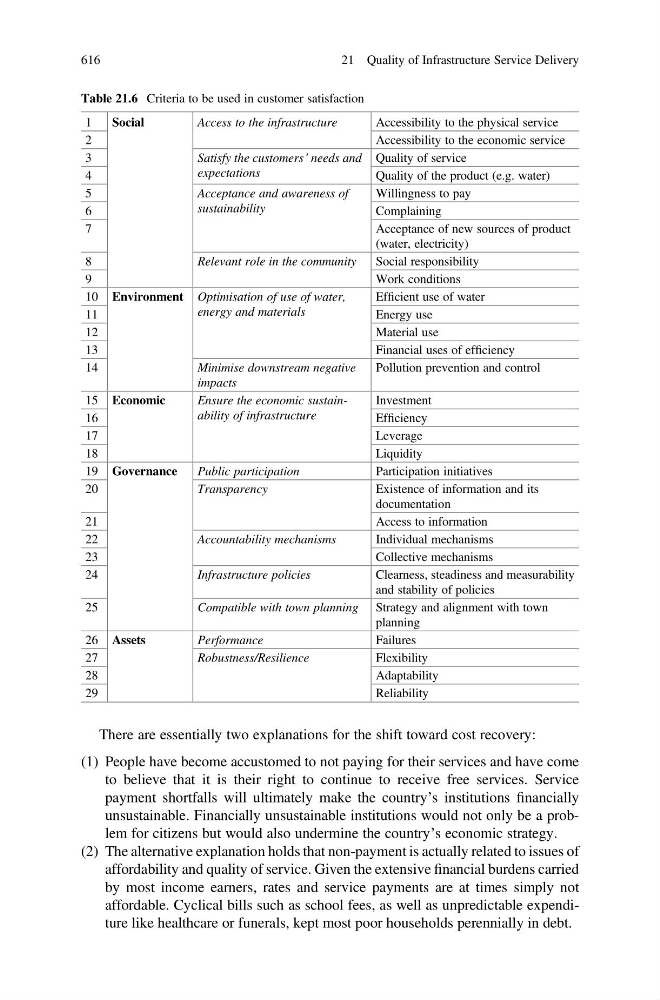
Table 21.6 Criteria to be used in customer satisfaction
1
Social
Access to the infrastructure
Accessibility to the physical service
2
Accessibility to the economic service
3
Satisfy the customers’ needs and
expectations
Quality of service
4
Quality of the product (e.g. water)
5
Acceptance and awareness of
sustainability
Willingness to pay
6
Complaining
7
Acceptance of new sources of product
(water, electricity)
8
Relevant role in the community
Social responsibility
9
Work conditions
10 Environment Optimisation of use of water,
energy and materials
Efficient use of water
11
Energy use
12
Material use
13
Financial uses of efficiency
14
Minimise downstream negative
impacts
Pollution prevention and control
15 Economic
Ensure the economic sustainability of infrastructure
Investment
16
Efficiency
17
Leverage
18
Liquidity
19 Governance
Public participation
Participation initiatives
20
Transparency
Existence of information and its
documentation
21
Access to information
22
Accountability mechanisms
Individual mechanisms
23
Collective mechanisms
24
Infrastructure policies
Clearness, steadiness and measurability
and stability of policies
25
Compatible with town planning Strategy and alignment with town
planning
26 Assets
Performance
Failures
27
Robustness/Resilience
Flexibility
28
Adaptability
29
Reliability
616
21 Quality of Infrastructure Service Delivery