

There is no best choice, but most people today would agree that development:
(1) is not an easy process which takes quite some time
(2) may proceed randomly and that some people or groups might receive more than
others
(3) industrialisation of some sort is required to create the jobs, as well as produce the
goods and services, required to improve the standard of living and increase the
quality of life
(4) the world is one planet, whose fate we all share.
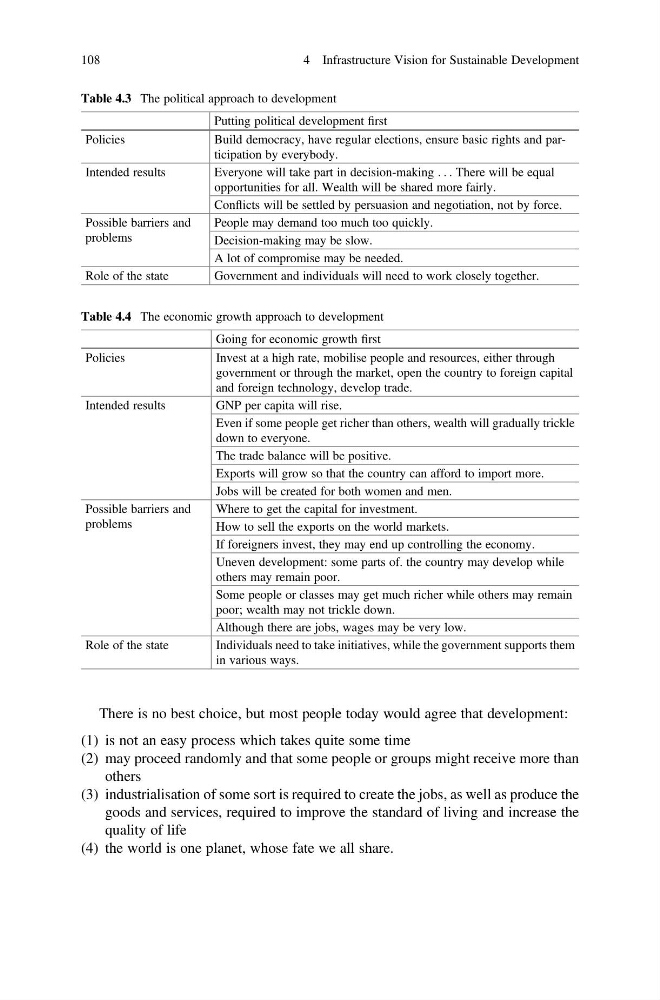
Table 4.3 The political approach to development
Putting political development first
Policies
Build democracy, have regular elections, ensure basic rights and participation by everybody.
Intended results
Everyone will take part in decision-making . . . There will be equal
opportunities for all. Wealth will be shared more fairly.
Conflicts will be settled by persuasion and negotiation, not by force.
Possible barriers and
problems
People may demand too much too quickly.
Decision-making may be slow.
A lot of compromise may be needed.
Role of the state
Government and individuals will need to work closely together.
Table 4.4 The economic growth approach to development
Going for economic growth first
Policies
Invest at a high rate, mobilise people and resources, either through
government or through the market, open the country to foreign capital
and foreign technology, develop trade.
Intended results
GNP per capita will rise.
Even if some people get richer than others, wealth will gradually trickle
down to everyone.
The trade balance will be positive.
Exports will grow so that the country can afford to import more.
Jobs will be created for both women and men.
Possible barriers and
problems
Where to get the capital for investment.
How to sell the exports on the world markets.
If foreigners invest, they may end up controlling the economy.
Uneven development: some parts of. the country may develop while
others may remain poor.
Some people or classes may get much richer while others may remain
poor; wealth may not trickle down.
Although there are jobs, wages may be very low.
Role of the state
Individuals need to take initiatives, while the government supports them
in various ways.
108
4 Infrastructure Vision for Sustainable Development
(1) is not an easy process which takes quite some time
(2) may proceed randomly and that some people or groups might receive more than
others
(3) industrialisation of some sort is required to create the jobs, as well as produce the
goods and services, required to improve the standard of living and increase the
quality of life
(4) the world is one planet, whose fate we all share.
Table 4.3 The political approach to development
Putting political development first
Policies
Build democracy, have regular elections, ensure basic rights and participation by everybody.
Intended results
Everyone will take part in decision-making . . . There will be equal
opportunities for all. Wealth will be shared more fairly.
Conflicts will be settled by persuasion and negotiation, not by force.
Possible barriers and
problems
People may demand too much too quickly.
Decision-making may be slow.
A lot of compromise may be needed.
Role of the state
Government and individuals will need to work closely together.
Table 4.4 The economic growth approach to development
Going for economic growth first
Policies
Invest at a high rate, mobilise people and resources, either through
government or through the market, open the country to foreign capital
and foreign technology, develop trade.
Intended results
GNP per capita will rise.
Even if some people get richer than others, wealth will gradually trickle
down to everyone.
The trade balance will be positive.
Exports will grow so that the country can afford to import more.
Jobs will be created for both women and men.
Possible barriers and
problems
Where to get the capital for investment.
How to sell the exports on the world markets.
If foreigners invest, they may end up controlling the economy.
Uneven development: some parts of. the country may develop while
others may remain poor.
Some people or classes may get much richer while others may remain
poor; wealth may not trickle down.
Although there are jobs, wages may be very low.
Role of the state
Individuals need to take initiatives, while the government supports them
in various ways.
108
4 Infrastructure Vision for Sustainable Development