

312
U. Muntwyler
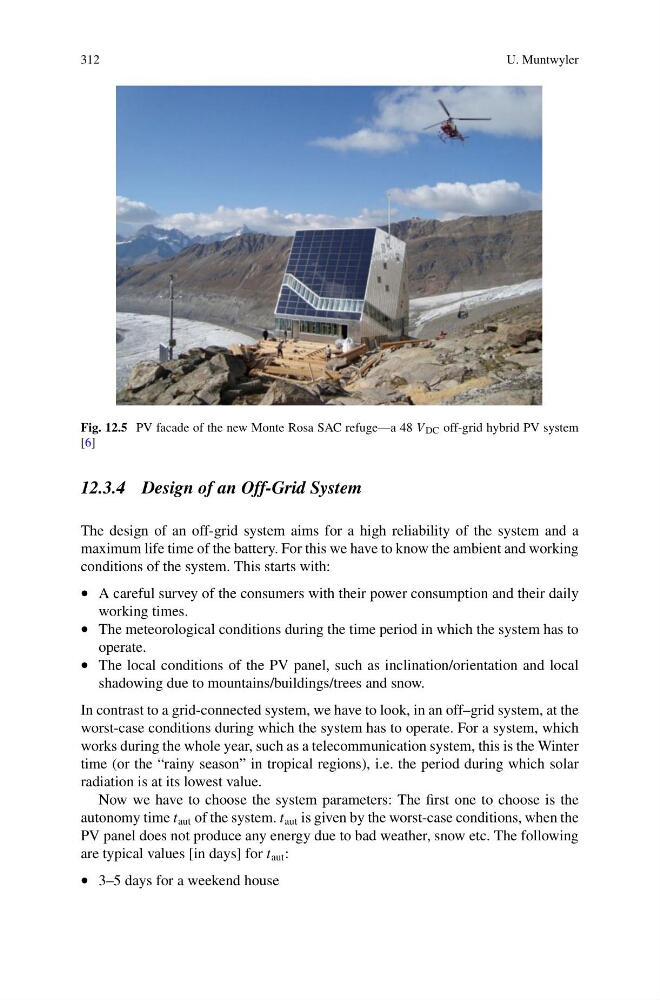
Fig. 12.5 PV facade of the new Monte Rosa SAC refuge—a 48 V DC off-grid hybrid PV system
[6]
12.3.4 Design of an Off-Grid System
The design of an off-grid system aims for a high reliability of the system and a
maximum life time of the battery. For this we have to know the ambient and working
conditions of the system. This starts with:
• A careful survey of the consumers with their power consumption and their daily
working times.
• The meteorological conditions during the time period in which the system has to
operate.
• The local conditions of the PV panel, such as inclination/orientation and local
shadowing due to mountains/buildings/trees and snow.
In contrast to a grid-connected system, we have to look, in an off–grid system, at the
worst-case conditions during which the system has to operate. For a system, which
works during the whole year, such as a telecommunication system, this is the Winter
time (or the “rainy season” in tropical regions), i.e. the period during which solar
radiation is at its lowest value.
Now we have to choose the system parameters: The first one to choose is the
autonomy time t aut of the system. t aut is given by the worst-case conditions, when the
PV panel does not produce any energy due to bad weather, snow etc. The following
are typical values [in days] for t aut :
• 3–5 days for a weekend house
U. Muntwyler
Fig. 12.5 PV facade of the new Monte Rosa SAC refuge—a 48 V DC off-grid hybrid PV system
[6]
12.3.4 Design of an Off-Grid System
The design of an off-grid system aims for a high reliability of the system and a
maximum life time of the battery. For this we have to know the ambient and working
conditions of the system. This starts with:
• A careful survey of the consumers with their power consumption and their daily
working times.
• The meteorological conditions during the time period in which the system has to
operate.
• The local conditions of the PV panel, such as inclination/orientation and local
shadowing due to mountains/buildings/trees and snow.
In contrast to a grid-connected system, we have to look, in an off–grid system, at the
worst-case conditions during which the system has to operate. For a system, which
works during the whole year, such as a telecommunication system, this is the Winter
time (or the “rainy season” in tropical regions), i.e. the period during which solar
radiation is at its lowest value.
Now we have to choose the system parameters: The first one to choose is the
autonomy time t aut of the system. t aut is given by the worst-case conditions, when the
PV panel does not produce any energy due to bad weather, snow etc. The following
are typical values [in days] for t aut :
• 3–5 days for a weekend house