

11 Solar Photovoltaics on Land, Water, and Buildings
305
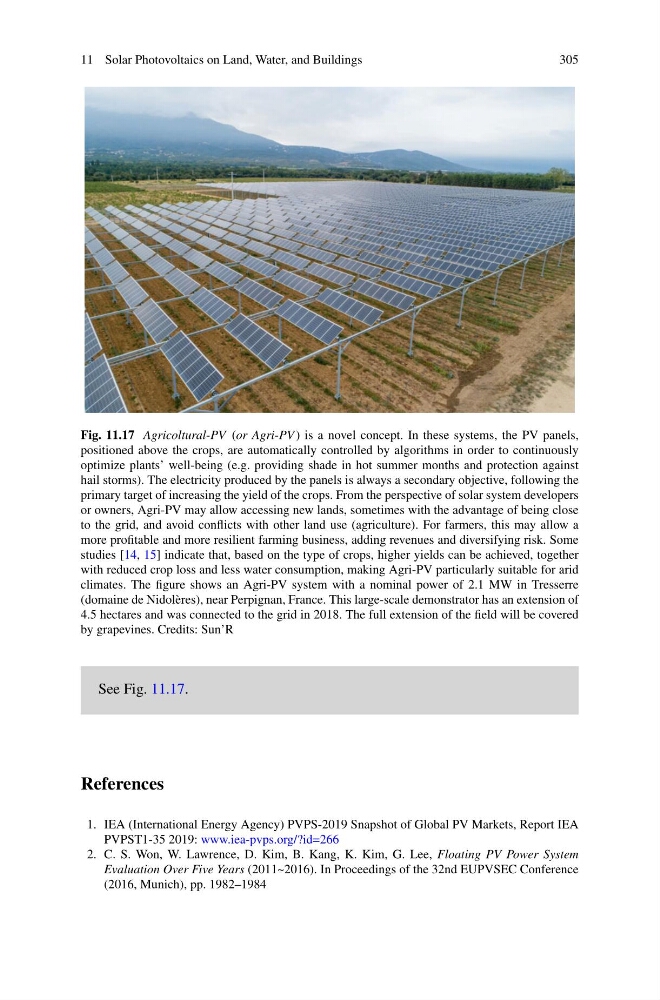
Fig. 11.17 Agricoltural-PV (or Agri-PV ) is a novel concept. In these systems, the PV panels,
positioned above the crops, are automatically controlled by algorithms in order to continuously
optimize plants’ well-being (e.g. providing shade in hot summer months and protection against
hail storms). The electricity produced by the panels is always a secondary objective, following the
primary target of increasing the yield of the crops. From the perspective of solar system developers
or owners, Agri-PV may allow accessing new lands, sometimes with the advantage of being close
to the grid, and avoid conflicts with other land use (agriculture). For farmers, this may allow a
more profitable and more resilient farming business, adding revenues and diversifying risk. Some
studies [14, 15] indicate that, based on the type of crops, higher yields can be achieved, together
with reduced crop loss and less water consumption, making Agri-PV particularly suitable for arid
climates. The figure shows an Agri-PV system with a nominal power of 2.1 MW in Tresserre
(domaine de Nidolères), near Perpignan, France. This large-scale demonstrator has an extension of
4.5 hectares and was connected to the grid in 2018. The full extension of the field will be covered
by grapevines. Credits: Sun’R
See Fig. 11.17.
References
1. IEA (International Energy Agency) PVPS-2019 Snapshot of Global PV Markets, Report IEA
PVPST1-35 2019: www.iea-pvps.org/?id=266
2. C. S. Won, W. Lawrence, D. Kim, B. Kang, K. Kim, G. Lee, Floating PV Power System
Evaluation Over Five Years (2011~2016). In Proceedings of the 32nd EUPVSEC Conference
(2016, Munich), pp. 1982–1984
305
Fig. 11.17 Agricoltural-PV (or Agri-PV ) is a novel concept. In these systems, the PV panels,
positioned above the crops, are automatically controlled by algorithms in order to continuously
optimize plants’ well-being (e.g. providing shade in hot summer months and protection against
hail storms). The electricity produced by the panels is always a secondary objective, following the
primary target of increasing the yield of the crops. From the perspective of solar system developers
or owners, Agri-PV may allow accessing new lands, sometimes with the advantage of being close
to the grid, and avoid conflicts with other land use (agriculture). For farmers, this may allow a
more profitable and more resilient farming business, adding revenues and diversifying risk. Some
studies [14, 15] indicate that, based on the type of crops, higher yields can be achieved, together
with reduced crop loss and less water consumption, making Agri-PV particularly suitable for arid
climates. The figure shows an Agri-PV system with a nominal power of 2.1 MW in Tresserre
(domaine de Nidolères), near Perpignan, France. This large-scale demonstrator has an extension of
4.5 hectares and was connected to the grid in 2018. The full extension of the field will be covered
by grapevines. Credits: Sun’R
See Fig. 11.17.
References
1. IEA (International Energy Agency) PVPS-2019 Snapshot of Global PV Markets, Report IEA
PVPST1-35 2019: www.iea-pvps.org/?id=266
2. C. S. Won, W. Lawrence, D. Kim, B. Kang, K. Kim, G. Lee, Floating PV Power System
Evaluation Over Five Years (2011~2016). In Proceedings of the 32nd EUPVSEC Conference
(2016, Munich), pp. 1982–1984