

296
A. Virtuani
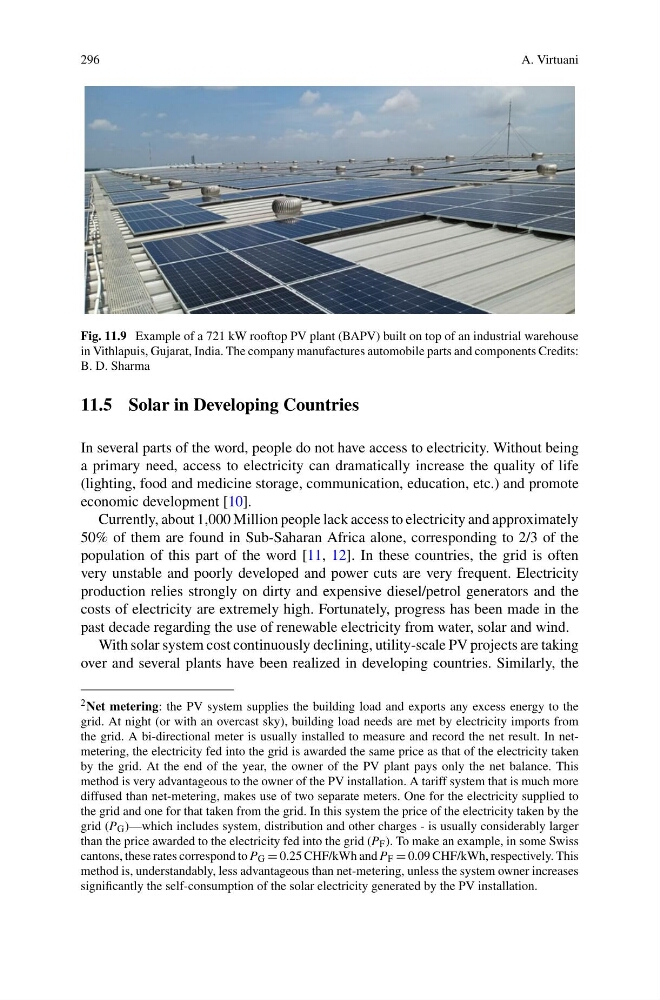
Fig. 11.9 Example of a 721 kW rooftop PV plant (BAPV) built on top of an industrial warehouse
in Vithlapuis, Gujarat, India. The company manufactures automobile parts and components Credits:
B. D. Sharma
11.5 Solar in Developing Countries
In several parts of the word, people do not have access to electricity. Without being
a primary need, access to electricity can dramatically increase the quality of life
(lighting, food and medicine storage, communication, education, etc.) and promote
economic development [10].
Currently, about 1,000 Million people lack access to electricity and approximately
50% of them are found in Sub-Saharan Africa alone, corresponding to 2/3 of the
population of this part of the word [11, 12]. In these countries, the grid is often
very unstable and poorly developed and power cuts are very frequent. Electricity
production relies strongly on dirty and expensive diesel/petrol generators and the
costs of electricity are extremely high. Fortunately, progress has been made in the
past decade regarding the use of renewable electricity from water, solar and wind.
With solar system cost continuously declining, utility-scale PV projects are taking
over and several plants have been realized in developing countries. Similarly, the
2 Net metering: the PV system supplies the building load and exports any excess energy to the
grid. At night (or with an overcast sky), building load needs are met by electricity imports from
the grid. A bi-directional meter is usually installed to measure and record the net result. In netmetering, the electricity fed into the grid is awarded the same price as that of the electricity taken
by the grid. At the end of the year, the owner of the PV plant pays only the net balance. This
method is very advantageous to the owner of the PV installation. A tariff system that is much more
diffused than net-metering, makes use of two separate meters. One for the electricity supplied to
the grid and one for that taken from the grid. In this system the price of the electricity taken by the
grid (P G )—which includes system, distribution and other charges - is usually considerably larger
than the price awarded to the electricity fed into the grid (P F ). To make an example, in some Swiss
cantons, these rates correspond to P G = 0.25 CHF/kWh and P F = 0.09 CHF/kWh, respectively. This
method is, understandably, less advantageous than net-metering, unless the system owner increases
significantly the self-consumption of the solar electricity generated by the PV installation.
A. Virtuani
Fig. 11.9 Example of a 721 kW rooftop PV plant (BAPV) built on top of an industrial warehouse
in Vithlapuis, Gujarat, India. The company manufactures automobile parts and components Credits:
B. D. Sharma
11.5 Solar in Developing Countries
In several parts of the word, people do not have access to electricity. Without being
a primary need, access to electricity can dramatically increase the quality of life
(lighting, food and medicine storage, communication, education, etc.) and promote
economic development [10].
Currently, about 1,000 Million people lack access to electricity and approximately
50% of them are found in Sub-Saharan Africa alone, corresponding to 2/3 of the
population of this part of the word [11, 12]. In these countries, the grid is often
very unstable and poorly developed and power cuts are very frequent. Electricity
production relies strongly on dirty and expensive diesel/petrol generators and the
costs of electricity are extremely high. Fortunately, progress has been made in the
past decade regarding the use of renewable electricity from water, solar and wind.
With solar system cost continuously declining, utility-scale PV projects are taking
over and several plants have been realized in developing countries. Similarly, the
2 Net metering: the PV system supplies the building load and exports any excess energy to the
grid. At night (or with an overcast sky), building load needs are met by electricity imports from
the grid. A bi-directional meter is usually installed to measure and record the net result. In netmetering, the electricity fed into the grid is awarded the same price as that of the electricity taken
by the grid. At the end of the year, the owner of the PV plant pays only the net balance. This
method is very advantageous to the owner of the PV installation. A tariff system that is much more
diffused than net-metering, makes use of two separate meters. One for the electricity supplied to
the grid and one for that taken from the grid. In this system the price of the electricity taken by the
grid (P G )—which includes system, distribution and other charges - is usually considerably larger
than the price awarded to the electricity fed into the grid (P F ). To make an example, in some Swiss
cantons, these rates correspond to P G = 0.25 CHF/kWh and P F = 0.09 CHF/kWh, respectively. This
method is, understandably, less advantageous than net-metering, unless the system owner increases
significantly the self-consumption of the solar electricity generated by the PV installation.