

7 Crystalline Silicon Solar Cells: Heterojunction Cells
191
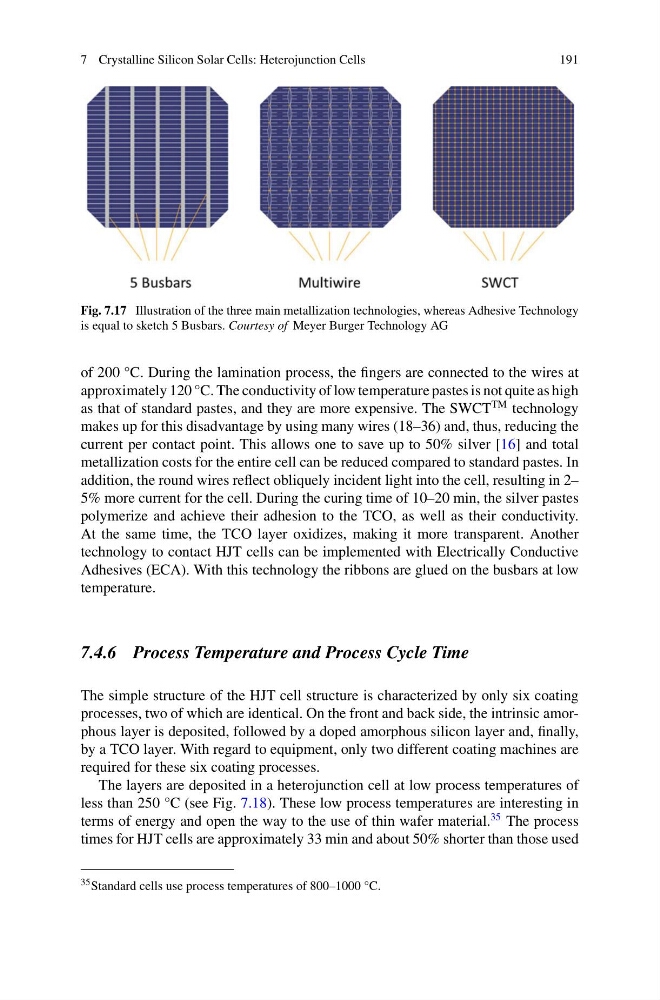
Fig. 7.17 Illustration of the three main metallization technologies, whereas Adhesive Technology
is equal to sketch 5 Busbars. Courtesy of Meyer Burger Technology AG
of 200 °C. During the lamination process, the fingers are connected to the wires at
approximately 120 °C. The conductivity of low temperature pastes is not quite as high
as that of standard pastes, and they are more expensive. The SWCT
TM technology
makes up for this disadvantage by using many wires (18–36) and, thus, reducing the
current per contact point. This allows one to save up to 50% silver [16] and total
metallization costs for the entire cell can be reduced compared to standard pastes. In
addition, the round wires reflect obliquely incident light into the cell, resulting in 2–
5% more current for the cell. During the curing time of 10–20 min, the silver pastes
polymerize and achieve their adhesion to the TCO, as well as their conductivity.
At the same time, the TCO layer oxidizes, making it more transparent. Another
technology to contact HJT cells can be implemented with Electrically Conductive
Adhesives (ECA). With this technology the ribbons are glued on the busbars at low
temperature.
7.4.6 Process Temperature and Process Cycle Time
The simple structure of the HJT cell structure is characterized by only six coating
processes, two of which are identical. On the front and back side, the intrinsic amorphous layer is deposited, followed by a doped amorphous silicon layer and, finally,
by a TCO layer. With regard to equipment, only two different coating machines are
required for these six coating processes.
The layers are deposited in a heterojunction cell at low process temperatures of
less than 250 °C (see Fig. 7.18). These low process temperatures are interesting in
terms of energy and open the way to the use of thin wafer material.
35 The process
times for HJT cells are approximately 33 min and about 50% shorter than those used
35 Standard cells use process temperatures of 800–1000 °C.
191
Fig. 7.17 Illustration of the three main metallization technologies, whereas Adhesive Technology
is equal to sketch 5 Busbars. Courtesy of Meyer Burger Technology AG
of 200 °C. During the lamination process, the fingers are connected to the wires at
approximately 120 °C. The conductivity of low temperature pastes is not quite as high
as that of standard pastes, and they are more expensive. The SWCT
TM technology
makes up for this disadvantage by using many wires (18–36) and, thus, reducing the
current per contact point. This allows one to save up to 50% silver [16] and total
metallization costs for the entire cell can be reduced compared to standard pastes. In
addition, the round wires reflect obliquely incident light into the cell, resulting in 2–
5% more current for the cell. During the curing time of 10–20 min, the silver pastes
polymerize and achieve their adhesion to the TCO, as well as their conductivity.
At the same time, the TCO layer oxidizes, making it more transparent. Another
technology to contact HJT cells can be implemented with Electrically Conductive
Adhesives (ECA). With this technology the ribbons are glued on the busbars at low
temperature.
7.4.6 Process Temperature and Process Cycle Time
The simple structure of the HJT cell structure is characterized by only six coating
processes, two of which are identical. On the front and back side, the intrinsic amorphous layer is deposited, followed by a doped amorphous silicon layer and, finally,
by a TCO layer. With regard to equipment, only two different coating machines are
required for these six coating processes.
The layers are deposited in a heterojunction cell at low process temperatures of
less than 250 °C (see Fig. 7.18). These low process temperatures are interesting in
terms of energy and open the way to the use of thin wafer material.
35 The process
times for HJT cells are approximately 33 min and about 50% shorter than those used
35 Standard cells use process temperatures of 800–1000 °C.