

5 Crystalline Silicon Solar Cells: Homojunction Cells
101
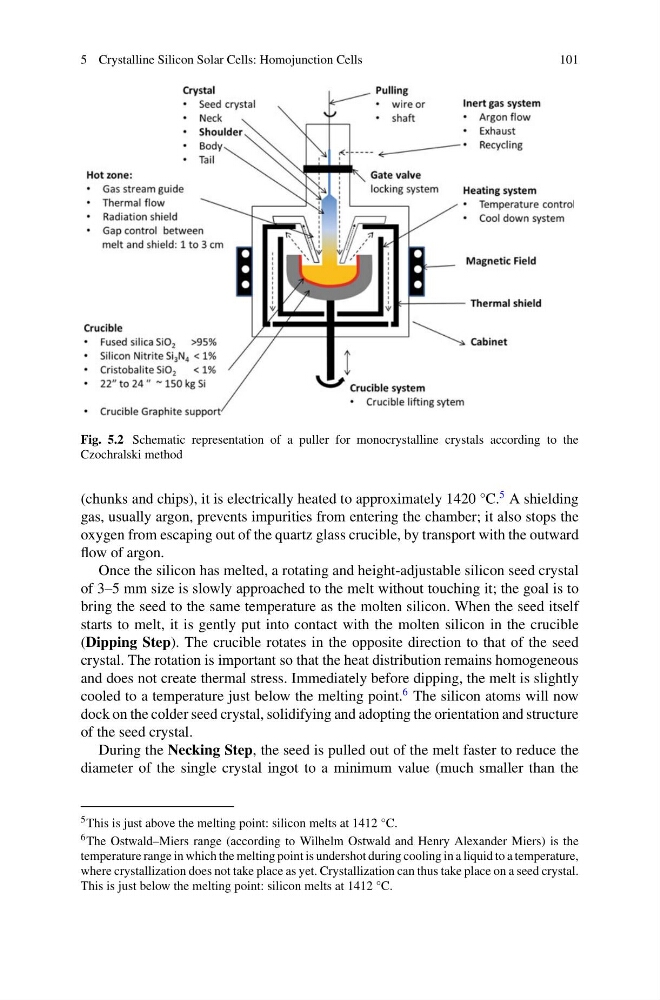
Fig. 5.2 Schematic representation of a puller for monocrystalline crystals according to the
Czochralski method
(chunks and chips), it is electrically heated to approximately 1420 °C.
5 A shielding
gas, usually argon, prevents impurities from entering the chamber; it also stops the
oxygen from escaping out of the quartz glass crucible, by transport with the outward
flow of argon.
Once the silicon has melted, a rotating and height-adjustable silicon seed crystal
of 3–5 mm size is slowly approached to the melt without touching it; the goal is to
bring the seed to the same temperature as the molten silicon. When the seed itself
starts to melt, it is gently put into contact with the molten silicon in the crucible
(Dipping Step). The crucible rotates in the opposite direction to that of the seed
crystal. The rotation is important so that the heat distribution remains homogeneous
and does not create thermal stress. Immediately before dipping, the melt is slightly
cooled to a temperature just below the melting point.
6 The silicon atoms will now
dock on the colder seed crystal, solidifying and adopting the orientation and structure
of the seed crystal.
During the Necking Step, the seed is pulled out of the melt faster to reduce the
diameter of the single crystal ingot to a minimum value (much smaller than the
5 This is just above the melting point: silicon melts at 1412 °C.
6 The Ostwald–Miers range (according to Wilhelm Ostwald and Henry Alexander Miers) is the
temperature range in which the melting point is undershot during cooling in a liquid to a temperature,
where crystallization does not take place as yet. Crystallization can thus take place on a seed crystal.
This is just below the melting point: silicon melts at 1412 °C.
101
Fig. 5.2 Schematic representation of a puller for monocrystalline crystals according to the
Czochralski method
(chunks and chips), it is electrically heated to approximately 1420 °C.
5 A shielding
gas, usually argon, prevents impurities from entering the chamber; it also stops the
oxygen from escaping out of the quartz glass crucible, by transport with the outward
flow of argon.
Once the silicon has melted, a rotating and height-adjustable silicon seed crystal
of 3–5 mm size is slowly approached to the melt without touching it; the goal is to
bring the seed to the same temperature as the molten silicon. When the seed itself
starts to melt, it is gently put into contact with the molten silicon in the crucible
(Dipping Step). The crucible rotates in the opposite direction to that of the seed
crystal. The rotation is important so that the heat distribution remains homogeneous
and does not create thermal stress. Immediately before dipping, the melt is slightly
cooled to a temperature just below the melting point.
6 The silicon atoms will now
dock on the colder seed crystal, solidifying and adopting the orientation and structure
of the seed crystal.
During the Necking Step, the seed is pulled out of the melt faster to reduce the
diameter of the single crystal ingot to a minimum value (much smaller than the
5 This is just above the melting point: silicon melts at 1412 °C.
6 The Ostwald–Miers range (according to Wilhelm Ostwald and Henry Alexander Miers) is the
temperature range in which the melting point is undershot during cooling in a liquid to a temperature,
where crystallization does not take place as yet. Crystallization can thus take place on a seed crystal.
This is just below the melting point: silicon melts at 1412 °C.