

1 3
Topics in Current Chemistry (2020) 378:35
Another method commonly used to achieve QD stability in an aqueous environment is based on the well-known silica chemistry used for inorganic encapsulation of the hydrophilic structures (e.g. surface silanization) of the QDs through
the generation of a silica shell around the NP surface [46]. This is a very attractive
approach to achieve water stabilization of QDs as the silica surface is non-toxic,
chemically inert and optically transparent. In this method, typically a precursor molecule, such as mercaptopropyltrimethoxysilane (MPTMOS), is added to the QDs
(which replaces the hydrophobic surface chains of the QD). The thiol groups of the
MPTMOS react with the inorganic surface of the QD, and the methoxysilane groups
polymerize through the formation of siloxane bonds, thus generating a highly crosslinked protective shell around the QD. An additional advantage of this approach
is that silica exhibits a high degree of biocompatibility, and it is a simple process
to functionalize its surface with appropriate (bio)analyte recognition BMs. Consequently, QDs encapsulated in a silica layer are highly suitable for further bioanalytical applications [47].
The third common approach to achieve water stabilization of QDs is to transfer the nonpolar QDs into an aqueous media combined with the use of amphiphilic polymers. Here, the hydrophobic shell of QDs (e.g. TOP [trioctylphosphine]/
TOPO) interacts with the hydrophobic alkyl chains of the amphiphilic polymeric
structures through hydrophobic or electronic interactions. The hydrophilic groups
of the amphiphilic polymer used will then remain oriented to the external part of the
QD surface, thereby providing the required water stability [48]. A large number of
amphiphilic copolymers are available for use in this approach, such as polymaleic
anhydride [49]) and polyelectrolytes (poly-acrylamide [50], or biopolymers such
as DNA [51]). Application of a polyethylene glycol (PEG)-based coating to QDs is
another alternative often used to provide stability and biocompatibility to the NPs,
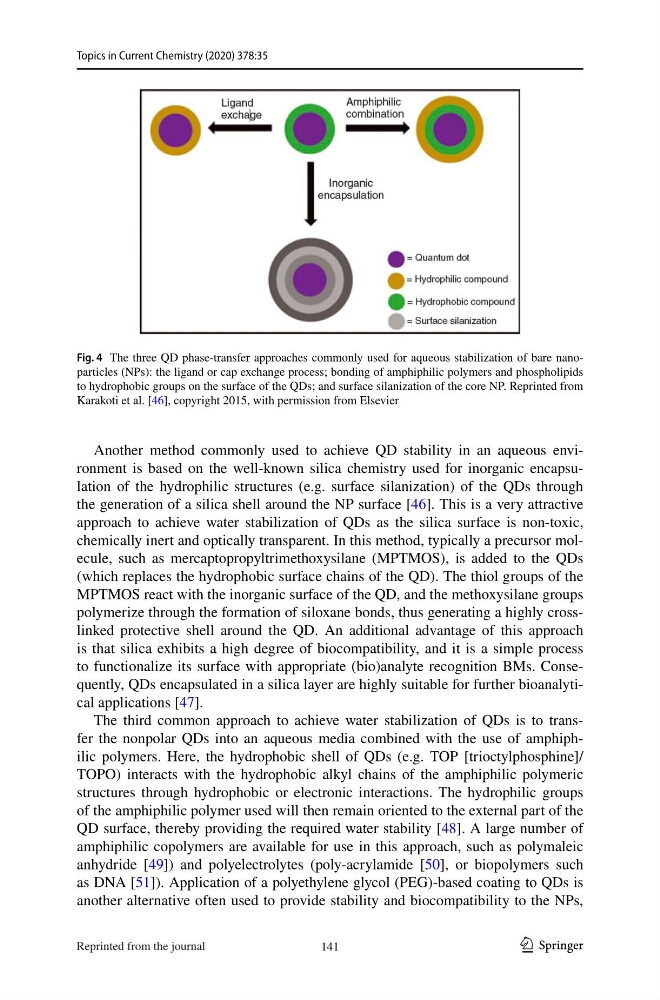
Fig. 4 The three QD phase-transfer approaches commonly used for aqueous stabilization of bare nanoparticles (NPs): the ligand or cap exchange process; bonding of amphiphilic polymers and phospholipids
to hydrophobic groups on the surface of the QDs; and surface silanization of the core NP. Reprinted from
Karakoti et al. [46], copyright 2015, with permission from Elsevier
141
Reprinted from the journal
Topics in Current Chemistry (2020) 378:35
Another method commonly used to achieve QD stability in an aqueous environment is based on the well-known silica chemistry used for inorganic encapsulation of the hydrophilic structures (e.g. surface silanization) of the QDs through
the generation of a silica shell around the NP surface [46]. This is a very attractive
approach to achieve water stabilization of QDs as the silica surface is non-toxic,
chemically inert and optically transparent. In this method, typically a precursor molecule, such as mercaptopropyltrimethoxysilane (MPTMOS), is added to the QDs
(which replaces the hydrophobic surface chains of the QD). The thiol groups of the
MPTMOS react with the inorganic surface of the QD, and the methoxysilane groups
polymerize through the formation of siloxane bonds, thus generating a highly crosslinked protective shell around the QD. An additional advantage of this approach
is that silica exhibits a high degree of biocompatibility, and it is a simple process
to functionalize its surface with appropriate (bio)analyte recognition BMs. Consequently, QDs encapsulated in a silica layer are highly suitable for further bioanalytical applications [47].
The third common approach to achieve water stabilization of QDs is to transfer the nonpolar QDs into an aqueous media combined with the use of amphiphilic polymers. Here, the hydrophobic shell of QDs (e.g. TOP [trioctylphosphine]/
TOPO) interacts with the hydrophobic alkyl chains of the amphiphilic polymeric
structures through hydrophobic or electronic interactions. The hydrophilic groups
of the amphiphilic polymer used will then remain oriented to the external part of the
QD surface, thereby providing the required water stability [48]. A large number of
amphiphilic copolymers are available for use in this approach, such as polymaleic
anhydride [49]) and polyelectrolytes (poly-acrylamide [50], or biopolymers such
as DNA [51]). Application of a polyethylene glycol (PEG)-based coating to QDs is
another alternative often used to provide stability and biocompatibility to the NPs,
Fig. 4 The three QD phase-transfer approaches commonly used for aqueous stabilization of bare nanoparticles (NPs): the ligand or cap exchange process; bonding of amphiphilic polymers and phospholipids
to hydrophobic groups on the surface of the QDs; and surface silanization of the core NP. Reprinted from
Karakoti et al. [46], copyright 2015, with permission from Elsevier
141
Reprinted from the journal