

15.2 Factors Needed for Ordering to Occur
599
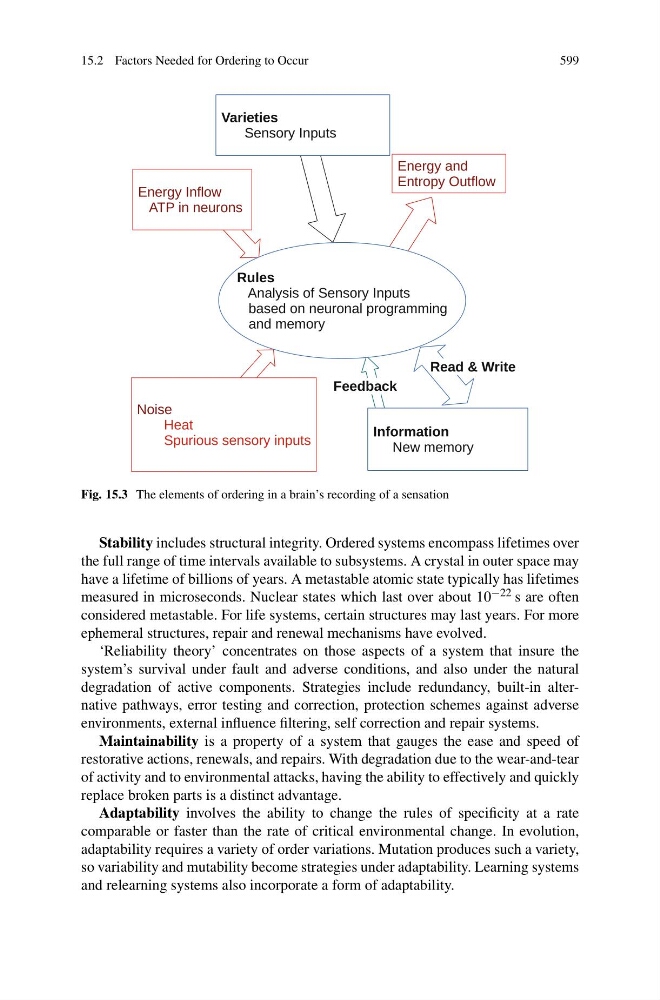
Fig. 15.3 The elements of ordering in a brain’s recording of a sensation
Stability includes structural integrity. Ordered systems encompass lifetimes over
the full range of time intervals available to subsystems. A crystal in outer space may
have a lifetime of billions of years. A metastable atomic state typically has lifetimes
measured in microseconds. Nuclear states which last over about 10 −22 s are often
considered metastable. For life systems, certain structures may last years. For more
ephemeral structures, repair and renewal mechanisms have evolved.
‘Reliability theory’ concentrates on those aspects of a system that insure the
system’s survival under fault and adverse conditions, and also under the natural
degradation of active components. Strategies include redundancy, built-in alternative pathways, error testing and correction, protection schemes against adverse
environments, external influence filtering, self correction and repair systems.
Maintainability is a property of a system that gauges the ease and speed of
restorative actions, renewals, and repairs. With degradation due to the wear-and-tear
of activity and to environmental attacks, having the ability to effectively and quickly
replace broken parts is a distinct advantage.
Adaptability involves the ability to change the rules of specificity at a rate
comparable or faster than the rate of critical environmental change. In evolution,
adaptability requires a variety of order variations. Mutation produces such a variety,
so variability and mutability become strategies under adaptability. Learning systems
and relearning systems also incorporate a form of adaptability.