

11.9 Biomolecular Motor
539
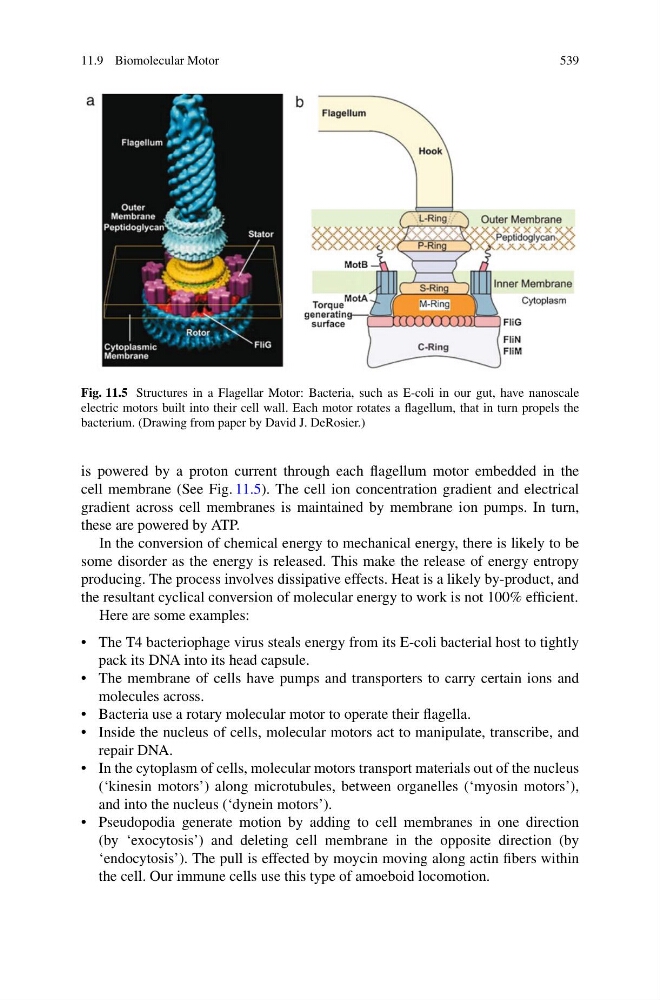
Fig. 11.5 Structures in a Flagellar Motor: Bacteria, such as E-coli in our gut, have nanoscale
electric motors built into their cell wall. Each motor rotates a flagellum, that in turn propels the
bacterium. (Drawing from paper by David J. DeRosier.)
is powered by a proton current through each flagellum motor embedded in the
cell membrane (See Fig. 11.5). The cell ion concentration gradient and electrical
gradient across cell membranes is maintained by membrane ion pumps. In turn,
these are powered by ATP.
In the conversion of chemical energy to mechanical energy, there is likely to be
some disorder as the energy is released. This make the release of energy entropy
producing. The process involves dissipative effects. Heat is a likely by-product, and
the resultant cyclical conversion of molecular energy to work is not 100% efficient.
Here are some examples:
• The T4 bacteriophage virus steals energy from its E-coli bacterial host to tightly
pack its DNA into its head capsule.
• The membrane of cells have pumps and transporters to carry certain ions and
molecules across.
• Bacteria use a rotary molecular motor to operate their flagella.
• Inside the nucleus of cells, molecular motors act to manipulate, transcribe, and
repair DNA.
• In the cytoplasm of cells, molecular motors transport materials out of the nucleus
(‘kinesin motors’) along microtubules, between organelles (‘myosin motors’),
and into the nucleus (‘dynein motors’).
• Pseudopodia generate motion by adding to cell membranes in one direction
(by ‘exocytosis’) and deleting cell membrane in the opposite direction (by
‘endocytosis’). The pull is effected by moycin moving along actin fibers within
the cell. Our immune cells use this type of amoeboid locomotion.