

8.4 Ultraviolet Radiation
289
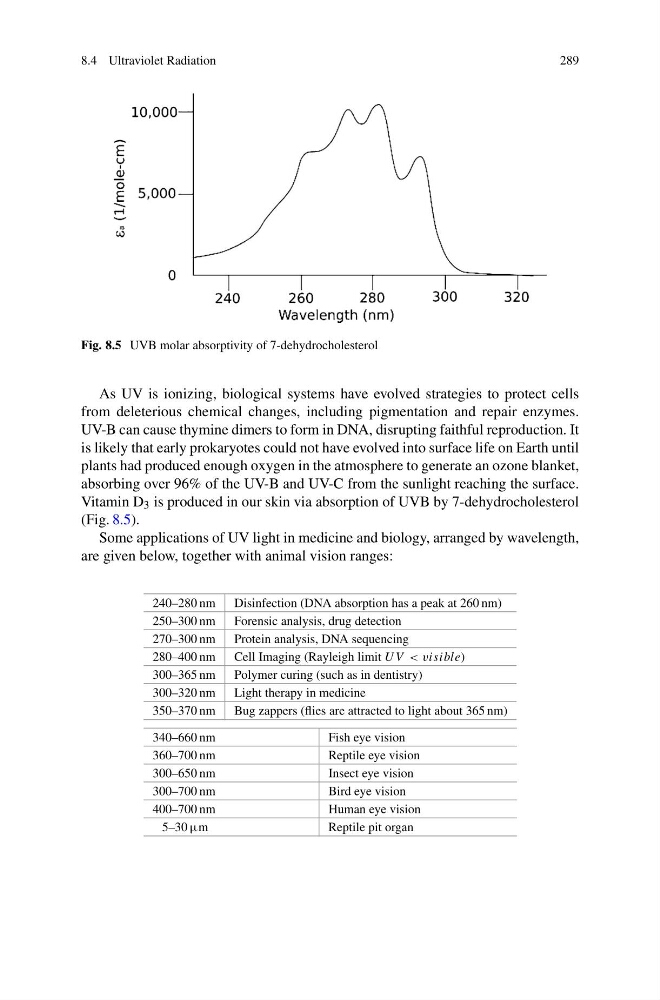
Fig. 8.5 UVB molar absorptivity of 7-dehydrocholesterol
As UV is ionizing, biological systems have evolved strategies to protect cells
from deleterious chemical changes, including pigmentation and repair enzymes.
UV-B can cause thymine dimers to form in DNA, disrupting faithful reproduction. It
is likely that early prokaryotes could not have evolved into surface life on Earth until
plants had produced enough oxygen in the atmosphere to generate an ozone blanket,
absorbing over 96% of the UV-B and UV-C from the sunlight reaching the surface.
Vitamin D 3 is produced in our skin via absorption of UVB by 7-dehydrocholesterol
(Fig. 8.5).
Some applications of UV light in medicine and biology, arranged by wavelength,
are given below, together with animal vision ranges:
240–280 nm Disinfection (DNA absorption has a peak at 260 nm)
250–300 nm Forensic analysis, drug detection
270–300 nm Protein analysis, DNA sequencing
280–400 nm Cell Imaging (Rayleigh limit U V < visible)
300–365 nm Polymer curing (such as in dentistry)
300–320 nm Light therapy in medicine
350–370 nm Bug zappers (flies are attracted to light about 365 nm)
340–660 nm
Fish eye vision
360–700 nm
Reptile eye vision
300–650 nm
Insect eye vision
300–700 nm
Bird eye vision
400–700 nm
Human eye vision
5–30 μm
Reptile pit organ
289
Fig. 8.5 UVB molar absorptivity of 7-dehydrocholesterol
As UV is ionizing, biological systems have evolved strategies to protect cells
from deleterious chemical changes, including pigmentation and repair enzymes.
UV-B can cause thymine dimers to form in DNA, disrupting faithful reproduction. It
is likely that early prokaryotes could not have evolved into surface life on Earth until
plants had produced enough oxygen in the atmosphere to generate an ozone blanket,
absorbing over 96% of the UV-B and UV-C from the sunlight reaching the surface.
Vitamin D 3 is produced in our skin via absorption of UVB by 7-dehydrocholesterol
(Fig. 8.5).
Some applications of UV light in medicine and biology, arranged by wavelength,
are given below, together with animal vision ranges:
240–280 nm Disinfection (DNA absorption has a peak at 260 nm)
250–300 nm Forensic analysis, drug detection
270–300 nm Protein analysis, DNA sequencing
280–400 nm Cell Imaging (Rayleigh limit U V < visible)
300–365 nm Polymer curing (such as in dentistry)
300–320 nm Light therapy in medicine
350–370 nm Bug zappers (flies are attracted to light about 365 nm)
340–660 nm
Fish eye vision
360–700 nm
Reptile eye vision
300–650 nm
Insect eye vision
300–700 nm
Bird eye vision
400–700 nm
Human eye vision
5–30 μm
Reptile pit organ