

200
6 Electric and Magnetic Fields in Life
Table 6.1 Nuclear spins and
magnetic moments (in units
of the nuclear magneton) for
atoms common to organic
molecules (abundance by
fraction of number of atoms
in human)
Isotope Spin μ
Abundance
1 H
1/2
2.79278 0.62
12 C
0
0
0.12
14 N
1
0.40375 0.011
16 O
0
0
0.24
23 Na
3/2
2.217
0.00037
24 Mg
0
0
0.000070
31 P
1/2
1.1317
0.0022
32 S
0
0
0.00038
35 Cl
3/2
0.82181 0.00024
39 K
3/2
0.391
0.00033
40 Ca
0
0
0.0022
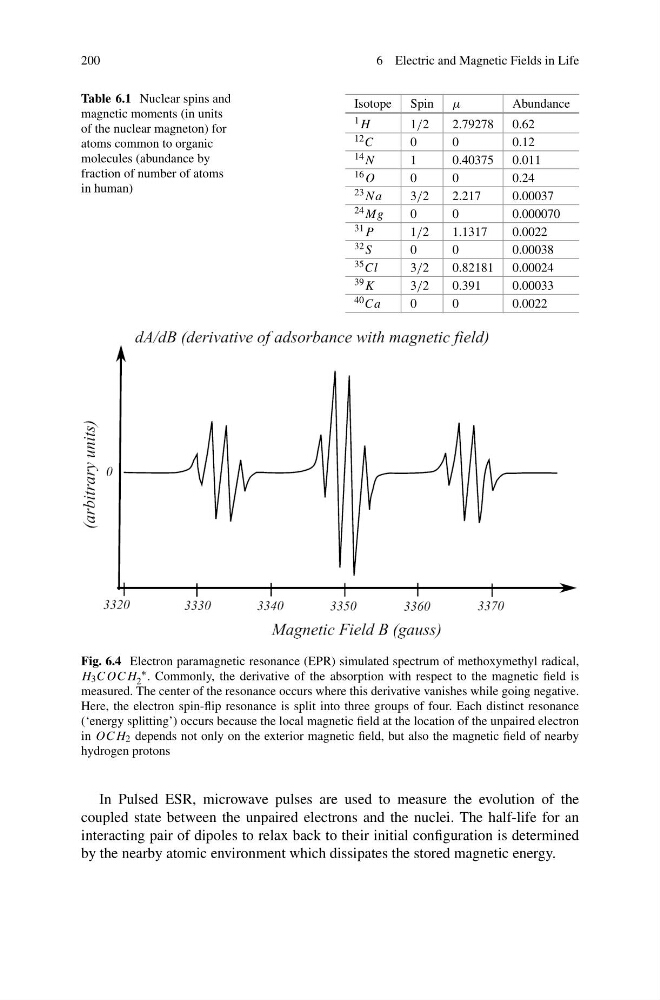
Fig. 6.4 Electron paramagnetic resonance (EPR) simulated spectrum of methoxymethyl radical,
H 3 COCH ∗
2 . Commonly, the derivative of the absorption with respect to the magnetic field is
measured. The center of the resonance occurs where this derivative vanishes while going negative.
Here, the electron spin-flip resonance is split into three groups of four. Each distinct resonance
(‘energy splitting’) occurs because the local magnetic field at the location of the unpaired electron
in OCH 2 depends not only on the exterior magnetic field, but also the magnetic field of nearby
hydrogen protons
In Pulsed ESR, microwave pulses are used to measure the evolution of the
coupled state between the unpaired electrons and the nuclei. The half-life for an
interacting pair of dipoles to relax back to their initial configuration is determined
by the nearby atomic environment which dissipates the stored magnetic energy.
6 Electric and Magnetic Fields in Life
Table 6.1 Nuclear spins and
magnetic moments (in units
of the nuclear magneton) for
atoms common to organic
molecules (abundance by
fraction of number of atoms
in human)
Isotope Spin μ
Abundance
1 H
1/2
2.79278 0.62
12 C
0
0
0.12
14 N
1
0.40375 0.011
16 O
0
0
0.24
23 Na
3/2
2.217
0.00037
24 Mg
0
0
0.000070
31 P
1/2
1.1317
0.0022
32 S
0
0
0.00038
35 Cl
3/2
0.82181 0.00024
39 K
3/2
0.391
0.00033
40 Ca
0
0
0.0022
Fig. 6.4 Electron paramagnetic resonance (EPR) simulated spectrum of methoxymethyl radical,
H 3 COCH ∗
2 . Commonly, the derivative of the absorption with respect to the magnetic field is
measured. The center of the resonance occurs where this derivative vanishes while going negative.
Here, the electron spin-flip resonance is split into three groups of four. Each distinct resonance
(‘energy splitting’) occurs because the local magnetic field at the location of the unpaired electron
in OCH 2 depends not only on the exterior magnetic field, but also the magnetic field of nearby
hydrogen protons
In Pulsed ESR, microwave pulses are used to measure the evolution of the
coupled state between the unpaired electrons and the nuclei. The half-life for an
interacting pair of dipoles to relax back to their initial configuration is determined
by the nearby atomic environment which dissipates the stored magnetic energy.