

162
5 Acoustics in Biology and Medicine
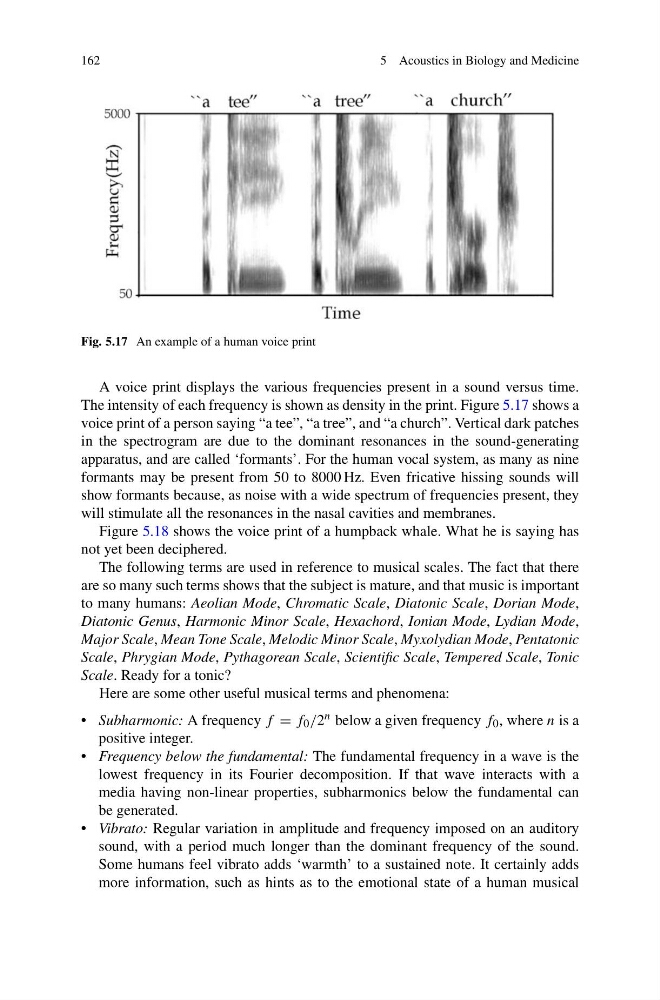
Fig. 5.17 An example of a human voice print
A voice print displays the various frequencies present in a sound versus time.
The intensity of each frequency is shown as density in the print. Figure 5.17 shows a
voice print of a person saying “a tee”, “a tree”, and “a church”. Vertical dark patches
in the spectrogram are due to the dominant resonances in the sound-generating
apparatus, and are called ‘formants’. For the human vocal system, as many as nine
formants may be present from 50 to 8000 Hz. Even fricative hissing sounds will
show formants because, as noise with a wide spectrum of frequencies present, they
will stimulate all the resonances in the nasal cavities and membranes.
Figure 5.18 shows the voice print of a humpback whale. What he is saying has
not yet been deciphered.
The following terms are used in reference to musical scales. The fact that there
are so many such terms shows that the subject is mature, and that music is important
to many humans: Aeolian Mode, Chromatic Scale, Diatonic Scale, Dorian Mode,
Diatonic Genus, Harmonic Minor Scale, Hexachord, Ionian Mode, Lydian Mode,
Major Scale, Mean Tone Scale, Melodic Minor Scale, Myxolydian Mode, Pentatonic
Scale, Phrygian Mode, Pythagorean Scale, Scientific Scale, Tempered Scale, Tonic
Scale. Ready for a tonic?
Here are some other useful musical terms and phenomena:
• Subharmonic: A frequency f = f 0 /2 n below a given frequency f 0 , where n is a
positive integer.
• Frequency below the fundamental: The fundamental frequency in a wave is the
lowest frequency in its Fourier decomposition. If that wave interacts with a
media having non-linear properties, subharmonics below the fundamental can
be generated.
• Vibrato: Regular variation in amplitude and frequency imposed on an auditory
sound, with a period much longer than the dominant frequency of the sound.
Some humans feel vibrato adds ‘warmth’ to a sustained note. It certainly adds
more information, such as hints as to the emotional state of a human musical
5 Acoustics in Biology and Medicine
Fig. 5.17 An example of a human voice print
A voice print displays the various frequencies present in a sound versus time.
The intensity of each frequency is shown as density in the print. Figure 5.17 shows a
voice print of a person saying “a tee”, “a tree”, and “a church”. Vertical dark patches
in the spectrogram are due to the dominant resonances in the sound-generating
apparatus, and are called ‘formants’. For the human vocal system, as many as nine
formants may be present from 50 to 8000 Hz. Even fricative hissing sounds will
show formants because, as noise with a wide spectrum of frequencies present, they
will stimulate all the resonances in the nasal cavities and membranes.
Figure 5.18 shows the voice print of a humpback whale. What he is saying has
not yet been deciphered.
The following terms are used in reference to musical scales. The fact that there
are so many such terms shows that the subject is mature, and that music is important
to many humans: Aeolian Mode, Chromatic Scale, Diatonic Scale, Dorian Mode,
Diatonic Genus, Harmonic Minor Scale, Hexachord, Ionian Mode, Lydian Mode,
Major Scale, Mean Tone Scale, Melodic Minor Scale, Myxolydian Mode, Pentatonic
Scale, Phrygian Mode, Pythagorean Scale, Scientific Scale, Tempered Scale, Tonic
Scale. Ready for a tonic?
Here are some other useful musical terms and phenomena:
• Subharmonic: A frequency f = f 0 /2 n below a given frequency f 0 , where n is a
positive integer.
• Frequency below the fundamental: The fundamental frequency in a wave is the
lowest frequency in its Fourier decomposition. If that wave interacts with a
media having non-linear properties, subharmonics below the fundamental can
be generated.
• Vibrato: Regular variation in amplitude and frequency imposed on an auditory
sound, with a period much longer than the dominant frequency of the sound.
Some humans feel vibrato adds ‘warmth’ to a sustained note. It certainly adds
more information, such as hints as to the emotional state of a human musical