

Theoretical Study of the Direct Conversion of Methane …
25
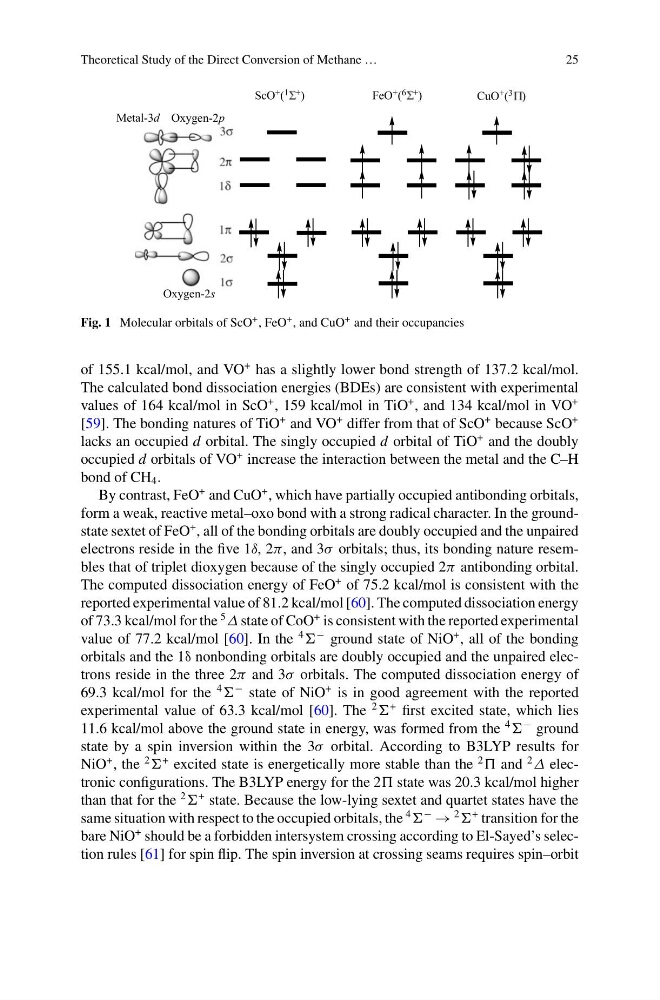
Fig. 1 Molecular orbitals of ScO + , FeO + , and CuO + and their occupancies
of 155.1 kcal/mol, and VO
+ has a slightly lower bond strength of 137.2 kcal/mol.
The calculated bond dissociation energies (BDEs) are consistent with experimental
values of 164 kcal/mol in ScO
+ , 159 kcal/mol in TiO
+ , and 134 kcal/mol in VO
+
[59]. The bonding natures of TiO
+ and VO
+ differ from that of ScO
+ because ScO
+
lacks an occupied d orbital. The singly occupied d orbital of TiO
+ and the doubly
occupied d orbitals of VO
+ increase the interaction between the metal and the C–H
bond of CH 4 .
By contrast, FeO
+ and CuO
+ , which have partially occupied antibonding orbitals,
form a weak, reactive metal–oxo bond with a strong radical character. In the groundstate sextet of FeO
+ , all of the bonding orbitals are doubly occupied and the unpaired
electrons reside in the five 1δ, 2π, and 3σ orbitals; thus, its bonding nature resembles that of triplet dioxygen because of the singly occupied 2π antibonding orbital.
The computed dissociation energy of FeO
+ of 75.2 kcal/mol is consistent with the
reported experimental value of 81.2 kcal/mol [60]. The computed dissociation energy
of 73.3 kcal/mol for the
5
Δ state of CoO
+ is consistent with the reported experimental
value of 77.2 kcal/mol [60]. In the
4
− ground state of NiO
+ , all of the bonding
orbitals and the 1δ nonbonding orbitals are doubly occupied and the unpaired electrons reside in the three 2π and 3σ orbitals. The computed dissociation energy of
69.3 kcal/mol for the
4
− state of NiO
+ is in good agreement with the reported
experimental value of 63.3 kcal/mol [60]. The
2
+ first excited state, which lies
11.6 kcal/mol above the ground state in energy, was formed from the
4
− ground
state by a spin inversion within the 3σ orbital. According to B3LYP results for
NiO
+ , the
2
+ excited state is energetically more stable than the
2
and
2
Δ electronic configurations. The B3LYP energy for the 2 state was 20.3 kcal/mol higher
than that for the
2
+ state. Because the low-lying sextet and quartet states have the
same situation with respect to the occupied orbitals, the
4
−
→
2
+ transition for the
bare NiO
+ should be a forbidden intersystem crossing according to El-Sayed’s selection rules [61] for spin flip. The spin inversion at crossing seams requires spin–orbit
25
Fig. 1 Molecular orbitals of ScO + , FeO + , and CuO + and their occupancies
of 155.1 kcal/mol, and VO
+ has a slightly lower bond strength of 137.2 kcal/mol.
The calculated bond dissociation energies (BDEs) are consistent with experimental
values of 164 kcal/mol in ScO
+ , 159 kcal/mol in TiO
+ , and 134 kcal/mol in VO
+
[59]. The bonding natures of TiO
+ and VO
+ differ from that of ScO
+ because ScO
+
lacks an occupied d orbital. The singly occupied d orbital of TiO
+ and the doubly
occupied d orbitals of VO
+ increase the interaction between the metal and the C–H
bond of CH 4 .
By contrast, FeO
+ and CuO
+ , which have partially occupied antibonding orbitals,
form a weak, reactive metal–oxo bond with a strong radical character. In the groundstate sextet of FeO
+ , all of the bonding orbitals are doubly occupied and the unpaired
electrons reside in the five 1δ, 2π, and 3σ orbitals; thus, its bonding nature resembles that of triplet dioxygen because of the singly occupied 2π antibonding orbital.
The computed dissociation energy of FeO
+ of 75.2 kcal/mol is consistent with the
reported experimental value of 81.2 kcal/mol [60]. The computed dissociation energy
of 73.3 kcal/mol for the
5
Δ state of CoO
+ is consistent with the reported experimental
value of 77.2 kcal/mol [60]. In the
4
− ground state of NiO
+ , all of the bonding
orbitals and the 1δ nonbonding orbitals are doubly occupied and the unpaired electrons reside in the three 2π and 3σ orbitals. The computed dissociation energy of
69.3 kcal/mol for the
4
− state of NiO
+ is in good agreement with the reported
experimental value of 63.3 kcal/mol [60]. The
2
+ first excited state, which lies
11.6 kcal/mol above the ground state in energy, was formed from the
4
− ground
state by a spin inversion within the 3σ orbital. According to B3LYP results for
NiO
+ , the
2
+ excited state is energetically more stable than the
2
and
2
Δ electronic configurations. The B3LYP energy for the 2 state was 20.3 kcal/mol higher
than that for the
2
+ state. Because the low-lying sextet and quartet states have the
same situation with respect to the occupied orbitals, the
4
−
→
2
+ transition for the
bare NiO
+ should be a forbidden intersystem crossing according to El-Sayed’s selection rules [61] for spin flip. The spin inversion at crossing seams requires spin–orbit