

the mineral. Of interest is also the statement that alum shale ”is so penetrated with
phlogiston, that it is completely black and often burn in fire”. It seems that Bergman
had rather vague ideas of phlogiston at this point. It is almost as if he regards it as a
material substance, perhaps even synonymous with the oil in the shale. A footnote
in the paper, discussing the similarity between quartz and flint would be attacked by
his predecessor Wallerius (Chap. 9.1).
7.1 The Cosmographic Society
In 1758, the Cosmographic Society was formed in Uppsala. Bergman was among
the founding members, the others were Bergman’s supervisor Bengt Ferner, Per
Arrhenius, who would become vicar in Funbo, Johan Gustaf Zegollström, who
became a teacher in mathematics at the Naval Academy in Karlskrona, Stefan
Insulin, later bishop in Strängnäs and engraver Anders Åkerman [19]. Soon they
were joined by, e.g. Mårten Strömer, astronomical observer Fredric Mallet in
Uppsala and Wargentin. The first undertaking of the society was the production of
two globes, one of Earth and one of the stars, and an extensive treatise about the
world in three volumes. The globes were produced by Åkerman and Fredric Mallet
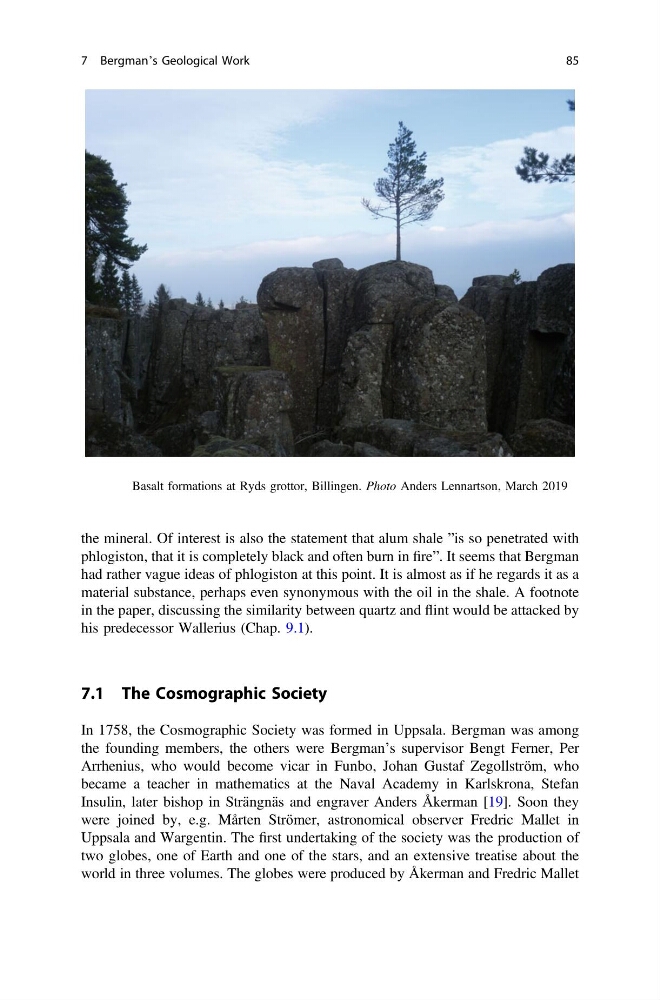
Fig. 7.1 Basalt formations at Ryds grottor, Billingen. Photo Anders Lennartson, March 2019
7 Bergman’s Geological Work
85
phlogiston, that it is completely black and often burn in fire”. It seems that Bergman
had rather vague ideas of phlogiston at this point. It is almost as if he regards it as a
material substance, perhaps even synonymous with the oil in the shale. A footnote
in the paper, discussing the similarity between quartz and flint would be attacked by
his predecessor Wallerius (Chap. 9.1).
7.1 The Cosmographic Society
In 1758, the Cosmographic Society was formed in Uppsala. Bergman was among
the founding members, the others were Bergman’s supervisor Bengt Ferner, Per
Arrhenius, who would become vicar in Funbo, Johan Gustaf Zegollström, who
became a teacher in mathematics at the Naval Academy in Karlskrona, Stefan
Insulin, later bishop in Strängnäs and engraver Anders Åkerman [19]. Soon they
were joined by, e.g. Mårten Strömer, astronomical observer Fredric Mallet in
Uppsala and Wargentin. The first undertaking of the society was the production of
two globes, one of Earth and one of the stars, and an extensive treatise about the
world in three volumes. The globes were produced by Åkerman and Fredric Mallet
Fig. 7.1 Basalt formations at Ryds grottor, Billingen. Photo Anders Lennartson, March 2019
7 Bergman’s Geological Work
85