

finally settle down in Eskilstuna, where he also set up his own laboratory. He is
today best known for his textbooks on mining and metallurgy. He was elected a
member of the Royal Swedish Academy of Sciences in 1751 and died in Eskilstuna
in 1792.
Franz Aepinus had studied tourmalines in Berlin during the time when Wilcke
visited him. In 1757, Aepinius reported that the tourmaline crystals had two poles,
and upon heating, one pole became positively charged while the other pole became
negatively charged. In 1759, Benjamin Wilson had reported contradictory results:
when a large crystal was heated on only one side, both sides would acquire the
same charge. Bergman showed that the effect was due to thermal expansion
(Fig. 5.4). When one pole was heated the crystal expanded and the opposite pole
acquired the opposite charge, but as the heated pole cooled, the polarisation switched. Bergman showed that the crystal would not acquire any net charge: there
were always equal amounts of positive and negative charge. The original stones that
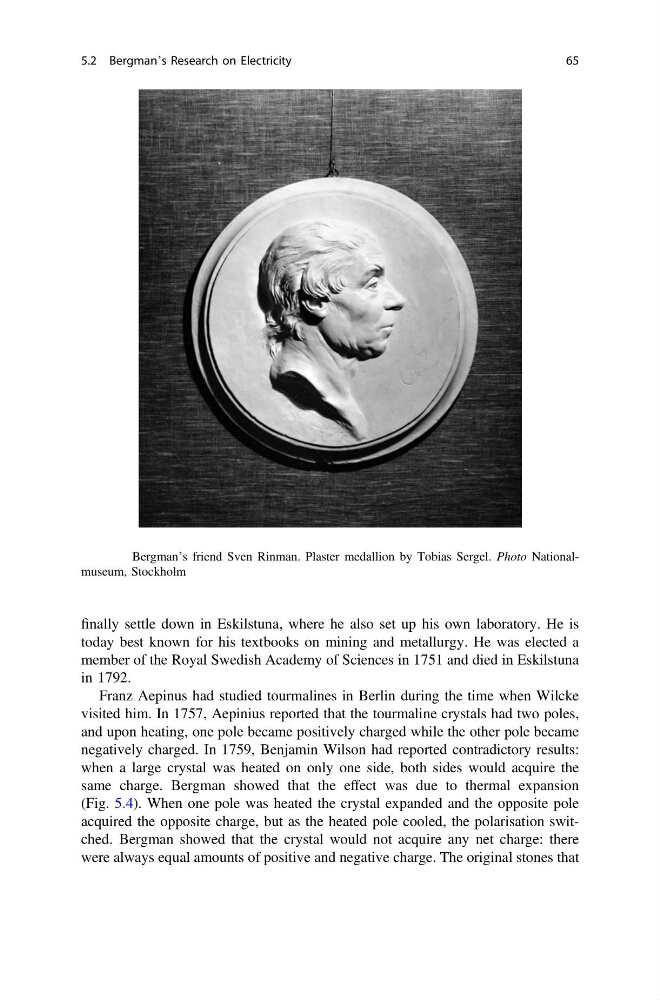
Fig. 5.3 Bergman’s friend Sven Rinman. Plaster medallion by Tobias Sergel. Photo Nationalmuseum, Stockholm
5.2 Bergman’s Research on Electricity
65
today best known for his textbooks on mining and metallurgy. He was elected a
member of the Royal Swedish Academy of Sciences in 1751 and died in Eskilstuna
in 1792.
Franz Aepinus had studied tourmalines in Berlin during the time when Wilcke
visited him. In 1757, Aepinius reported that the tourmaline crystals had two poles,
and upon heating, one pole became positively charged while the other pole became
negatively charged. In 1759, Benjamin Wilson had reported contradictory results:
when a large crystal was heated on only one side, both sides would acquire the
same charge. Bergman showed that the effect was due to thermal expansion
(Fig. 5.4). When one pole was heated the crystal expanded and the opposite pole
acquired the opposite charge, but as the heated pole cooled, the polarisation switched. Bergman showed that the crystal would not acquire any net charge: there
were always equal amounts of positive and negative charge. The original stones that
Fig. 5.3 Bergman’s friend Sven Rinman. Plaster medallion by Tobias Sergel. Photo Nationalmuseum, Stockholm
5.2 Bergman’s Research on Electricity
65