

Finnish, was sent instead of Bergman. It would actually turn out to be fortunate for
Bergman, since his colleague Fredric Mallet (1728–1797), who later became professor of mathematics, actually travelled to Torneå, but could not make any
observations due to the cloudy weather [14]. Bergman instead assisted Strömer in
Uppsala, where the weather was more favourable. Bergman described his observations in a letter to Benjamin Wilson, who published the letter, written in Latin, in
Philosophical Transactions [15]. The observation of an atmosphere around Venus
by the Russian scientist Mikhail Lomonosov during the 1761 transit was later found
to be an error. Not until the nineteenth century was the atmosphere Venus correctly
observed and not until the space age did we obtain any data about its remarkable
nature.
In 1765, Bergman published a paper in Economic Newspapers on the importance of weather forecasts for agriculture [16]. Bergman noted that within the
tropics, the weather was easily predicted, while weather was more unpredictable in
Sweden. Bergman suggested that this was due to lack of reliable data, and
encouraged people to use thermometers, barometers, and hygrometers to collect
data and send the observations to the Royal Swedish Academy of Sciences for
evaluation. Bergman stressed to the reader that observed connections could be
coincidental. For instance, it could be observed that the lightning of a blast furnace
diverted a raincloud, but based on a single observation this was not a reliable
conclusion.
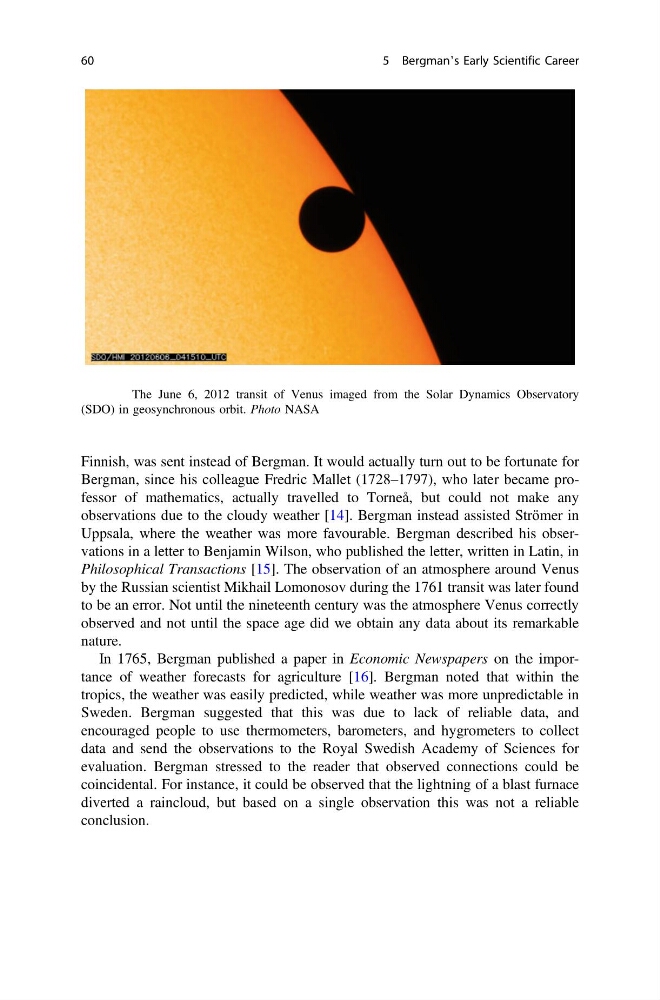
Fig. 5.1 The June 6, 2012 transit of Venus imaged from the Solar Dynamics Observatory
(SDO) in geosynchronous orbit. Photo NASA
60
5 Bergman’s Early Scientific Career
Bergman, since his colleague Fredric Mallet (1728–1797), who later became professor of mathematics, actually travelled to Torneå, but could not make any
observations due to the cloudy weather [14]. Bergman instead assisted Strömer in
Uppsala, where the weather was more favourable. Bergman described his observations in a letter to Benjamin Wilson, who published the letter, written in Latin, in
Philosophical Transactions [15]. The observation of an atmosphere around Venus
by the Russian scientist Mikhail Lomonosov during the 1761 transit was later found
to be an error. Not until the nineteenth century was the atmosphere Venus correctly
observed and not until the space age did we obtain any data about its remarkable
nature.
In 1765, Bergman published a paper in Economic Newspapers on the importance of weather forecasts for agriculture [16]. Bergman noted that within the
tropics, the weather was easily predicted, while weather was more unpredictable in
Sweden. Bergman suggested that this was due to lack of reliable data, and
encouraged people to use thermometers, barometers, and hygrometers to collect
data and send the observations to the Royal Swedish Academy of Sciences for
evaluation. Bergman stressed to the reader that observed connections could be
coincidental. For instance, it could be observed that the lightning of a blast furnace
diverted a raincloud, but based on a single observation this was not a reliable
conclusion.
Fig. 5.1 The June 6, 2012 transit of Venus imaged from the Solar Dynamics Observatory
(SDO) in geosynchronous orbit. Photo NASA
60
5 Bergman’s Early Scientific Career