

to publish his results. A German translation by von Born appeared the same year,
and a revised version appeared in the second volume of Bergman’s Opuscula the
following year, followed by translations to French, English and Italian. Bergman’s
student Hjelm translated the Opuscula version to Swedish and published it with
additional comments by Bergman in 1781. According to Szabadváry, Bergman in
his book on the blow-pipe became the first to clearly distinguish between quantitative and qualitative analyses [49].
To use the blow-pipe, Bergman assured, requires much practice, since a constant
flow of air is required. Thus, the analyst needs to breathe through his nose while
using the cheeks to provide the air pressure for the blowing.
9 The sample is placed
on a piece of fir or birch charcoal (for reduction experiments) or in a silver (or even
better golden) spoon for melting with fluxes. The fluxes Bergman used where
ammonium sodium phosphate (microcosmic salt), sodium tetraborate (borax) and
sodium carbonate (mineral alkali). The sample was powdered with a hammer
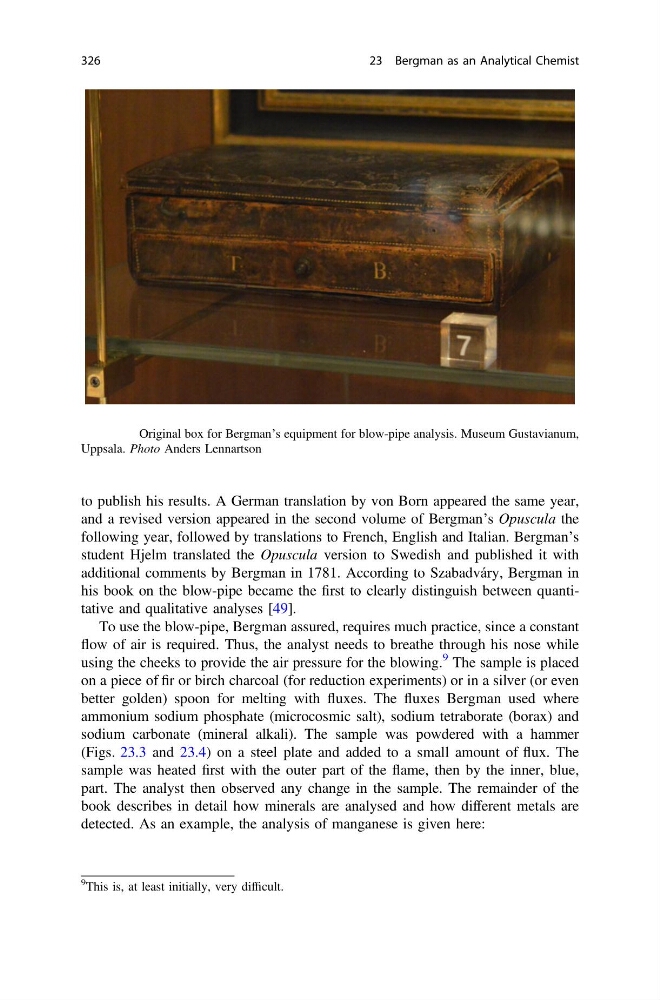
(Figs. 23.3 and 23.4) on a steel plate and added to a small amount of flux. The
sample was heated first with the outer part of the flame, then by the inner, blue,
part. The analyst then observed any change in the sample. The remainder of the
book describes in detail how minerals are analysed and how different metals are
detected. As an example, the analysis of manganese is given here:
Fig. 23.4 Original box for Bergman’s equipment for blow-pipe analysis. Museum Gustavianum,
Uppsala. Photo Anders Lennartson
9
This is, at least initially, very difficult.
326
23 Bergman as an Analytical Chemist
and a revised version appeared in the second volume of Bergman’s Opuscula the
following year, followed by translations to French, English and Italian. Bergman’s
student Hjelm translated the Opuscula version to Swedish and published it with
additional comments by Bergman in 1781. According to Szabadváry, Bergman in
his book on the blow-pipe became the first to clearly distinguish between quantitative and qualitative analyses [49].
To use the blow-pipe, Bergman assured, requires much practice, since a constant
flow of air is required. Thus, the analyst needs to breathe through his nose while
using the cheeks to provide the air pressure for the blowing.
9 The sample is placed
on a piece of fir or birch charcoal (for reduction experiments) or in a silver (or even
better golden) spoon for melting with fluxes. The fluxes Bergman used where
ammonium sodium phosphate (microcosmic salt), sodium tetraborate (borax) and
sodium carbonate (mineral alkali). The sample was powdered with a hammer
(Figs. 23.3 and 23.4) on a steel plate and added to a small amount of flux. The
sample was heated first with the outer part of the flame, then by the inner, blue,
part. The analyst then observed any change in the sample. The remainder of the
book describes in detail how minerals are analysed and how different metals are
detected. As an example, the analysis of manganese is given here:
Fig. 23.4 Original box for Bergman’s equipment for blow-pipe analysis. Museum Gustavianum,
Uppsala. Photo Anders Lennartson
9
This is, at least initially, very difficult.
326
23 Bergman as an Analytical Chemist