

physician Göran Rothman (1739–1778) and Henric Gahn, all of which were apostles
of Linnæus, Johan Bergstrahl (1715–1795) and Scheele’s friend David von
Schulzenheim. Chairman was Scheele’s friend Abraham Bäck. According to the
preserved minutes, Scheele answered all the questions in chemistry and pharmacy
correctly. It has been claimed that the examination took the form of an informal
celebration of the famous chemist; this has been questioned by Gentz [15], and no
preserved document supports that view. However, six days after the exam, it was
decided that Scheele would be freed from the costs of the exam, partly as he had
promised to help with the new edition of the Swedish pharmacopeia, Pharmacopoea
Suecia [16].
The day after the exam, Scheele once again attended a meeting of the Royal
Swedish Academy of Sciences. This was Bergman’s last meeting as president, and
King Gustav III was attending. As a leaving president, Bergman’s duty was to
deliver a lecture. This lecture, On Chemistry’s Latest Progress (Sect. 19.5), is a
good insight into Bergman’s views on chemistry.
In the election of new president, Scheele was one of those getting the largest
number of votes, but lost when lots were drawn. In the end, Scheele never served as
president in the Academy, and he was probably happy about that. On the initiative
of Bergman, Scheele was granted an annual scholarship of 100 riksdaler specie for
three years. This funding was later extended for the rest of his life, but was reduced
to 60 riksdaler 1781–1784. On the same occasion, Bergman was also awarded a
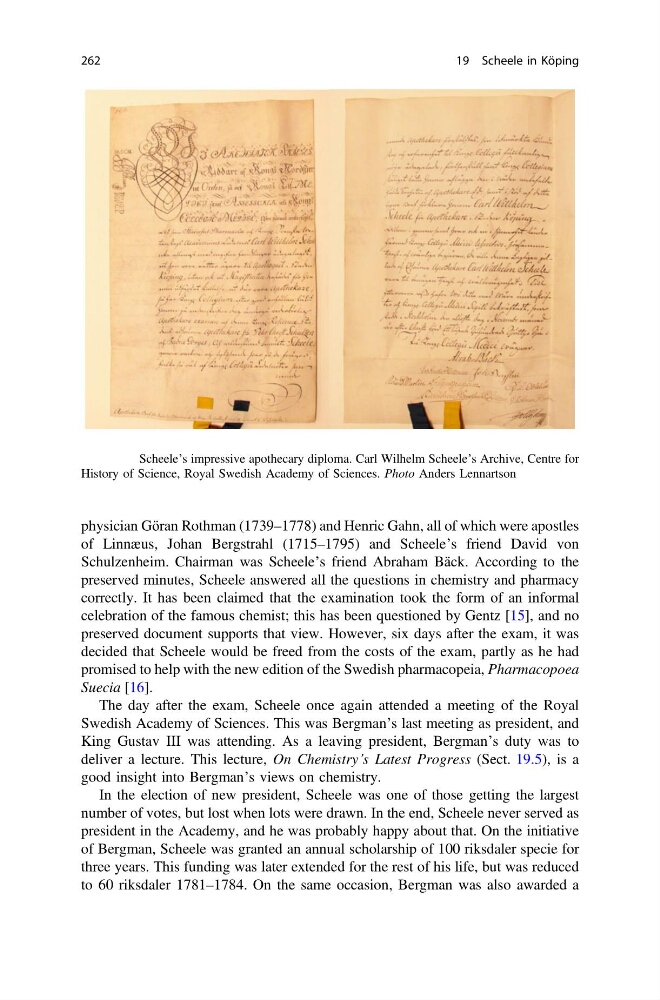
Fig. 19.5 Scheele’s impressive apothecary diploma. Carl Wilhelm Scheele’s Archive, Centre for
History of Science, Royal Swedish Academy of Sciences. Photo Anders Lennartson
262
19 Scheele in Köping
of Linnæus, Johan Bergstrahl (1715–1795) and Scheele’s friend David von
Schulzenheim. Chairman was Scheele’s friend Abraham Bäck. According to the
preserved minutes, Scheele answered all the questions in chemistry and pharmacy
correctly. It has been claimed that the examination took the form of an informal
celebration of the famous chemist; this has been questioned by Gentz [15], and no
preserved document supports that view. However, six days after the exam, it was
decided that Scheele would be freed from the costs of the exam, partly as he had
promised to help with the new edition of the Swedish pharmacopeia, Pharmacopoea
Suecia [16].
The day after the exam, Scheele once again attended a meeting of the Royal
Swedish Academy of Sciences. This was Bergman’s last meeting as president, and
King Gustav III was attending. As a leaving president, Bergman’s duty was to
deliver a lecture. This lecture, On Chemistry’s Latest Progress (Sect. 19.5), is a
good insight into Bergman’s views on chemistry.
In the election of new president, Scheele was one of those getting the largest
number of votes, but lost when lots were drawn. In the end, Scheele never served as
president in the Academy, and he was probably happy about that. On the initiative
of Bergman, Scheele was granted an annual scholarship of 100 riksdaler specie for
three years. This funding was later extended for the rest of his life, but was reduced
to 60 riksdaler 1781–1784. On the same occasion, Bergman was also awarded a
Fig. 19.5 Scheele’s impressive apothecary diploma. Carl Wilhelm Scheele’s Archive, Centre for
History of Science, Royal Swedish Academy of Sciences. Photo Anders Lennartson
262
19 Scheele in Köping