

apron. Scheele happily discussed his research with them, but did not interrupt his
work in the laboratory. He spoke freely about his new discoveries, apparently
without keeping unpublished work secret. When they invited him for dinner, he
joined them, but immediately returned to his laboratory as soon as he had finished
the food—without thanking his hosts. The two guests stayed for two days and left
very impressed. From a letter to Bergman, it is clear that Scheele was very happy
about the visit, but it seems that he never considered taking a break from his work.
In August 1784, Scheele was visited by Smithson Tennant (1761–1815), a
British chemist who would be known as co-discoverer of osmium and iridium in
1803. In a letter to Wilcke, Scheele wrote that Tennant stayed for two days, and had
written down all news Scheele told him. It was especially the discovery of hydrogen
cyanide that Tennant found interesting. The trip to Sweden must have made a great
impression on Tennant; when Berzelius met Tennant in England decades later, he
was still carrying a map over Sweden in his pocket [11].
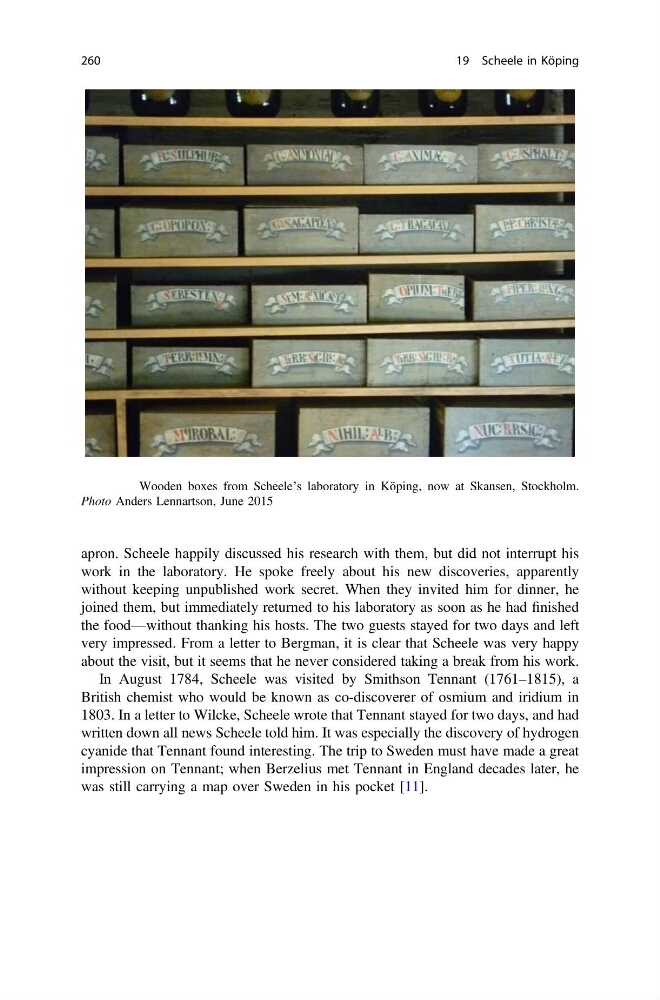
Fig. 19.4 Wooden boxes from Scheele’s laboratory in Köping, now at Skansen, Stockholm.
Photo Anders Lennartson, June 2015
260
19 Scheele in Köping
work in the laboratory. He spoke freely about his new discoveries, apparently
without keeping unpublished work secret. When they invited him for dinner, he
joined them, but immediately returned to his laboratory as soon as he had finished
the food—without thanking his hosts. The two guests stayed for two days and left
very impressed. From a letter to Bergman, it is clear that Scheele was very happy
about the visit, but it seems that he never considered taking a break from his work.
In August 1784, Scheele was visited by Smithson Tennant (1761–1815), a
British chemist who would be known as co-discoverer of osmium and iridium in
1803. In a letter to Wilcke, Scheele wrote that Tennant stayed for two days, and had
written down all news Scheele told him. It was especially the discovery of hydrogen
cyanide that Tennant found interesting. The trip to Sweden must have made a great
impression on Tennant; when Berzelius met Tennant in England decades later, he
was still carrying a map over Sweden in his pocket [11].
Fig. 19.4 Wooden boxes from Scheele’s laboratory in Köping, now at Skansen, Stockholm.
Photo Anders Lennartson, June 2015
260
19 Scheele in Köping