

topic of chemical affinities. He devoted much time to the study of heat, but also
conducted mineral analysis. In 1794, he found a new earth, yttria, in a mineral from
the Ytterby mine in the Stockholm archipelago [56]. From this earth, yttrium was
eventually isolated, the first in a series of elements named after the same small
mine: yttrium, ytterbium, terbium and erbium. In 1800, Gadolin got the rare earth
mineral gadolinite named after him, which in turn gave the name to the lanthanide
element gadolinium.
Of special interest is Gadolin’s opinions on phlogiston [57]. Influenced by
Bergman, he was initially a phlogistonist. In 1788, however, he had started to move
towards the theories of Lavoisier. In a paper published that year, he wrote that no
one can question that metals upon calcination take up a substance which occurs in
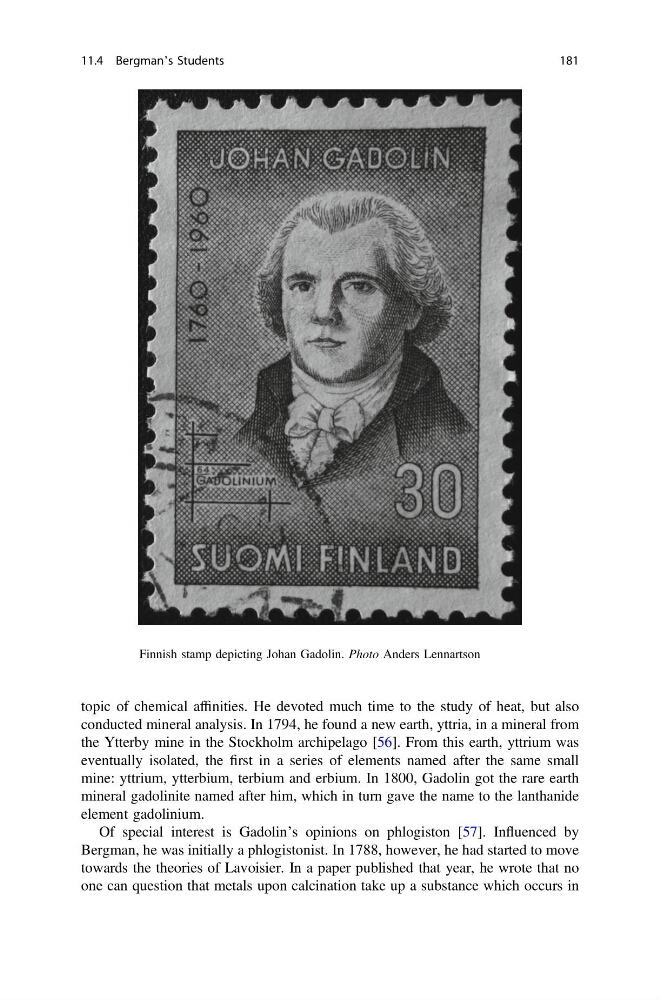
Fig. 11.7 Finnish stamp depicting Johan Gadolin. Photo Anders Lennartson
11.4 Bergman’s Students
181
conducted mineral analysis. In 1794, he found a new earth, yttria, in a mineral from
the Ytterby mine in the Stockholm archipelago [56]. From this earth, yttrium was
eventually isolated, the first in a series of elements named after the same small
mine: yttrium, ytterbium, terbium and erbium. In 1800, Gadolin got the rare earth
mineral gadolinite named after him, which in turn gave the name to the lanthanide
element gadolinium.
Of special interest is Gadolin’s opinions on phlogiston [57]. Influenced by
Bergman, he was initially a phlogistonist. In 1788, however, he had started to move
towards the theories of Lavoisier. In a paper published that year, he wrote that no
one can question that metals upon calcination take up a substance which occurs in
Fig. 11.7 Finnish stamp depicting Johan Gadolin. Photo Anders Lennartson
11.4 Bergman’s Students
181