

required to give fire against steel, is a reason to believe it to be one of the elements
in siliceous stones, which is fully confirmed by the fact that the earth precipitated
from Liquor Silicium give alum with vitriolic acid” [97]. Liquor Silicium was a
solution of sodium silicates, and the earth (hydrated silicon dioxide) precipitated by
acids should not have reacted with sulphuric acid under any reaction conditions,
and certainly not to give alum (aluminium potassium sulphate). Bergman probably
made the mistake to prepare his Liquor Silicium by fusing sodium carbonate with
silica in a clay crucible which, as Scheele later showed (Sect. 22.4), dissolved some
aluminium-rich clay from the crucible. Wallerius did not question that alum was
formed by treating the precipitate with sulphuric acid, this observation was correct
according to Wallerius, but he questioned the nature of the earth. Wallerius’ point
was that the formation of alum said nothing about the nature of the Earth since
earths could transform into each other in solution, in precipitates as well as in
nature. Wallerius claimed that alum could be obtained from, for example, pyrites
(FeS 2 ) and iron(II) sulphate (green vitriol). This paper was written in an objective
manner, and Bergman did not respond although he certainly did not agree. This was
probably a disappointment for Wallerius, who probably had hoped for a long debate
with Bergman, where he could expose Bergman’s lack of chemical knowledge.
20
On March 1, 1770, Wallerius published another anonymous article entitled
Necessary, but well-meant reminders for young chemists, in one of the most widely
read Swedish newspapers of the time, Lärda Tidningar (Learned newspapers) [98].
This paper was written in a very different style, possibly since his previous paper
had little effect. Wallerius paper does not mention Bergman, but the true target was
easily realised by the readers since Wallerius illustrated his criticism by examples
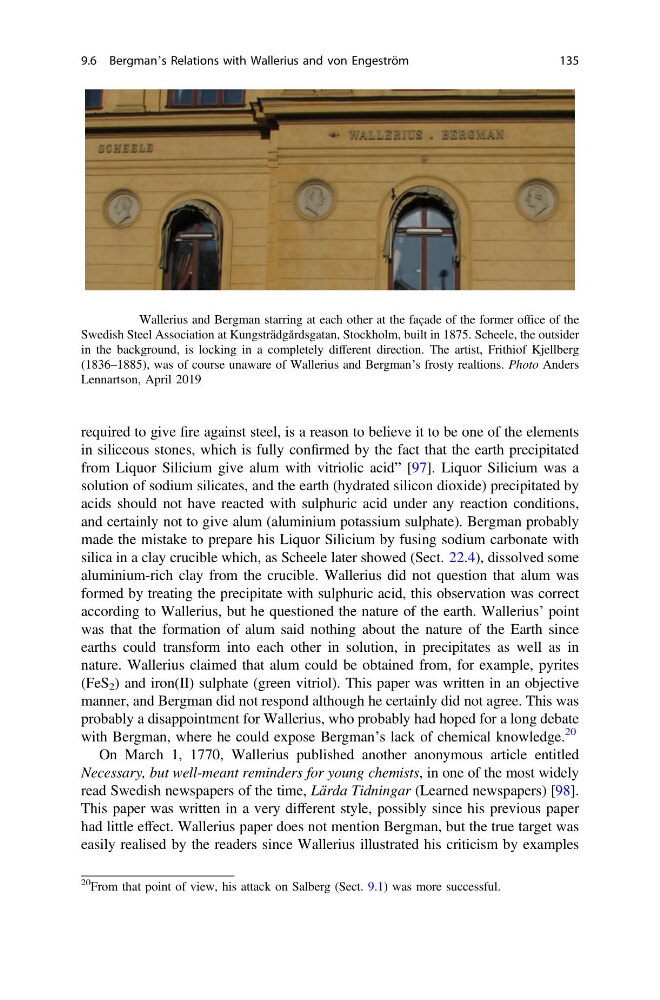
Fig. 9.16 Wallerius and Bergman starring at each other at the façade of the former office of the
Swedish Steel Association at Kungsträdgårdsgatan, Stockholm, built in 1875. Scheele, the outsider
in the background, is locking in a completely different direction. The artist, Frithiof Kjellberg
(1836–1885), was of course unaware of Wallerius and Bergman’s frosty realtions. Photo Anders
Lennartson, April 2019
20
From that point of view, his attack on Salberg (Sect. 9.1) was more successful.
9.6 Bergman’s Relations with Wallerius and von Engeström
135
in siliceous stones, which is fully confirmed by the fact that the earth precipitated
from Liquor Silicium give alum with vitriolic acid” [97]. Liquor Silicium was a
solution of sodium silicates, and the earth (hydrated silicon dioxide) precipitated by
acids should not have reacted with sulphuric acid under any reaction conditions,
and certainly not to give alum (aluminium potassium sulphate). Bergman probably
made the mistake to prepare his Liquor Silicium by fusing sodium carbonate with
silica in a clay crucible which, as Scheele later showed (Sect. 22.4), dissolved some
aluminium-rich clay from the crucible. Wallerius did not question that alum was
formed by treating the precipitate with sulphuric acid, this observation was correct
according to Wallerius, but he questioned the nature of the earth. Wallerius’ point
was that the formation of alum said nothing about the nature of the Earth since
earths could transform into each other in solution, in precipitates as well as in
nature. Wallerius claimed that alum could be obtained from, for example, pyrites
(FeS 2 ) and iron(II) sulphate (green vitriol). This paper was written in an objective
manner, and Bergman did not respond although he certainly did not agree. This was
probably a disappointment for Wallerius, who probably had hoped for a long debate
with Bergman, where he could expose Bergman’s lack of chemical knowledge.
20
On March 1, 1770, Wallerius published another anonymous article entitled
Necessary, but well-meant reminders for young chemists, in one of the most widely
read Swedish newspapers of the time, Lärda Tidningar (Learned newspapers) [98].
This paper was written in a very different style, possibly since his previous paper
had little effect. Wallerius paper does not mention Bergman, but the true target was
easily realised by the readers since Wallerius illustrated his criticism by examples
Fig. 9.16 Wallerius and Bergman starring at each other at the façade of the former office of the
Swedish Steel Association at Kungsträdgårdsgatan, Stockholm, built in 1875. Scheele, the outsider
in the background, is locking in a completely different direction. The artist, Frithiof Kjellberg
(1836–1885), was of course unaware of Wallerius and Bergman’s frosty realtions. Photo Anders
Lennartson, April 2019
20
From that point of view, his attack on Salberg (Sect. 9.1) was more successful.
9.6 Bergman’s Relations with Wallerius and von Engeström
135