

laboratory itself had become seriously out-dated in the nineteenth century, and after
years of discussions, a new building was erected on the initiative of chemistry
professor Lars Fredrik Svanberg (1805–1878), a student of Berzelius, who moved
from Bergman’s laboratory in 1857 [87]. Luckily, the old laboratory was not
demolished and has survived to the present day. When the chemists left the
building, it was converted to a printing house. In the mid-1930s, it was the home for
Statens institut för rasbiologi (the Institute of Racial Biology), which became the
Department of Medical Genetics and incorporated into the university in 1958. Still,
in the 1980s, it was used as a hydrological laboratory. At present (2019), the newly
renovated building is used by the Department of Law. Bergman’s layout is still
recognisable, but some of the larger rooms have been split into smaller rooms with
new passages between the rooms. Bergman’s former laboratory, with its preserved
stone vaults, is a meeting room for students, and the main part of the gallery has
been turned into a conference room.
9.5 Bergman’s Early Chemical Work
Following his appointment as a professor, it would take some time for Bergman to
build up his new career. In 1768, he published only a single paper, the paper on the
mountains of Västergötland discussed in Chap. 7. In 1769, he presented his first
dissertation as a professor. It was a study on fulminating gold, a shock-sensitive
compound of the ill-defined composition prepared by adding ammonia to a solution
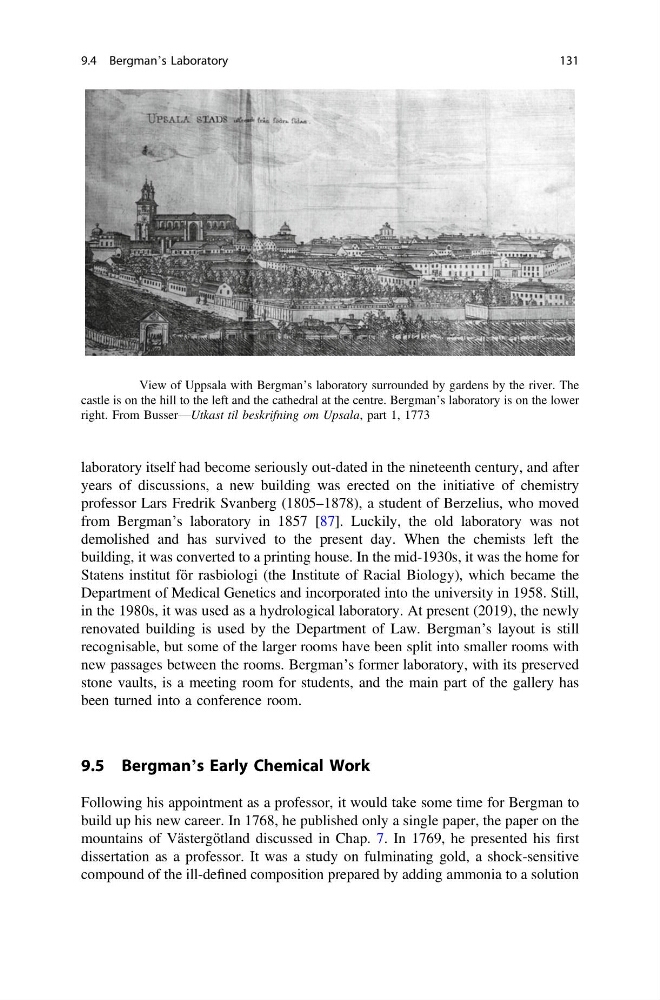
Fig. 9.14 View of Uppsala with Bergman’s laboratory surrounded by gardens by the river. The
castle is on the hill to the left and the cathedral at the centre. Bergman’s laboratory is on the lower
right. From Busser—Utkast til beskrifning om Upsala, part 1, 1773
9.4 Bergman’s Laboratory
131
years of discussions, a new building was erected on the initiative of chemistry
professor Lars Fredrik Svanberg (1805–1878), a student of Berzelius, who moved
from Bergman’s laboratory in 1857 [87]. Luckily, the old laboratory was not
demolished and has survived to the present day. When the chemists left the
building, it was converted to a printing house. In the mid-1930s, it was the home for
Statens institut för rasbiologi (the Institute of Racial Biology), which became the
Department of Medical Genetics and incorporated into the university in 1958. Still,
in the 1980s, it was used as a hydrological laboratory. At present (2019), the newly
renovated building is used by the Department of Law. Bergman’s layout is still
recognisable, but some of the larger rooms have been split into smaller rooms with
new passages between the rooms. Bergman’s former laboratory, with its preserved
stone vaults, is a meeting room for students, and the main part of the gallery has
been turned into a conference room.
9.5 Bergman’s Early Chemical Work
Following his appointment as a professor, it would take some time for Bergman to
build up his new career. In 1768, he published only a single paper, the paper on the
mountains of Västergötland discussed in Chap. 7. In 1769, he presented his first
dissertation as a professor. It was a study on fulminating gold, a shock-sensitive
compound of the ill-defined composition prepared by adding ammonia to a solution
Fig. 9.14 View of Uppsala with Bergman’s laboratory surrounded by gardens by the river. The
castle is on the hill to the left and the cathedral at the centre. Bergman’s laboratory is on the lower
right. From Busser—Utkast til beskrifning om Upsala, part 1, 1773
9.4 Bergman’s Laboratory
131