

King Charles XI (Karl XI) in the audience. As a private physician for Officer Jacob
Staël von Holstein, he travelled to the hot spas of Aachen in Germany, where he
learned the art of analysing mineral waters (Chap. 17). He continued his trip
through Leiden, Riga, London (where he became a fellow of the Royal Society) and
Paris, where he studied chemistry for Christopher Glaser (born 1615) at Jardin du
Roi. In Copenhagen, he deepened his chemical knowledge under Professor Ole
Borch (1626–1690), the first chemist in Scandinavia. Hiärne became a convinced
paracelsian, and an opponent to Robert Boyle (1627–1691). Back in Stockholm, he
practised as a physician and operated a private laboratory before he became the
director of Laboratorium chymicum. One of the main responsibilities of Laboratorium chymicum was to provide chemical (paracelcian) medicine for the army, but
from the end of the century, Hiärne could devote his time to basic chemical
research. Among Hiärne’s, more important works were his analyses of mineral
waters and a study of formic acid, which he found to be different from acetic acid.
1
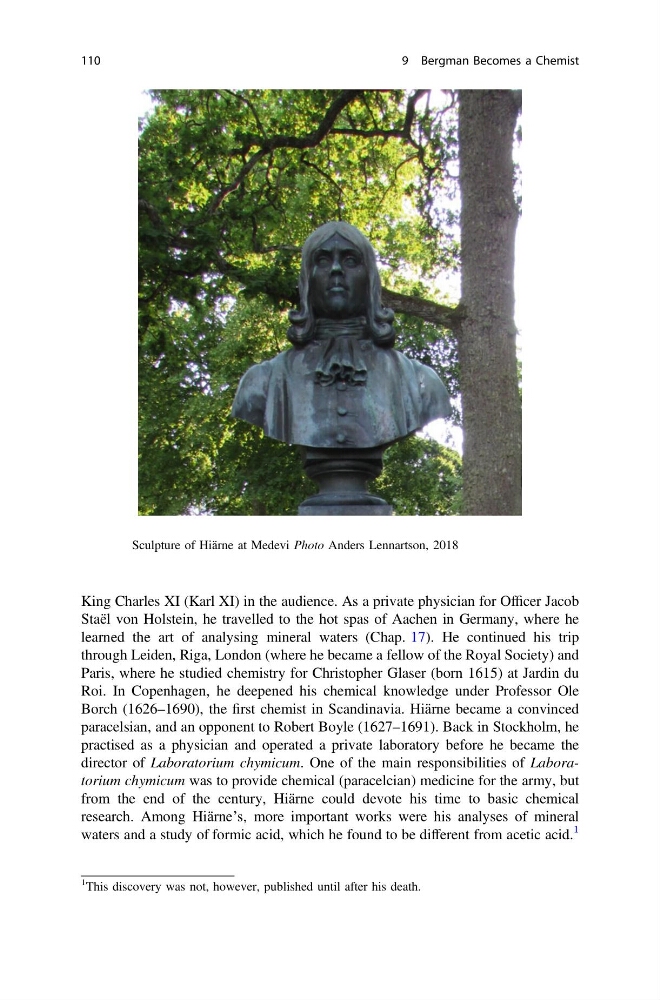
Fig. 9.1 Sculpture of Hiärne at Medevi Photo Anders Lennartson, 2018
1
This discovery was not, however, published until after his death.
110
9 Bergman Becomes a Chemist
Staël von Holstein, he travelled to the hot spas of Aachen in Germany, where he
learned the art of analysing mineral waters (Chap. 17). He continued his trip
through Leiden, Riga, London (where he became a fellow of the Royal Society) and
Paris, where he studied chemistry for Christopher Glaser (born 1615) at Jardin du
Roi. In Copenhagen, he deepened his chemical knowledge under Professor Ole
Borch (1626–1690), the first chemist in Scandinavia. Hiärne became a convinced
paracelsian, and an opponent to Robert Boyle (1627–1691). Back in Stockholm, he
practised as a physician and operated a private laboratory before he became the
director of Laboratorium chymicum. One of the main responsibilities of Laboratorium chymicum was to provide chemical (paracelcian) medicine for the army, but
from the end of the century, Hiärne could devote his time to basic chemical
research. Among Hiärne’s, more important works were his analyses of mineral
waters and a study of formic acid, which he found to be different from acetic acid.
1
Fig. 9.1 Sculpture of Hiärne at Medevi Photo Anders Lennartson, 2018
1
This discovery was not, however, published until after his death.
110
9 Bergman Becomes a Chemist