

4.2 Validation with DFT
Periodic plane-wave density functional theory (DFT) is a powerful tool for computing properties of crystalline materials and finds applications alongside crystallographic investigations of materials. Common applications include surveying an
energy minimum, or rationalizing geometry of structurally important atoms, for
example, proton positions in short strong hydrogen bonds [46], and ranking of
putative models in ab initio crystal structure prediction work [47]. DFT and phonon
calculations can provide missing information, such as realistic anisotropic displacement parameters, in structural models fitted to low- or medium-resolution experimental data [48].
In principle DFT calculations can be used to validate molecular crystal structure
results, either at the point of deposition or as a retrospective survey to provide
confidence in historically reported structures. The latter application does not even
require access to experimental diffraction data, so this could be applied to reports of
structures going back over a century.
Geometry optimization of experimental crystal structures using dispersioncorrected DFT can give a measure of the agreement between experiment and theory.
Application of this method to 241 organic crystal structures from a single volume of
Acta Cryst E was carried out and revealed that the average r.m.s. Cartesian change in
coordinates was 0.095 Å [49]. Based on analysis of outlying values, the authors
suggest that a r.m.s. Cartesian displacement of atom positions of greater than 0.25 Å
indicates either an error, such as an incorrect structure or incorrectly modelled
disorder, or in one case an interesting temperature-dependent effect which resulted
in a concerted shift of a whole molecule by 0.5 Å. Experimental verification
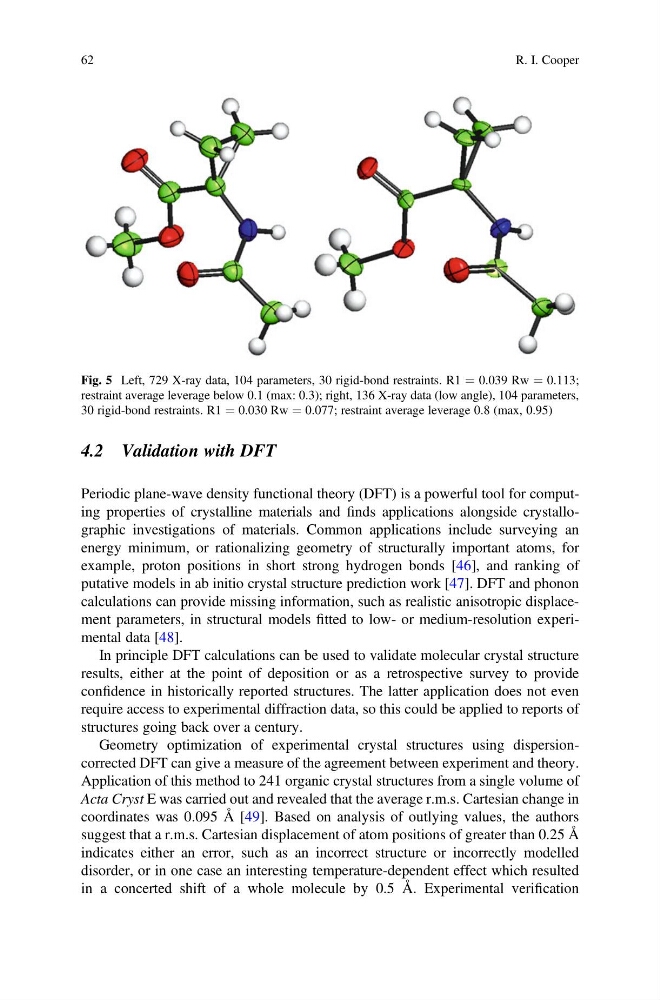
Fig. 5 Left, 729 X-ray data, 104 parameters, 30 rigid-bond restraints. R1 ¼ 0.039 Rw ¼ 0.113;
restraint average leverage below 0.1 (max: 0.3); right, 136 X-ray data (low angle), 104 parameters,
30 rigid-bond restraints. R1 ¼ 0.030 Rw ¼ 0.077; restraint average leverage 0.8 (max, 0.95)
62
R. I. Cooper
Periodic plane-wave density functional theory (DFT) is a powerful tool for computing properties of crystalline materials and finds applications alongside crystallographic investigations of materials. Common applications include surveying an
energy minimum, or rationalizing geometry of structurally important atoms, for
example, proton positions in short strong hydrogen bonds [46], and ranking of
putative models in ab initio crystal structure prediction work [47]. DFT and phonon
calculations can provide missing information, such as realistic anisotropic displacement parameters, in structural models fitted to low- or medium-resolution experimental data [48].
In principle DFT calculations can be used to validate molecular crystal structure
results, either at the point of deposition or as a retrospective survey to provide
confidence in historically reported structures. The latter application does not even
require access to experimental diffraction data, so this could be applied to reports of
structures going back over a century.
Geometry optimization of experimental crystal structures using dispersioncorrected DFT can give a measure of the agreement between experiment and theory.
Application of this method to 241 organic crystal structures from a single volume of
Acta Cryst E was carried out and revealed that the average r.m.s. Cartesian change in
coordinates was 0.095 Å [49]. Based on analysis of outlying values, the authors
suggest that a r.m.s. Cartesian displacement of atom positions of greater than 0.25 Å
indicates either an error, such as an incorrect structure or incorrectly modelled
disorder, or in one case an interesting temperature-dependent effect which resulted
in a concerted shift of a whole molecule by 0.5 Å. Experimental verification
Fig. 5 Left, 729 X-ray data, 104 parameters, 30 rigid-bond restraints. R1 ¼ 0.039 Rw ¼ 0.113;
restraint average leverage below 0.1 (max: 0.3); right, 136 X-ray data (low angle), 104 parameters,
30 rigid-bond restraints. R1 ¼ 0.030 Rw ¼ 0.077; restraint average leverage 0.8 (max, 0.95)
62
R. I. Cooper