

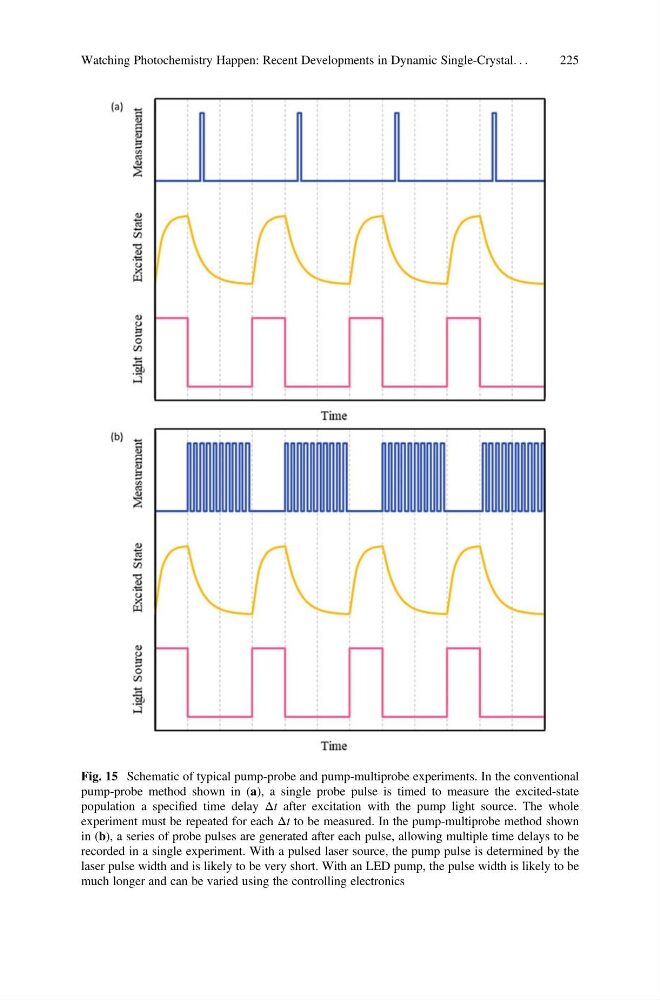
Fig. 15 Schematic of typical pump-probe and pump-multiprobe experiments. In the conventional
pump-probe method shown in (a), a single probe pulse is timed to measure the excited-state
population a specified time delay Δt after excitation with the pump light source. The whole
experiment must be repeated for each Δt to be measured. In the pump-multiprobe method shown
in (b), a series of probe pulses are generated after each pulse, allowing multiple time delays to be
recorded in a single experiment. With a pulsed laser source, the pump pulse is determined by the
laser pulse width and is likely to be very short. With an LED pump, the pulse width is likely to be
much longer and can be varied using the controlling electronics
Watching Photochemistry Happen: Recent Developments in Dynamic Single-Crystal. . .
225
pump-probe method shown in (a), a single probe pulse is timed to measure the excited-state
population a specified time delay Δt after excitation with the pump light source. The whole
experiment must be repeated for each Δt to be measured. In the pump-multiprobe method shown
in (b), a series of probe pulses are generated after each pulse, allowing multiple time delays to be
recorded in a single experiment. With a pulsed laser source, the pump pulse is determined by the
laser pulse width and is likely to be very short. With an LED pump, the pulse width is likely to be
much longer and can be varied using the controlling electronics
Watching Photochemistry Happen: Recent Developments in Dynamic Single-Crystal. . .
225