

Topics in Current Chemistry (2019) 377:38
1 3
strategy, devising an elegant protocol for the regioselective α-alkylation of ketones
with olefins [65]. The chemical reaction ensued by oxidative addition of the enamine and the C–H bond (IX), migratory insertion (X), migratory insertion into the
olefin (XI), reductive elimination of the C–C bond (XII) and then further enamine hydrolysis provided the alkylated products 78 (Scheme 16). By using the simple ethylene 75 together with various functionalized ketones 74, the products 78
were afforded in moderate-to-high yield (Scheme 16). The practical protocol was
scalable and also worked well with other simple olefins [65]. Interestingly, very
recently, the same group demonstrated an intermolecular direct branched-selective
α-alkylation, providing β-branched ketones with excellent branched selectivity in an
atom- and step economic approach [66]. Kang and colleagues also demonstrated the
Ar
R
CHO
R
1
R
2
Ar
R
2
R
1 CHO
Ar
R
2
R
1 CHO
R
+
+
Pd(PPh 3 ) 4 (10 mol%)
33 (R)-TRIP (10 mol%)
toluene, 100
o
C, 48 h
67 (80 mol%)
65
66
68
69
R
Ar
R
Ar
Pd
II -L n
PdX*
Ar
PdX*
R = vinyl
R
3 = 1-naphthyl
R
3
NH 2
Ph
CHO
68a 82% yield
94% ee, E/Z = 9:1
Ph
CHO
Cl
68b 65% yield
91% ee, E/Z = 12:1
Ph
CHO
68c 58% yield
90% ee, E/Z = 10:1
S
CHO
68d 85% yield
94% ee, E/Z = 10:1
CHO
68e 65% yield
95% ee, E/Z = 10:1
Cl
CHO
68f 55% yield
92% ee, E/Z = 10:1
O
O
VI
VII
V III
H
X*
+ -
+ -
L n
L n
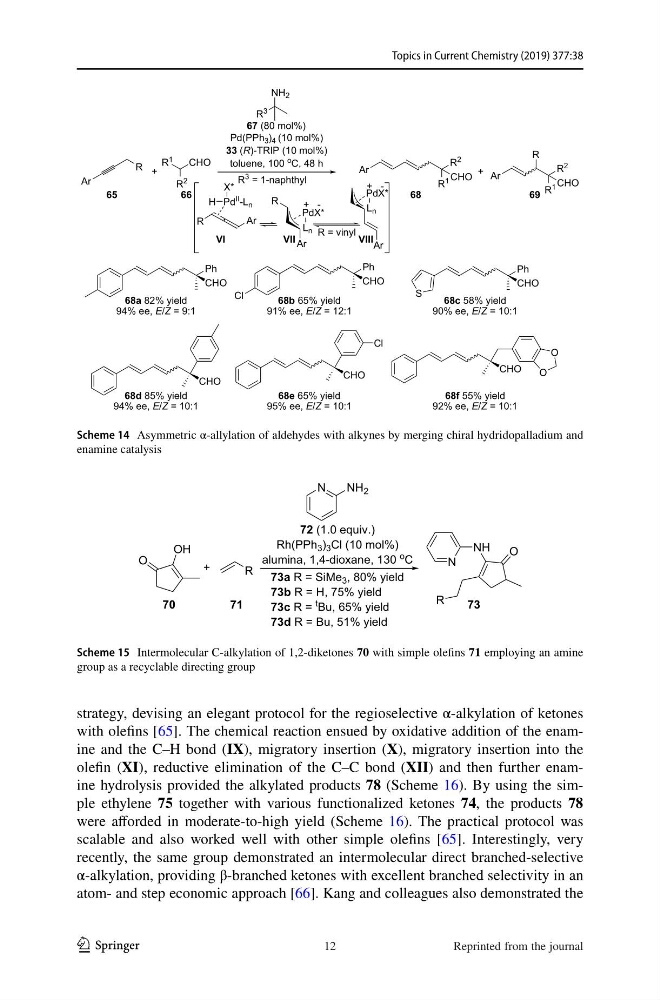
Scheme 14 Asymmetric α-allylation of aldehydes with alkynes by merging chiral hydridopalladium and
enamine catalysis
O
OH
+
R
NH
O
N
R
73a R = SiMe 3 , 80% yield
73b R = H, 75% yield
73c R =
t
Bu, 65% yield
73d R = Bu, 51% yield
72 (1.0 equiv.)
Rh(PPh 3 ) 3 Cl (10 mol%)
alumina, 1,4-dioxane, 130
o C
70
71
73
N
NH 2
Scheme 15 Intermolecular C-alkylation of 1,2-diketones 70 with simple olefins 71 employing an amine
group as a recyclable directing group
Reprinted from the journal
12
1 3
strategy, devising an elegant protocol for the regioselective α-alkylation of ketones
with olefins [65]. The chemical reaction ensued by oxidative addition of the enamine and the C–H bond (IX), migratory insertion (X), migratory insertion into the
olefin (XI), reductive elimination of the C–C bond (XII) and then further enamine hydrolysis provided the alkylated products 78 (Scheme 16). By using the simple ethylene 75 together with various functionalized ketones 74, the products 78
were afforded in moderate-to-high yield (Scheme 16). The practical protocol was
scalable and also worked well with other simple olefins [65]. Interestingly, very
recently, the same group demonstrated an intermolecular direct branched-selective
α-alkylation, providing β-branched ketones with excellent branched selectivity in an
atom- and step economic approach [66]. Kang and colleagues also demonstrated the
Ar
R
CHO
R
1
R
2
Ar
R
2
R
1 CHO
Ar
R
2
R
1 CHO
R
+
+
Pd(PPh 3 ) 4 (10 mol%)
33 (R)-TRIP (10 mol%)
toluene, 100
o
C, 48 h
67 (80 mol%)
65
66
68
69
R
Ar
R
Ar
Pd
II -L n
PdX*
Ar
PdX*
R = vinyl
R
3 = 1-naphthyl
R
3
NH 2
Ph
CHO
68a 82% yield
94% ee, E/Z = 9:1
Ph
CHO
Cl
68b 65% yield
91% ee, E/Z = 12:1
Ph
CHO
68c 58% yield
90% ee, E/Z = 10:1
S
CHO
68d 85% yield
94% ee, E/Z = 10:1
CHO
68e 65% yield
95% ee, E/Z = 10:1
Cl
CHO
68f 55% yield
92% ee, E/Z = 10:1
O
O
VI
VII
V III
H
X*
+ -
+ -
L n
L n
Scheme 14 Asymmetric α-allylation of aldehydes with alkynes by merging chiral hydridopalladium and
enamine catalysis
O
OH
+
R
NH
O
N
R
73a R = SiMe 3 , 80% yield
73b R = H, 75% yield
73c R =
t
Bu, 65% yield
73d R = Bu, 51% yield
72 (1.0 equiv.)
Rh(PPh 3 ) 3 Cl (10 mol%)
alumina, 1,4-dioxane, 130
o C
70
71
73
N
NH 2
Scheme 15 Intermolecular C-alkylation of 1,2-diketones 70 with simple olefins 71 employing an amine
group as a recyclable directing group
Reprinted from the journal
12