

1 3
Topics in Current Chemistry (2020) 378:16
of N-substitution on the pyrrole and the entire breadth of previously established
allylic electrophiles could be incorporated giving products in high yield and high
levels of enantioselectivity. The products could be easily derivatized, most notably
to forge a fused 5,7-bicycle via methanolysis followed by ring-closing metathesis.
In a final example, Snaddon et al. exploited the high reactivity of pentafluorophenyl esters toward amine nucleophiles by pairing enantioselective C–C bond formation with subsequent in situ ammonolysis and Hofmann rearrangement of the
resulting primary amides (Scheme 24) [33]. This strategy capitalizes on their earlier
developments in correlating electrophile structure with specific phosphine ligands
and results in a remarkably modular and general preparation of enantioenriched carbamate-protected amines. This procedure accommodates a wide variation of nucleophile, electrophile, and alcohol structure, resulting in the preparation of 30 distinct
enantioenriched homoallylic amines. One limitation concerned the poor oxidative
stability of styrenyl motifs. However, this could be circumvented by straightforward
Ar
Br
NTs
NTs
Ar 1
Ar 2
O
N
S
N H
H
O
Ar
R 1
R 2
R 2
N
R 1
Ts
CO (1 bar)
Pd 2 dba 3 (10 mol%)
Xantphos (11 mol%)
Fused-BTM (20 mol%)
i Pr 2 NEt (4.0 equiv.)
THF, 30 °C
22 Examples
NTs
O
Ph
Ph
>99%
15:1 d.r., 85% ee
NTs
O
Ph
93%
9:1 d.r., 94% ee
N
O
Ph
Ph
83%
10:1 d.r., 93% ee
NTs
O
Ph
Ph
>99%
13:1 d.r., 99% ee
Cl
Cl
S
Me
S
O O
Ar 1
Br
Fused-BTM:
Selected Examples for 1,4-Addition:
1,2-Addition to N-Tosyl Imines Electrophiles:
Deprotection Conditions:
NTs
O
Ph
Ph
Ph
NH
O
Ph
Ph
Ph
SmI 2 , THF
83%
10:1 d.r.,96% ee
NTs
Ph
PMP
O
N
Ph
PMP
O
OMe
OMe
MeO
68%
>20:1 d.r., 95% ee
1. Deprotection
2. N-arylation
Synthesis of an Antiproliferative Agent:
Ar 2
R 2
N
Ts
CO (1 bar)
Pd 2 dba 3 (10 mol%)
Xantphos (11 mol%)
Fused-BTM (20 mol%)
i Pr 2 NEt (4.0 equiv.)
THF, 30 °C
6 Examples
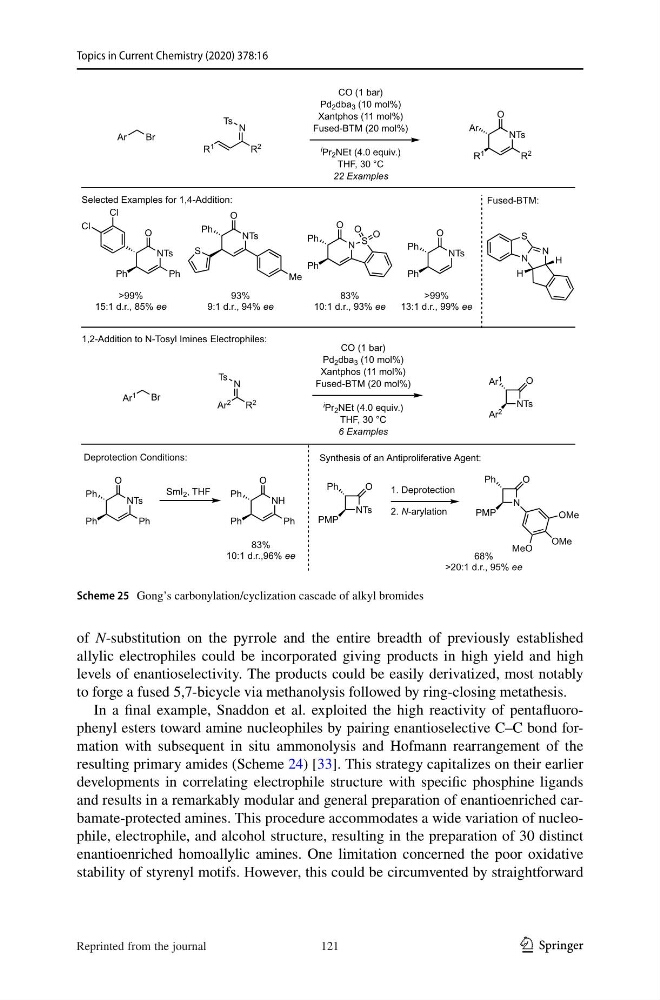
Scheme 25 Gong’s carbonylation/cyclization cascade of alkyl bromides
Reprinted from the journal
121
Topics in Current Chemistry (2020) 378:16
of N-substitution on the pyrrole and the entire breadth of previously established
allylic electrophiles could be incorporated giving products in high yield and high
levels of enantioselectivity. The products could be easily derivatized, most notably
to forge a fused 5,7-bicycle via methanolysis followed by ring-closing metathesis.
In a final example, Snaddon et al. exploited the high reactivity of pentafluorophenyl esters toward amine nucleophiles by pairing enantioselective C–C bond formation with subsequent in situ ammonolysis and Hofmann rearrangement of the
resulting primary amides (Scheme 24) [33]. This strategy capitalizes on their earlier
developments in correlating electrophile structure with specific phosphine ligands
and results in a remarkably modular and general preparation of enantioenriched carbamate-protected amines. This procedure accommodates a wide variation of nucleophile, electrophile, and alcohol structure, resulting in the preparation of 30 distinct
enantioenriched homoallylic amines. One limitation concerned the poor oxidative
stability of styrenyl motifs. However, this could be circumvented by straightforward
Ar
Br
NTs
NTs
Ar 1
Ar 2
O
N
S
N H
H
O
Ar
R 1
R 2
R 2
N
R 1
Ts
CO (1 bar)
Pd 2 dba 3 (10 mol%)
Xantphos (11 mol%)
Fused-BTM (20 mol%)
i Pr 2 NEt (4.0 equiv.)
THF, 30 °C
22 Examples
NTs
O
Ph
Ph
>99%
15:1 d.r., 85% ee
NTs
O
Ph
93%
9:1 d.r., 94% ee
N
O
Ph
Ph
83%
10:1 d.r., 93% ee
NTs
O
Ph
Ph
>99%
13:1 d.r., 99% ee
Cl
Cl
S
Me
S
O O
Ar 1
Br
Fused-BTM:
Selected Examples for 1,4-Addition:
1,2-Addition to N-Tosyl Imines Electrophiles:
Deprotection Conditions:
NTs
O
Ph
Ph
Ph
NH
O
Ph
Ph
Ph
SmI 2 , THF
83%
10:1 d.r.,96% ee
NTs
Ph
PMP
O
N
Ph
PMP
O
OMe
OMe
MeO
68%
>20:1 d.r., 95% ee
1. Deprotection
2. N-arylation
Synthesis of an Antiproliferative Agent:
Ar 2
R 2
N
Ts
CO (1 bar)
Pd 2 dba 3 (10 mol%)
Xantphos (11 mol%)
Fused-BTM (20 mol%)
i Pr 2 NEt (4.0 equiv.)
THF, 30 °C
6 Examples
Scheme 25 Gong’s carbonylation/cyclization cascade of alkyl bromides
Reprinted from the journal
121