

at 1 AU from the Sun, determined by spacecraft observations, are summarized in
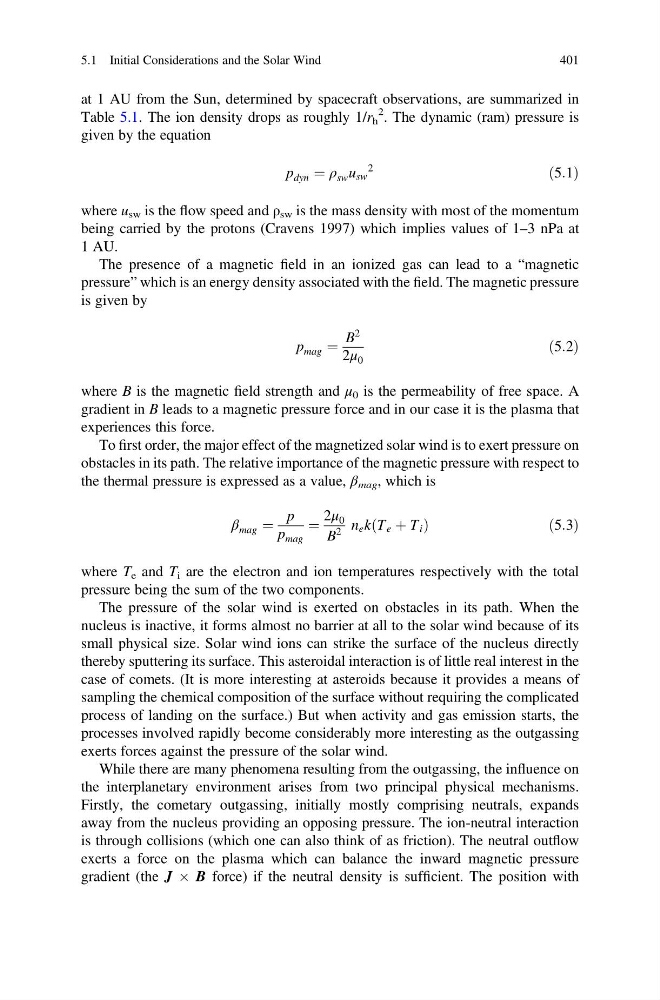
Table 5.1. The ion density drops as roughly 1/r h
2 . The dynamic (ram) pressure is
given by the equation
p dyn ¼ ρ sw u sw
2
ð5:1Þ
where u sw is the flow speed and ρ sw is the mass density with most of the momentum
being carried by the protons (Cravens 1997) which implies values of 1–3 nPa at
1 AU.
The presence of a magnetic field in an ionized gas can lead to a “magnetic
pressure” which is an energy density associated with the field. The magnetic pressure
is given by
p mag ¼
B
2
2μ 0
ð5:2Þ
where B is the magnetic field strength and μ 0 is the permeability of free space. A
gradient in B leads to a magnetic pressure force and in our case it is the plasma that
experiences this force.
To first order, the major effect of the magnetized solar wind is to exert pressure on
obstacles in its path. The relative importance of the magnetic pressure with respect to
the thermal pressure is expressed as a value, β mag , which is
β mag ¼
p
p mag
¼
2μ 0
B
2
n e k T e þ T i
ð
Þ
ð 5:3Þ
where T e and T i are the electron and ion temperatures respectively with the total
pressure being the sum of the two components.
The pressure of the solar wind is exerted on obstacles in its path. When the
nucleus is inactive, it forms almost no barrier at all to the solar wind because of its
small physical size. Solar wind ions can strike the surface of the nucleus directly
thereby sputtering its surface. This asteroidal interaction is of little real interest in the
case of comets. (It is more interesting at asteroids because it provides a means of
sampling the chemical composition of the surface without requiring the complicated
process of landing on the surface.) But when activity and gas emission starts, the
processes involved rapidly become considerably more interesting as the outgassing
exerts forces against the pressure of the solar wind.
While there are many phenomena resulting from the outgassing, the influence on
the interplanetary environment arises from two principal physical mechanisms.
Firstly, the cometary outgassing, initially mostly comprising neutrals, expands
away from the nucleus providing an opposing pressure. The ion-neutral interaction
is through collisions (which one can also think of as friction). The neutral outflow
exerts a force on the plasma which can balance the inward magnetic pressure
gradient (the J Â B force) if the neutral density is sufficient. The position with
5.1 Initial Considerations and the Solar Wind
401
Table 5.1. The ion density drops as roughly 1/r h
2 . The dynamic (ram) pressure is
given by the equation
p dyn ¼ ρ sw u sw
2
ð5:1Þ
where u sw is the flow speed and ρ sw is the mass density with most of the momentum
being carried by the protons (Cravens 1997) which implies values of 1–3 nPa at
1 AU.
The presence of a magnetic field in an ionized gas can lead to a “magnetic
pressure” which is an energy density associated with the field. The magnetic pressure
is given by
p mag ¼
B
2
2μ 0
ð5:2Þ
where B is the magnetic field strength and μ 0 is the permeability of free space. A
gradient in B leads to a magnetic pressure force and in our case it is the plasma that
experiences this force.
To first order, the major effect of the magnetized solar wind is to exert pressure on
obstacles in its path. The relative importance of the magnetic pressure with respect to
the thermal pressure is expressed as a value, β mag , which is
β mag ¼
p
p mag
¼
2μ 0
B
2
n e k T e þ T i
ð
Þ
ð 5:3Þ
where T e and T i are the electron and ion temperatures respectively with the total
pressure being the sum of the two components.
The pressure of the solar wind is exerted on obstacles in its path. When the
nucleus is inactive, it forms almost no barrier at all to the solar wind because of its
small physical size. Solar wind ions can strike the surface of the nucleus directly
thereby sputtering its surface. This asteroidal interaction is of little real interest in the
case of comets. (It is more interesting at asteroids because it provides a means of
sampling the chemical composition of the surface without requiring the complicated
process of landing on the surface.) But when activity and gas emission starts, the
processes involved rapidly become considerably more interesting as the outgassing
exerts forces against the pressure of the solar wind.
While there are many phenomena resulting from the outgassing, the influence on
the interplanetary environment arises from two principal physical mechanisms.
Firstly, the cometary outgassing, initially mostly comprising neutrals, expands
away from the nucleus providing an opposing pressure. The ion-neutral interaction
is through collisions (which one can also think of as friction). The neutral outflow
exerts a force on the plasma which can balance the inward magnetic pressure
gradient (the J Â B force) if the neutral density is sufficient. The position with
5.1 Initial Considerations and the Solar Wind
401