

4. Peatland-related land policies are driving large-scale plantations, and the rights of
villagers have often been denied.
5. Villagers owned multiple farmlands in this village, and fires frequently occurred
on farmlands far from their homes.
25.3 Projects for Peatland Management
25.3.1 Rewetting and Reforestation Project
Surveys in 2010/2011 revealed that acacia and oil palm plantations were expanding,
causing dryness peatland by drainage and fires in Tanjung Leban village. The
frequency of fires has increased sharply after the construction of Acacia plantations
by the company in 2002, and heavy fires, which caused damage to crops, occurred
frequently in 2002, 2004, 2007, 2012, and 2013. A serious fire broke out in July
2013 and destroyed 4500 ha of rubber and oil palm plantations. Based on these
incidents, several measures were suggested to prevent peatland fire as follows:
(1) stopping over drainage from peatlands, (2) conserving peatland forest to maintain
high moisture content in land surface, and (3) preserving the ecological environment.
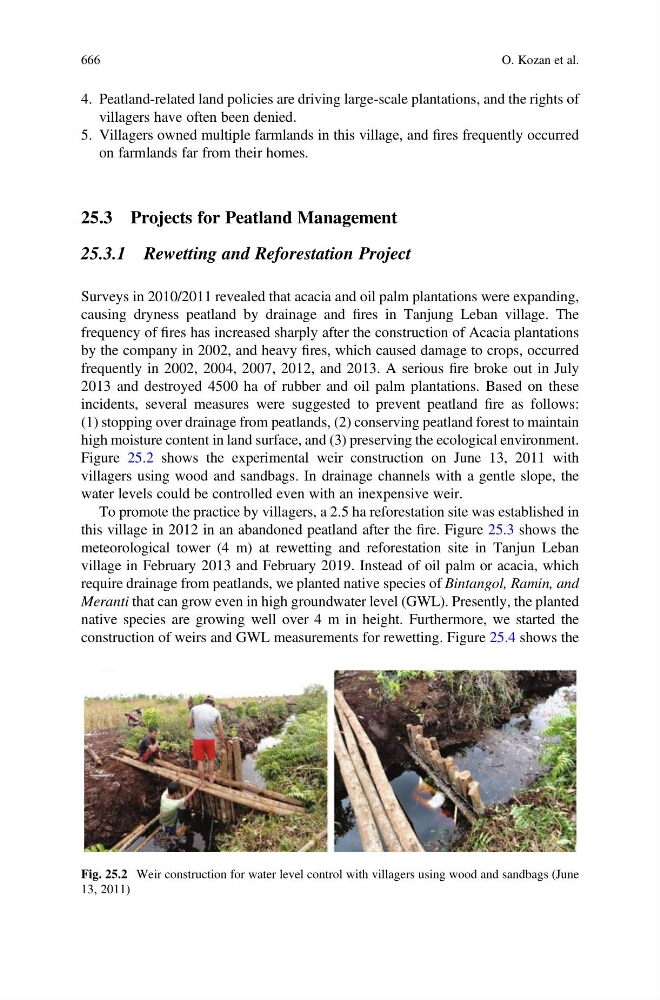
Figure 25.2 shows the experimental weir construction on June 13, 2011 with
villagers using wood and sandbags. In drainage channels with a gentle slope, the
water levels could be controlled even with an inexpensive weir.
To promote the practice by villagers, a 2.5 ha reforestation site was established in
this village in 2012 in an abandoned peatland after the fire. Figure 25.3 shows the
meteorological tower (4 m) at rewetting and reforestation site in Tanjun Leban
village in February 2013 and February 2019. Instead of oil palm or acacia, which
require drainage from peatlands, we planted native species of Bintangol, Ramin, and
Meranti that can grow even in high groundwater level (GWL). Presently, the planted
native species are growing well over 4 m in height. Furthermore, we started the
construction of weirs and GWL measurements for rewetting. Figure 25.4 shows the
Fig. 25.2 Weir construction for water level control with villagers using wood and sandbags (June
13, 2011)
666
O. Kozan et al.